

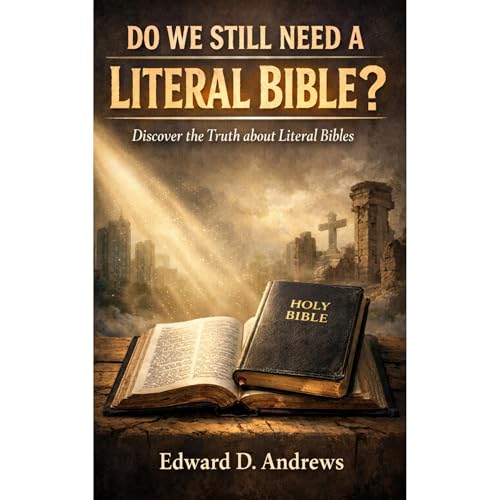
DO WE STILL NEED A LITERAL BIBLE?
Discover the Truth about Literal Bibles
Failed to add items
Add to Cart failed.
Add to Wish List failed.
Remove from wishlist failed.
Adding to library failed
Follow podcast failed
Unfollow podcast failed
Audible Standard 30-day free trial

DO WE STILL NEED A LITERAL BIBLE?
Buy for $14.95
-
Narrated by:
-
Virtual Voice
-
By:
-
Edward Andrews

This title uses virtual voice narration
Do we still need a literal Bible in an age of smooth, interpretive translations and instant readability? This book answers that question by confronting a quiet but decisive shift in modern Bible translation—the movement away from representing what Scripture says toward replacing it with what translators think Scripture means.
This 2026 edition represents a complete expansion and refinement of the original work. Every chapter from the 2024 edition has been expanded and reworked, increasing the book from 126 pages to approximately 245 pages. Redundancy has been deliberately and thoroughly removed—not by shortening the argument, but by strengthening it. Each chapter now carries its own distinct burden, grounded in fresh biblical texts, concrete translation problems, and disciplined analysis rather than repeated restatement. The result is a clearer, more substantial, and more forward-moving work that advances chapter by chapter instead of circling the same claims.
Rather than offering abstract theory, this book exposes how translation decisions shape theology at the level of words, grammar, discourse structure, and vocabulary consistency. It examines where popular translations cross the line from translation into commentary, how theological pressure influences rendering choices, why key biblical terms must not be collapsed or paraphrased away, and how the loss of literalness weakens biblical literacy. Throughout, the reader is shown—not merely told—why accuracy, transparency, and restraint are essential if Scripture is to remain the final authority rather than the translator.
This expanded edition was intentionally rebuilt to eliminate repetition while dramatically increasing depth. The reader is no longer asked to rehearse the same arguments repeatedly, but to follow a sustained, carefully developed case supported by new passages, new examples, and clear distinctions between chapters.
This book is written for readers who take Scripture seriously, who want access to the text itself rather than interpretive replacements, and who recognize that biblical literacy depends on a Bible that can actually be studied. It is not a defense of tradition for tradition’s sake, nor a rejection of clarity. It is a sustained argument that clarity must serve accuracy, not override it.
If the Bible is inspired, then its words matter. This fully expanded and de-redundified edition exists to show why that conviction still matters—and why the church still needs a truly literal Bible.