

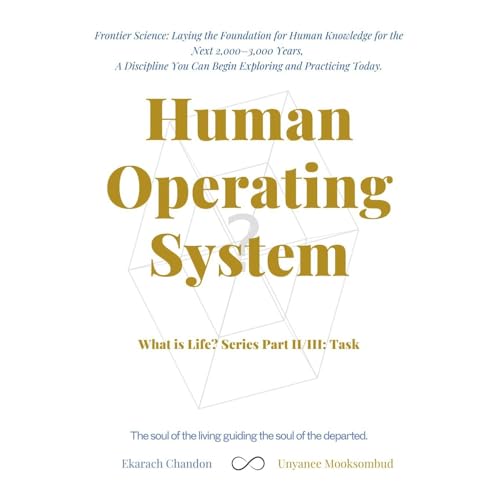
Human Operating System
What is Life? Series Part II/III: Task
Failed to add items
Add to Cart failed.
Add to Wish List failed.
Remove from wishlist failed.
Adding to library failed
Follow podcast failed
Unfollow podcast failed
Audible Standard 30-day free trial

Human Operating System
Buy for $10.06
-
Narrated by:
-
Virtual Voice

This title uses virtual voice narration
Human Operating System is not a book of comfort, belief, or ready-made philosophy.
It is an investigation into the hidden structures that shape human thought, decision-making, and responsibility.
Its central claim is simple:
The greatest harm does not come from ignorance alone, but from believing we are free while unseen constraints are still running.
In a world increasingly skilled at explaining behavior, systems, and intelligence, we still rarely ask the deeper question:
What is shaping our decisions before we even call them our own?
This book examines that question directly.
Inside, you will encounter:
- the difference between logic and reason
- hidden interference in cognition and systems
- a structural model of defilements (โทสะ, โลภะ, โมหะ) as information-processing conditions
- the limits of explanation and prediction in human systems
- responsibility as a structural reality, not merely a moral idea
Human Operating System does not tell you what to believe.
It helps expose the conditions under which belief, judgment, and decision are formed.
Part of the What is Life? series, this book is for readers willing to question not only what they think, but the structures through which they think.
If you want to continue into the method behind this work, explore Ignorance Management — Ekarach Chandon Method:
https://chatgpt.com/g/g-69bcc96056ac8191af243a442ca1ed2c-ignorance-management-ekarach-chandon-method
A Note on the Three Editions of What is Life?
This work, What is Life?, is offered in three distinct editions—Kindle, Paper Back, and Hard Cover—each crafted to enhance interaction with its layered knowledge. As this book integrates my reflections and insights from AI models, each edition offers a unique way to engage with these elements.
In the Kindle edition, minimal color-coding allows readers the freedom to interact personally with the material. Kindle’s highlighting feature lets you create your own color-coded emphasis, inviting mindfulness, concentration, and self-reflection to deepen understanding.
Conversely, the Paper Back and Hard Cover editions use color-coding to clarify the different sources of knowledge—my own insights and analyses from AI. This structure aids in navigating the perspectives within each passage, providing a more accessible reading journey for those who benefit from visual cues.
For Kindle readers, I recommend using the highlight feature to mark passages that resonate or invite reflection. This interaction will enrich your journey and foster a unique experience. For those seeking a structured approach, the Paper Back and Hard Cover editions provide a built-in color-coded framework to distinguish these layers.
Whichever format you choose, thank you for your commitment to What is Life?. This journey requires patience, dedication, and a readiness to engage deeply with your own thinking. May this journey offer insights and introspective growth that resonate with you long after the pages are turned.
With Conscientious Responsibility,
Ekarach Chandon
https://chatgpt.com/g/g-69bcc96056ac8191af243a442ca1ed2c-ignorance-management-ekarach-chandon-method