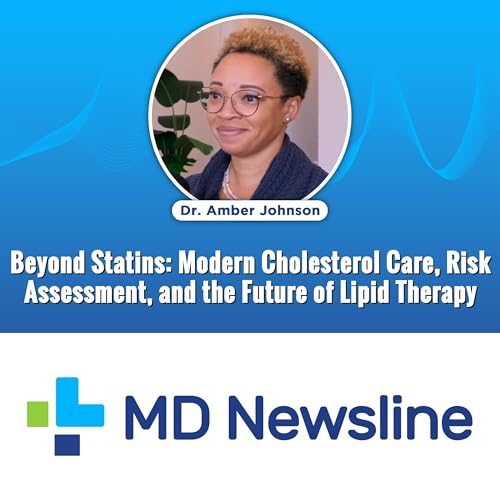
Beyond Statins: Modern Cholesterol Care, Risk Assessment, and the Future of Lipid Therapy Podcast By  cover art

Beyond Statins: Modern Cholesterol Care, Risk Assessment, and the Future of Lipid Therapy

Beyond Statins: Modern Cholesterol Care, Risk Assessment, and the Future of Lipid Therapy

Listen for free

View show details
In this episode of MD Newsline, Dr. Amber Johnson, Assistant Professor of Medicine and General Cardiologist at the University of Chicago, provides an in-depth look at modern cholesterol management and cardiovascular risk reduction. She discusses evolving lipid guidelines, aggressive LDL-C targets, statin intolerance, and the growing role of non-statin therapies. Dr. Johnson also explores emerging research on lipoprotein(a), hypertriglyceridemia, and future directions in lipid-lowering treatment. Episode Highlights Evolving Cholesterol Management and ASCVD Risk Dr. Johnson explains how cholesterol treatment has become more aggressive over the past decade, driven by robust evidence linking LDL cholesterol to cardiovascular events. She emphasizes LDL-C as the primary treatment target and discusses the role of HDL, triglycerides, and inflammatory markers such as high-sensitivity CRP, particularly in women. Lifestyle Modification and Population-Level Prevention Heart-healthy lifestyle interventions remain foundational to cardiovascular prevention. Dr. Johnson highlights the American Heart Association's Life's Essential Eight, including physical activity, diet, sleep, and smoking cessation, as critical components of long-term risk reduction. Key Updates in 2025 Dyslipidemia Guidelines Dr. Johnson reviews the 2025 ESC/EAS-focused update, emphasizing lower LDL-C targets for high- and extreme-risk patients. She discusses the increasing use of PCSK9 inhibitors, adjunct lipid-lowering therapies, and the recommendation for routine lipoprotein(a) screening as a risk-modifying factor. Risk Assessment and Personalized Treatment Decisions For primary prevention patients, Dr. Johnson outlines how risk calculators, coronary artery calcium scoring, and comorbidities such as diabetes and metabolic syndrome guide lipid-lowering intensity. She also addresses how updated endocrine and diabetes guidelines influence earlier and more aggressive treatment strategies. Statin Intolerance and Treatment Sequencing Persistent barriers to statin use include side effect concerns, cost, and polypharmacy. Dr. Johnson shares practical strategies for managing statin intolerance, including dose adjustments, switching statins, alternate-day dosing, and the addition of non-statin therapies such as ezetimibe, bempedoic acid, and PCSK9 inhibitors. Non-Statin Therapies and New Treatment Options Dr. Johnson discusses when to escalate therapy to PCSK9 inhibitors, including monoclonal antibodies and siRNA-based agents like inclisiran. She also explains how cost, access, and insurance coverage influence real-world treatment decisions. Triglycerides and Emerging Lipid Targets While triglycerides are often overlooked, Dr. Johnson reviews their clinical significance, particularly in severe hypertriglyceridemia. She discusses lifestyle interventions, fibrates, omega-3 therapies, and emerging agents targeting ANGPTL3 and APOC-3. The Role of Lipoprotein(a) Routine Lp(a) screening is gaining momentum due to its strong association with cardiovascular disease and aortic stenosis. Dr. Johnson reviews current guideline recommendations, clinical utility, and ongoing outcome trials such as OCEAN and HORIZON that may soon reshape treatment options. Special Populations and Complex Care Dr. Johnson addresses lipid management in patients with chronic kidney disease, HIV, inflammatory diseases, and cancer, emphasizing individualized therapy and careful consideration of drug–drug interactions. Future Directions in Lipid Therapy Looking ahead, Dr. Johnson explores long-acting therapies and gene-editing approaches such as CRISPR, while highlighting the importance of health equity, access to care, and sustainable lifestyle interventions. Key Takeaway Dr. Johnson underscores that lower LDL cholesterol is better, with no identified lower limit of harm, and highlights the growing importance of lipoprotein(a) screening in cardiovascular risk assessment. As lipid therapies continue to evolve, combining guideline-driven care, patient-centered decision-making, and equitable access remains essential to improving long-term cardiovascular outcomes. Resources Website: https://mdnewsline.com/ Newsletter: https://mdnewsline.com/subscribe/ Contact with Dr. Amber Johnson: Here
No reviews yet