Catholic Daily Reflections Podcast By My Catholic Life! cover art

Catholic Daily Reflections

Catholic Daily Reflections

By: My Catholic Life!
Listen for free

My Catholic Life! presents the beauty and splendor of our Catholic faith in a down to earth and practical way. These daily audio reflections come from the "Catholic Daily Reflections Series" which is available in online format from our website. They are also available in e eBook or paperback format.

May these reflections assist you on your journey of personal conversion!Copyright My Catholic Life! Inc.
Christianity Ministry & Evangelism Spirituality
Episodes
  • April 25, Feast of Saint Mark - Our Mission as Evangelists
    Apr 24 2026
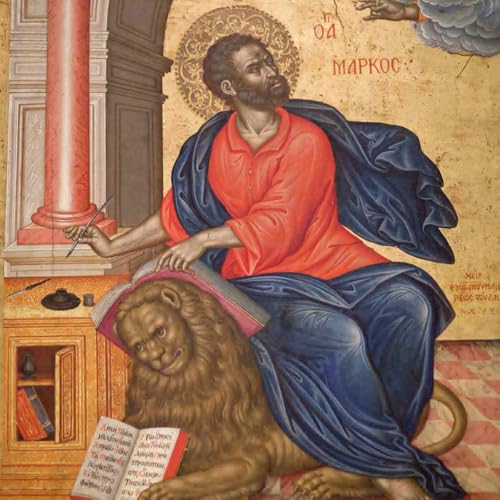
    Read OnlineJesus appeared to the Eleven and said to them: “Go into the whole world and proclaim the Gospel to every creature. Whoever believes and is baptized will be saved; whoever does not believe will be condemned. These signs will accompany those who believe…” Mark 16:15–17Today we honor the Gospel writer, Saint Mark. Mark, also called John Mark, was likely from modern-day Libya in North Africa but grew up in Jerusalem with his mother, Mary. Her home was a significant meeting place for early Christians, possibly hosting the Last Supper and Peter’s visit after his release from prison (Acts 12:12). Many scholars believe Mark was the young man who fled naked during Jesus’ arrest (Mark 14:51–52).Mark accompanied Barnabas (his cousin or uncle) and Paul on an early missionary journey but left them before its completion, which led to a sharp disagreement with Paul. Barnabas took Mark to Cyprus, while Paul continued elsewhere. Despite this conflict, Mark and Paul reconciled, and Paul later referred to Mark as a co-worker and a helpful companion during his imprisonment (Colossians 4:10–11; 2 Timothy 4:11).Mark also developed a close relationship with Peter, who affectionately called him “Mark, my son” (1 Peter 5:13). Tradition holds that Mark wrote his Gospel in Rome at Peter’s request, preserving Peter’s preaching for the Church. Mark’s Gospel, likely written for Gentile converts in Rome, became—and remains—a vital record of Jesus’ life and ministry.Later traditions hold that Mark became the first bishop of Alexandria in Egypt, where he preached the Gospel. He is believed to have suffered martyrdom there, dragged over stones and imprisoned for his faith. Though Saint Mark is traditionally honored as a martyr, today’s feast celebrates him above all as an evangelist. In today’s Gospel, Saint Mark recounts Jesus’ final words to His Apostles: “Go into the whole world and proclaim the Gospel to every creature.”Through his life and writings, Saint Mark faithfully fulfilled this command, preserving the saving message of Christ for generations to come.Jesus’ commission was accompanied by promises of signs that would follow those who believe: They would drive out demons, speak new languages, handle serpents, and heal the sick. While these signs were often manifested in miraculous ways in the early Church, they carry a deeper spiritual significance for us today.Like Saint Mark, each of us is called to be an evangelist, bringing the Gospel to the ends of the earth. Though we might not be given the grace to perform miracles, Jesus’ promises remain true when we act in His name. Demons are cast out not only through exorcism, but also when we bring the Light of Christ to the darkness of sin and evil. We “speak new languages” when the Holy Spirit uses us to communicate God’s Word in ways that touch hearts anew. The “serpents” we handle and the “deadly drink” we overcome symbolize the temptations and evils God’s grace protects us from when we remain faithful to Him.As we honor Saint Mark the Evangelist, reflect today on how his Gospel calls you to heed Jesus’ commission. Symbolically speaking, have you learned to speak the new language of the Holy Spirit, combat the powers of evil, and radiate God’s love and mercy to others? This mission takes firm resolve and courage. Do not fear when “serpents” or “deadly drink” appear along the way. Trust that God’s grace will protect and guide you. When you are fully united to Christ, everything you do and say flows naturally in His name, making the Gospel known to the ends of the earth. Saint Mark the Evangelist, though you were young when you met our Lord, you grew deeply in faith and faithfully heeded His commission to proclaim the Gospel to the ends of the earth. Through your fidelity to Christ, countless souls came to believe through your preaching and continue to encounter Him through your inspired writing. Please pray for me, that I may have the courage to speak and act in Jesus’ name, becoming an instrument of His saving Word. Jesus, I trust in You.Image: Ancient painting with St. Mark the Evangelist Source: Free RSS feed from catholic-daily-reflections.com — Copyright © 2026 My Catholic Life! Inc. All rights reserved. This content is provided solely for personal, non-commercial use. Redistribution, republication, or commercial use — including use within apps with advertising — is strictly prohibited without written permission.
    Show more Show less
    7 mins
  • Friday of the Third Week of Easter - Certitude of Faith
    Apr 23 2026
    Read Online“Amen, amen, I say to you, unless you eat the Flesh of the Son of Man and drink his Blood, you do not have life within you. Whoever eats my Flesh and drinks my Blood has eternal life, and I will raise him on the last day. For my Flesh is true food, and my Blood is true drink.” John 6:53–55Human reason and free will are the most precious natural gifts God gave us. They are what separate us from every other animal. Human reason enables us to think critically, understand concepts, and arrive at conclusions. Central to our human reason is our free will, which enables us to act upon the conclusions we reach or to reject them, choosing instead to follow our disordered appetites and misguided desires. Though human reason was wounded by Original Sin, it was not completely destroyed. We must diligently strive to act rationally and in accord with our common sense, adhering to the natural law that God has written on our souls. However, even though a rational approach to natural law will bring us a long way toward right living, it is not sufficient to lead us into the deeper truths of eternal salvation, promised to us in Jesus’ discourse on the Bread of Life, on which we have been reflecting.By natural reason alone, the Eucharist makes no sense. How could that which appears to be a piece of bread be the “Flesh of the Son of Man” and a cup that appears to be wine be His Blood? Yet when we incorporate divine revelation into our reasoning, the Eucharist as the Flesh and Blood of Jesus, the Son of God, makes perfect sense: “...my Flesh is true food, and my Blood is true drink.” The Eucharist makes sense, but only when we listen with faith to the revelation Jesus gave to us. Today’s Gospel provides the clearest teaching we have ever received on this Precious Gift.Today’s Gospel begins by relating that “The Jews quarreled among themselves, saying, ‘How can this man give us his Flesh to eat?’” (John 6:52). They were quarreling because they were not opening their human reason to the light of Jesus’ revealed truth. In this exchange, the Eternal and Incarnate Son of God was speaking a divine truth to them. Jesus spoke clearly and plainly, but their minds remained closed. They heard His words, but they closed themselves off to the Father’s Voice, which testified on Jesus’ behalf that all He said was true. It seems that some who listened began to understand and believe, prompting the quarrel among them.When you read our Lord’s words, what do you hear? Do you hear the Father’s Voice in the depths of your conscience, confirming the truthfulness of what you read? Do you hear the Living Word of God echoing within your mind and soul? Do you allow that Word to inform your human reason so that you can conclude that the Eucharist is real, that it is the Flesh and Blood of the Son of God, offered to you so that you can share in eternal life? No amount of human study or intelligence alone will ever convince us of divine truths. God alone can convince us, but only if we listen to His Voice.Truths of faith, such as our belief in the Eucharist, must be more certain than any other natural truth we believe. No rational person would deny the reality of the physical world we see with our eyes or touch with our hands. The noises we hear, the food we taste, and the aroma we smell are all judged as real because we believe what our five senses perceive. When our consciences perceive divine truths, those truths are more certain than all sensory knowledge. Why? Because God is the one directly communicating to us. Reflect today on Jesus’ crystal-clear teaching on the Eucharist. We must hear and understand what He said. Our faith in the Eucharist must become certain. Allow the Father’s Voice to resonate within your mind so that you are more certain that the Eucharist is the Flesh and Blood of the Son of God than anything else you believe. Strengthen your faith, knowing that His Flesh and Blood bring you to eternal life. My Eucharistic Lord, I believe that You gave Your life for the salvation of all and that the gift of eternal salvation is given to us through the Sacraments. I believe that the Eucharist is Your Flesh and Blood, Your Divine Essence. Please strengthen my faith so that I am more open to the abundant grace You wish to bestow through this Precious Gift. Jesus, I trust in You. Image: The Feeding the Multitude by S. G. Rudl.Source: Free RSS feed from catholic-daily-reflections.com — Copyright © 2026 My Catholic Life! Inc. All rights reserved. This content is provided solely for personal, non-commercial use. Redistribution, republication, or commercial use — including use within apps with advertising — is strictly prohibited without written permission.
    Show more Show less
    7 mins
  • Thursday of the Third Week of Easter - Drawn by the Father
    Apr 22 2026
    Read OnlineJesus said to the crowds: “No one can come to me unless the Father who sent me draw him, and I will raise him on the last day.” John 6:44In today’s Gospel, Jesus continues His conversation with the crowd who sought Him out after performing the miracle of the multiplication of the loaves and fishes. As the conversation continues, Jesus deepens His clarity about His relationship with the Father, His divine identity, the Father’s action in our lives, and the gift of Himself as the Bread of Life.The passage above reveals an essential spiritual principle we must understand as we work to strengthen our relationship with God: Faith is a response to the Father’s call, not something we initiate on our own. This principle is crucial because faith is not primarily a resolution we make to grow closer to God; rather, it begins as a resolution from the Father in Heaven Who draws us to Himself by drawing us to His Son, Jesus, especially in the Eucharist.Practically speaking, this principle must guide our prayer lives. Though it’s good to make a conscious effort to pray every day, to meditate on the Scriptures, recite devotions, and attend Mass as often as possible, we must always see those efforts as a response to God’s invitation rather than our own good idea. It’s a subtle, though important, distinction.To illustrate, consider the Gospel story of the contrasting prayer of the Pharisee and the tax collector in Luke 18:9–14. In that parable, the Pharisee offered many prayers each day and fasted regularly, but his prayers went unheard and his fasting was unfruitful. Why? Because his actions were not initiated by God but were works of his own doing. In contrast, the tax collector, aware of his sin and need for God’s mercy, humbled himself and prayed, “O God, be merciful to me a sinner.” That prayer was beautiful and fruitful because it was a response to God Who revealed his sin to him and called him to repent, which he did.Today’s Gospel lesson comes to us within the context of Jesus’ teaching on the Eucharist. Therefore, we must especially apply His opening words to the way we participate in the Mass. Our choice to attend Mass is not something we do as a favor to God. Instead, our participation in the Mass must be a response to the Father Who offers us the Body and Blood, Soul and Divinity of Jesus, His Son, as the spiritual food we need in order to attain everlasting life. Participation in the Mass is God’s gift to us, and our response must be authentic prayer.Our participation in the Mass becomes authentic when we recognize that the Father is inviting us to receive the Eucharist as “the living bread that came down from heaven” and Jesus’ “Flesh for the life of the world.” The Mass is about receiving God into our lives, not because we choose to put Him there, but because we say “Yes” to His invitation to be drawn to Him. The word “Eucharist” means “thanksgiving,” and this must be our prayerful response to such a great gift. We must foster an attitude of sincere gratitude for the Father’s invitation to share in the Sacrifice of His Son so as to be given the unmerited gift of eternal life.Reflect today on your participation in the Mass. If you ever feel that your attendance is a favor to God, pause and listen to the Father’s voice calling you. Try to hear Him invite you to this most precious Feast. Become aware of the Father drawing you to the Mass, to His Son, the source of eternal life. Respond with humble gratitude, knowing that there is no greater gift you can receive.Heavenly Father, You constantly speak to me, call to me, and draw me to Your Son. Please open my ears to hear Your gentle voice, offering me the Body and Blood, Soul and Divinity of Your Son in the Holy Eucharist. May my participation in that unfathomable Gift be one of sincere gratitude for the eternal gifts You invite me to receive. Jesus, I trust in You.Image: Sermon on the Mount via AdobeSource: Free RSS feed from catholic-daily-reflections.com — Copyright © 2026 My Catholic Life! Inc. All rights reserved. This content is provided solely for personal, non-commercial use. Redistribution, republication, or commercial use — including use within apps with advertising — is strictly prohibited without written permission.
    Show more Show less
    7 mins
All stars
Most relevant
I really appreciate this podcast providing short reflections on topics that I can take to prayer each day. Thank you! 

Hopeful for prayer 

Something went wrong. Please try again in a few minutes.