Declassified by Author Daniel P. Douglas Podcast By Daniel P. Douglas cover art

Declassified by Author Daniel P. Douglas

Declassified by Author Daniel P. Douglas

By: Daniel P. Douglas
Listen for free

This podcast excavates the classified details of Cold War programs, operations, and incidents your government hoped you'd never discover. Let's listen in, shall we?

authordanielpdouglas.substack.comDaniel P. Douglas
Political Science Politics & Government World
Episodes
  • Operation Washtub
    Apr 3 2026
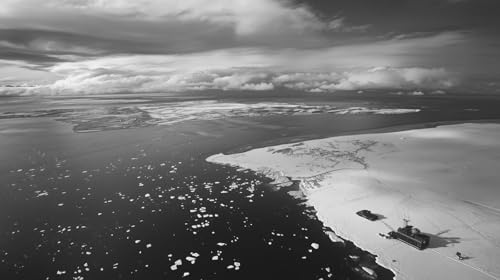
    It was January 1951. The Korean War was six months old and going badly. American soldiers were dying in frozen mountain passes while Chinese troops poured across the Yalu River. In Washington, military planners stared at maps and saw something terrifying.Alaska was only a few miles from Soviet territory.If the Soviets invaded, there was almost nothing to stop them. Alaska wasn’t even a state yet. It was a territory, vast and frozen and barely defended. The military believed the attack would come from the air, with Soviet bombers followed by paratroopers dropping into Anchorage, Fairbanks, Nome, and Seward. Once the Russians landed, who would fight them in the wilderness?The answer, according to FBI Director J. Edgar Hoover and his former protégé Joseph Carroll at the Air Force Office of Special Investigations, was bush pilots. Trappers. Miners. Fishermen. Ordinary Alaskans who knew the frozen landscape better than any soldier ever could.This was Operation Washtub. And it was about to become one of the strangest spy programs in American history.America’s Last Frontier Becomes Its First ProblemThe fear of a Soviet invasion of Alaska wasn’t just paranoia. It had a logic to it, the kind of logic that only makes sense when you’re convinced World War III could start any day.In 1949, the Soviets detonated their first atomic bomb, years ahead of American predictions. In 1950, Soviet-backed North Korea invaded South Korea, and some Pentagon analysts believed Korea was a feint. A distraction. Moscow’s real target, they believed, might be Western Europe. Or it might be Alaska, where the Bering Strait separated the two superpowers by less than the length of a decent Sunday drive.Alaska was also a former Russian colony, purchased by the United States in 1867 for $7.2 million. Some planners worried the Soviets might want it back. After all, the Japanese had invaded the Aleutian Islands during World War II, occupying American soil for over a year. If Japan could do it, the Soviet Union certainly could.The problem was defense. Alaska was enormous, remote, and brutally cold. There were more moose than military personnel. If Soviet paratroopers landed in the interior, conventional forces would take days or weeks to respond. By then, the territory could be occupied.So Hoover and Carroll hatched a plan. They would recruit ordinary Alaskans, train them in espionage, arm them with weapons and survival gear, and hide supply caches across the frozen wilderness. If the Soviets invaded, these civilian agents would stay behind while everyone else evacuated. They would hide, observe, and report enemy movements by coded radio transmissions.The Air Force called it Operation Washtub. The FBI called it STAGE. Both names were classified. The agents themselves were told never to speak of it. The program would remain secret for more than fifty years.Recruiting Spies From the Last FrontierThe plan called for a very specific kind of agent. According to the declassified documents, recruits had to be permanent Alaska residents with established livelihoods and “logical reasons for being placed where they intend to operate.” They could not be current or former military. They could not be government employees. They had to be people who would blend in, who wouldn’t be obvious targets for Soviet occupation forces trained to eliminate local resistance.Bush pilots were perfect. They already flew to isolated mining camps, remote villages, and distant fishing operations. Nobody would question a bush pilot being anywhere in Alaska. Their bird’s-eye view could document Soviet positions, troop movements, and supply lines. And they had the survival skills to stay alive in conditions that would kill most people in a matter of days.The FBI tapped its local contacts, including federal judges, the head of the U.S. Fish and Wildlife Service in Anchorage, and an Anchorage physician, to identify reliable candidates. The initial pool of potential recruits numbered as high as 40,000 people, according to FBI documents. From that pool, 89 were eventually selected and trained.The character sketches in the declassified files read like casting notes for a Jack London novel. One candidate was described as “a professional photographer in Anchorage” who had “only one arm and it is felt that he would not benefit the enemy in any labor battalion.” The same man was noted as “reasonably intelligent, particularly crafty, and possessed of sufficient physical courage as is indicated by his offer to guide a party which was to have hunted Kodiak bear armed only with bow and arrow.”A one-armed bear hunter with a bow and arrow. The FBI wanted to make him a spy.Other named agents included Dyton Abb Gillard, a well-known bush pilot from Cooper Landing on the Kenai Peninsula. Guy Raymond was described as a heavy-set tin miner from Lost River who had tattoos of a dagger and an eagle on his arms. Ira Weisner came from the gold mining town of Rampart. One...
    Show more Show less
    24 mins
  • The Plane That Vanished
    Mar 5 2026

    On Good Friday, March 23, 1951, a massive C-124 Globemaster II cargo plane carrying 53 of America’s most sensitive nuclear personnel ditched in the North Atlantic after a fire broke out in the cargo hold. The passengers included flight crews from the 509th Bombardment Group, the unit that dropped the atomic bombs on Japan, along with Brigadier General Paul Thomas Cullen, the man about to take command of America’s nuclear bomber force in Europe. Everyone survived. They climbed into life rafts with food, water, cold-weather gear, and emergency radios. A search plane spotted them, confirmed their position, and radioed for help.

    Nineteen hours later, rescue ships arrived to find nothing. No men. No plane. No rafts. Just some charred plywood and a single briefcase. The largest air and sea search in Air Force history at that time recovered zero bodies and zero wreckage. Fifty-three confirmed survivors had simply vanished from the surface of the ocean.

    Seventy-five years later, the families are still fighting for answers. FOIA requests to the CIA, State Department, and Air Force have been stonewalled. Documents have been classified, declassified, and reclassified multiple times. The official cargo manifest listed medical supplies, but the plane belonged to a squadron whose job was transporting nuclear weapons. Soviet submarines were operating in the area. A new book by Pulitzer Prize-winning journalist Tod Robberson argues the plane may have been carrying a Fat Man atomic bomb. This episode traces the paper trail from a cow pasture in Roswell to empty headstones at Arlington National Cemetery, where markers stand over graves that contain no remains.

    Now, let’s listen in as Nathaniel Sheppard narrates this tale on my behalf, shall we?

    -Daniel P. Douglas

    Thanks for listening to Declassified from Author Daniel P. Douglas! This post is public so feel free to share it.


    This is a public episode. If you would like to discuss this with other subscribers or get access to bonus episodes, visit authordanielpdouglas.substack.com
    Show more Show less
    22 mins
  • Podcast - Operation Sea-Spray
    Jan 20 2026

    In September 1950, a Navy minesweeper anchored near the Golden Gate Bridge spent one week spraying clouds of bacteria over San Francisco. The military wanted to know what would happen if an enemy launched a biological attack on an American city. So, they launched one themselves. Nearly all 800,000 residents inhaled the microbes. Nobody was warned. Nobody consented. Two weeks later, eleven patients showed up at Stanford Hospital with a mysterious infection the doctors had never encountered. One of them, a 75-year-old retired pipe fitter named Edward Nevin, died when the bacteria spread to his heart.

    The secret held for twenty-six years. When Edward Nevin’s grandson finally learned how his grandfather died, he sued the federal government. The trial featured shouting matches and a general who challenged the family’s lawyer to a fistfight. The court ruled that the military was legally entitled to spray American citizens with bacteria without telling them. Operation Sea-Spray was just one of 239 secret biological warfare tests conducted on American cities between 1949 and 1969. This episode traces the documented horror from the fog-shrouded bay to the federal courthouse and asks what else might have drifted on winds we never questioned.

    Now, let’s listen in as Nathaniel Sheppard narrates this tale on my behalf, shall we?

    -Daniel P. Douglas

    Thanks for listening to the Declassified podcast from Author Daniel P. Douglas! This podcast is public so feel free to share it!


    This is a public episode. If you would like to discuss this with other subscribers or get access to bonus episodes, visit authordanielpdouglas.substack.com
    Show more Show less
    17 mins
No reviews yet