Episodes

  • The Ugly Truth About Realistic Spaceship Design
    Mar 23 2026

    Most science fiction shows sleek, elegant starships—but real spaceships would look very different. In this episode of Entropy Rising, we break down what realistic spacecraft design might actually look like using real physics and engineering constraints.

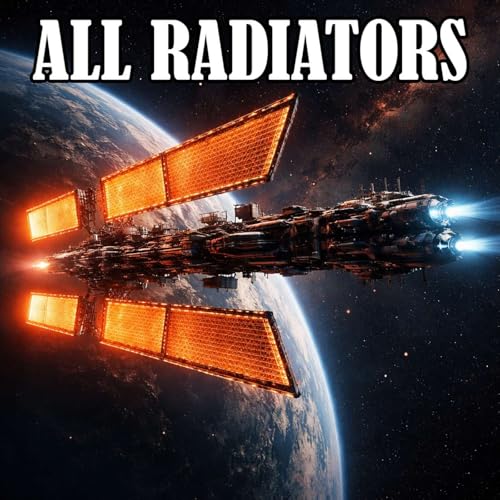
    From massive radiators needed to dump heat into the vacuum of space, to radiation shielding, propulsion limits, and the surprising advantages of long, narrow ship designs, we explore the practical challenges that would shape future spacecraft. We also look at how ships might differ depending on their role—whether they’re transporting people between space stations, hauling cargo across the solar system, or operating as military vessels.

    Along the way we discuss what sci-fi gets right, what it gets wrong, and how concepts like heat management, shielding, and orbital mechanics will influence the ships humanity may one day build.

    If humans expand into the solar system, these are the kinds of designs that could actually make it possible.

    Support the show

    Website: https://www.entropy-rising.com/

    Show more Show less
    43 mins
  • Are Hive Minds Inevitable?
    Mar 9 2026

    Hive minds are not just a sci fi trope. They might be a natural outcome of evolution.

    In this episode of Entropy Rising, we explore whether hive minds could realistically evolve in nature and whether advanced civilizations might choose to become networked intelligences. Are the Borg pure fantasy, or is there a biologically plausible path to collective consciousness? Could something like the Conjoiners from Revelation Space represent a more realistic future?

    We break down the difference between a true hive mind and a networked intelligence. From ant colonies and pheromones to biological radios and interstellar communication limits, we examine what physics and biology actually allow. We also tackle the uncomfortable questions: Do you lose free will in a hive mind? Could a civilization scale across the galaxy if its thoughts are limited by the speed of light? And could this be part of the Fermi Paradox?

    This episode moves from evolutionary biology to spacefaring civilizations, asking whether merging minds is dystopian, utopian, or simply inevitable.

    Would you join one?

    Support the show

    Website: https://www.entropy-rising.com/

    Show more Show less
    32 mins
  • Planetary Invasion: If They Can Reach Us, We’re Done
    Feb 23 2026

    If a civilization can cross interstellar space, the war is already decided.

    In this episode of Entropy Rising, we examine planetary invasion through the lens of real physics. No cinematic dogfights. No convenient alien weaknesses. Just propulsion energy, orbital mechanics, and strategic reality.

    Any ship capable of traveling between stars already carries extinction-level energy. Once an invading force controls orbit, they don’t need to land troops. They can freeze a planet with solar shades, redirect stellar energy to overheat it, scatter relativistic debris, or enforce a blockade. Gravity favors whoever owns space.

    We also explore the rare equal-footing scenario. What if two interstellar civilizations are technologically comparable? That leads to layered defenses, weaponized megastructures, and deeply entrenched planetary infrastructure.

    Finally, we ask the deeper question: why invade at all? With abundant resources in space, planetary conquest may be the least efficient option.

    Planetary invasion sounds dramatic. Under real physics, it becomes colder, faster, and far more decisive.

    Support the show

    Website: https://www.entropy-rising.com/

    Show more Show less
    38 mins
  • Colonizing Earth’s Orbit Is the First Real Step Into Space
    Feb 9 2026

    We often talk about the future of space as if it starts on Mars, in the asteroid belt, or among the stars. Giant habitats and interstellar travel dominate the conversation. Those ideas are exciting, but they skip over a much closer and more practical question.

    What happens first.

    In this episode of Entropy Rising, we focus on the place where humanity is most likely to learn how to actually live in space: Earth’s orbit. This is not an episode about distant megastructures or speculative technology. It is about infrastructure, economics, and incentives. The groundwork that turns space from a destination into a place where people stay.

    Earth’s orbit already matters more than most people realize. GPS, weather satellites, and global communications underpin modern civilization, and all of it exists because we built orbital infrastructure when launch costs were far higher than they are today. Those costs are not fixed. Reusable rockets have already driven them down by an order of magnitude, changing what is economically possible.

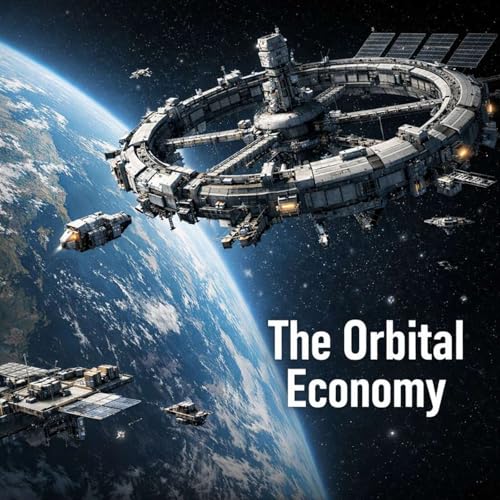
    We explore what an orbital economy really looks like. Not science fiction trade empires, but a gradual buildup of industries that benefit from being in orbit. Tourism, satellite assembly and servicing, and manufacturing processes that only work in microgravity all appear early. Tourism in particular provides revenue and political momentum long before permanent colonies exist.

    We also discuss the constraints that shape early space industry. Launching material from Earth remains expensive, pushing resource extraction toward the Moon and near Earth asteroids. Human biology drives stations toward artificial gravity sooner than many expect.

    If humanity ever becomes a spacefaring civilization, it does not begin on Mars. It begins above Earth. This episode is about the step we keep skipping.

    Support the show

    Website: https://www.entropy-rising.com/

    Show more Show less
    35 mins
  • Ring Worlds, Spin Gravity, and the Limits of Megastructures
    Jan 26 2026

    Planets are a historical accident. Ring worlds are what you build once you understand physics well enough to stop settling for spheres.

    In this episode of Entropy Rising, we break down rotating space habitats from the near term to the absurdly large. We start with practical designs like Stanford tori and early ring stations, then scale up through Bishop rings and Banks orbitals, all the way to full Niven style ring worlds that rival planetary orbits.

    We dig into how spin gravity actually works, why small habitats make people sick, where material limits appear, and which designs collapse under their own physics. We talk atmosphere retention, day night cycles, weather, oceans, radiation shielding, and why most sci fi depictions quietly ignore stability problems that would tear these structures apart.

    This is not a hype episode. Some ring worlds are plausible. Some are only possible with exotic materials or active stabilization. Some probably never work at all. The interesting part is understanding where each design breaks and why.

    If you want to know which megastructures are realistic, which ones are fantasy, and why cylinders may beat rings in the long run, this episode is for you.

    Support the show

    Website: https://www.entropy-rising.com/

    Show more Show less
    45 mins
  • The Great Filters That Explain the Fermi Paradox
    Jan 12 2026

    Why don’t we see aliens, even in a universe this big? In this episode of Entropy Rising, we break down the Great Filters and how they help explain the Fermi Paradox. The idea is simple but unsettling. Somewhere between dead matter and galaxy spanning civilizations, most life gets stopped. We walk through the full chain. From the origin of life, to complex cells, multicellular organisms, intelligence, and finally technological civilizations that should be detectable. Some filters may be behind us. Others may still be ahead. We also talk about why simple life might be common why intelligence may be rare early filters vs late filters what “loud aliens” actually means whether extinction events help or hurt evolution and what it would mean to find evidence of extinct civilizations This episode is less about fear and more about understanding what the silence of the universe might be telling us. If you enjoy discussions on the Fermi Paradox, future civilizations, astrobiology, and long term survival, this one is for you.

    Support the show

    Website: https://www.entropy-rising.com/

    Show more Show less
    34 mins
  • The Future of Weapons, From Drones to Dyson Swarms
    Dec 29 2025

    In this episode of Entropy Rising, we explore how weapons evolve as technology and energy scale up, starting with systems already reshaping modern battlefields and extending into the kinds of weapons only advanced civilizations could realistically build.

    We begin with near-term developments like drone warfare, autonomous systems, and anti-drone countermeasures, looking at why these technologies are changing conflict faster than almost anything else in modern military history. From there, we examine how familiar weapons behave once combat moves into new environments like zero gravity and space, and why many science-fiction staples break down once physics, heat, recoil, and energy constraints are taken seriously.

    As the discussion scales upward, we move into space warfare, unpacking the strengths and limits of lasers, railguns, missiles, and kinetic weapons. Rather than asking what looks impressive, we focus on what actually works, what fails quietly, and what tradeoffs dominate once distances, speeds, and energy budgets become extreme.

    The episode then pushes beyond conventional warfare into civilization-scale weapons. We explore concepts like relativistic kill vehicles, solar-powered lasers, and Dyson swarm infrastructure, not as fantasy superweapons, but as natural extensions of energy collection and propulsion systems an advanced civilization might already be using. At that scale, the line between transportation, industry, and weaponry begins to disappear.

    Throughout the episode, we keep one question front and center: what does physics allow, and what does it forbid? Not every future weapon is practical, and not every powerful system makes sense to deploy. Understanding where those boundaries lie tells us more about the future of warfare than any single piece of technology.

    This episode is for anyone interested in realistic futurism, the science of warfare, and how conflict changes as humanity pushes beyond Earth. No hype, no magic technology, just careful reasoning about what happens when energy, scale, and engineering collide.

    Support the show

    Website: https://www.entropy-rising.com/

    Show more Show less
    42 mins
  • Solar Shades, Cloud Seeding, and the Future of Climate Control
    Dec 15 2025

    What if cooling the planet isn’t just about cutting emissions, but about reshaping the environment itself? In this episode of Entropy Rising, Jacob and Lucas break down the real science behind climate engineering — from solar shades positioned at L1 to sulfur aerosols, cloud seeding, carbon capture, ocean fertilization, and even the far-future idea of nudging Earth’s orbit with gravity tractors. They explore what’s actually feasible, what’s risky, and how these technologies could shape not only Earth’s future, but the climates of Mars, Venus, and any other worlds humanity might settle. This is climate control at planetary scale: the science, the tradeoffs, the engineering, and the long-term consequences we can’t ignore. If you’ve ever wondered how civilizations move from reacting to climate change to actively controlling their environment, this episode is for you.

    Support the show

    Website: https://www.entropy-rising.com/

    Show more Show less
    33 mins