• Real Estate Investor & Community Builder Who Turned Distress Into a $50M Playbook - Fuquan Bilal
    Apr 27 2026
    From boarded-up houses to building an empire — and a community. In this episode, Fuquan Bilal pulls back the curtain on how he moved from small distressed rehabs to raising institutional capital, structuring deals that protect investors, and turning multi-family complexes into thriving communities. This is a conversation about grit, systems, and the ethical ambition of building wealth that lasts. Fuquan walks us through the exact underwriting rules, deal structures, and operational systems he depends on — plus the human side of legacy: how property renovation can become a platform for community uplift. If you want to scale beyond “one-off” flips and build a business that’s resilient, repeatable and value-driven, this is the playbook you need. Key takeaways: The 3x rule: aim to sell a redeveloped property for roughly three times the purchase price to reliably cover costs and profit. Investor protections: use fixed-return debt (e.g., 12% deferred interest) with UCC filings to prioritize lender security and speed deployment. Underwrite defensively: build 15–20% contingencies and shave 15% off ARV to stress-test deals against market shifts. Scale to be better, not just bigger: SOPs, CRM automations, and written processes are the foundation to deploy large capital without chaos. Creative financing & partnerships accelerate track record: joint ventures and seller financing let you increase deal velocity while building credibility. Community-first investing: “complex to community” programming (financial literacy, tutoring, classes) turns property improvements into lasting social value. Legacy is relational: true impact is the skills, discipline and opportunities you leave in people — not just the assets. Timestamps: 00:00 — Intro: From distressed homes to raising $50M (why this season is part two) 01:17 — The area matters: how neighborhood, schools and buyer profile drive product decisions 03:20 — The 3x rule explained: acquisition → teardown → rebuild economics 05:02 — How Fuquan protects investor capital (12% deferred interest, UCC filings) 08:11 — Scaling lessons: SOPs, CRM, and the question “Can you deploy $10M right now?” 11:19 — Creative financing & partnerships: building track record through JV deals 13:39 — Complex to community: programming that creates long-term value and legacy Guest links (as provided in the episode): Website / Investor inquiries: ingcapitalfund.com — schedule a discovery call if you’re an accredited investor Social: Facebook, Instagram, LinkedIn — handle mentioned in episode: @onebelow Learn more about your ad choices. Visit megaphone.fm/adchoices
    Show more Show less
    21 mins
  • From Distressed Properties to $50M Raised – The Hidden Mechanics of Wealth, Trust, and Discipline - Fuquan Bilal
    Apr 22 2026
    Most people want freedom. Almost no one is willing to put in the work it really costs. In this episode of Hacks and Hobbies, host Junaid Ahmed sits down with Fuquan Bilal, CEO of NNG Capital Fund, a real estate investor and educator with over 26 years in the game and more than $50M raised in real estate capital. From shadowing a family member after his corporate job to building a fund that buys distressed notes and transforms communities, Fuquan’s journey is a masterclass in flexibility, creativity, and stewardship of other people’s money. You’ll hear how one creative fourth deal completely rewired how he thinks about real estate, why running a fund is “like having kids,” and how martial arts, faith, and structure shaped his mindset as a capital raiser. This conversation is not just about real estate – it’s about how to build trust, communicate when things go wrong, and become the person investors want to back for life. 5 Key Takeaways Freedom vs. Flexibility: Real estate didn’t give Fuquan instant freedom – it gave him flexibility and control over his destiny, at the cost of 70–80 hour weeks for years. The Fourth Deal That Changed Everything: A creative seller-finance structure where the seller became the lender unlocked a new way of doing deals and generated a powerful early win. From Single Deals to a Fund: After the global financial crisis, Fuquan launched a fund to buy discounted notes from banks, effectively becoming the bank and reshaping his entire business model. How to Earn Investor Trust: Raising $50M wasn’t about hype. It was about radical transparency, relentless communication, education, and white-glove service to mom-and-pop accredited investors. Discipline as a Competitive Edge: Martial arts, faith, and structure gave Fuquan mental toughness and good habits, the same traits he leans on when managing retirement capital and high-stakes decisions. Timestamps [00:00] The Origin Story: From Corporate Job to Real Estate ObsessionJunaid introduces Fuquan and his track record; Fuquan shares how seeing a family member’s real estate win pulled him into the game. [01:31] Why “Freedom” Is a Myth (At First) – The Truth About 80-Hour WeeksFuquan explains why real estate didn’t instantly deliver freedom, but did offer flexibility and control over his destiny. [04:09] The Fourth Deal That Changed Everything – Seller Becomes the BankA creative transaction where the seller became the lender, Fuquan put in $25K, and walked away with a life-changing return. [06:21] After the Crisis: Launching a Fund and Becoming the BankHow the 2008 crash opened the door to buying discounted notes, modifying loans, and building his first fund in 2013. [07:50] Two-Pronged Strategy: Affordable Housing in the South, Luxury in the NorthFuquan breaks down how his fund balances affordable multifamily in the Southeast and luxury spec homes in New Jersey. [09:38] The Real Cost of Managing Other People’s Retirement MoneyWhy running a fund is like having kids, and what it means to be available to investors on Fridays, Saturdays – and late at night. [11:19] How to Raise Capital for the First Time (Without Faking It)Fuquan’s advice for first-time capital raisers: know your market, show real deals, create omnipresence, and understand that they invest in you as much as the deal. [14:18] Martial Arts, Religion, and the Habits That Build an InvestorThe parallels between martial arts, faith, structure, and building the mental resilience needed for long-term success in real estate. Guest Links https://nngcapitalfund.com/https://www.linkedin.com/in/fuquanbilal/https://www.instagram.com/fuquanbilal/https://www.facebook.com/fuquan.bilal.5https://x.com/FuquanBilal Learn more about your ad choices. Visit megaphone.fm/adchoices
    Show more Show less
    21 mins
  • The $100M “Built to Run” System That Turns Chaos Into Scalable Growth - Stewart Ervin
    Apr 20 2026
    Most founders are trapped in firefighting, not building a business that can run without them. In this episode, Junaid sits down with Stewart Ervin, the creator of the trademarked Built to Run $100M System, to dissect exactly how he turns chaotic, plateaued companies into disciplined, highly profitable machines. Stuart shares the six core plays that bring communication, financial clarity, operations, and growth into alignment—so the business can finally scale without the founder doing everything. From taking a company from 50% on-time delivery to 99% in just 90 days, to growing revenue from $60M to $82M while increasing EBITDA year over year, Stuart reveals the frameworks, meeting rhythms, and leadership shifts that separate businesses that merely “survive” from those that are truly built to run. If you feel stuck on a plateau, constantly putting out fires, or scared to step away from the day-to-day, this conversation will feel like a mirror—and a roadmap. 5 Key Takeaways The 6 core plays every founder needs: communication, annual planning, sales funnel, monthly business review, employee plan, and value drivers (pricing, profitable new business, cost reduction). Why most businesses neglect the annual plan first—and how that silently kills growth and discipline. How Stuart turned a company around in 90 days, from chaos and blame to trust, clarity, and reliable execution. The people playbook: job descriptions without names, KPIs, pay ranges, and coaching so employees act like owners. Why you must build like you’ll sell one day, even if you’re not planning an exit—and how focusing on three value drivers transforms valuation. Timestamps [00:00] The Built to Run philosophy (Part 2)How Stuart’s $100M system moves founders from endless planning into real execution. [00:49] Play #1: Communication and the power of “why”Mission, vision, values—and why most employees and customers don’t actually know them. [02:20] Play #2 & #3: Annual plan and the 2–3x sales funnelSetting a true North Star and building a sales funnel that matches your growth ambitions. [04:59] Play #4: Monthly Business Review and alignmentStopping the war between sales and operations by syncing plans, forecasts, and delivery. [05:59] Play #5 & #6: The employee plan and the 3 value driversJob descriptions without names, owner mindset, and focusing on price, cost, and new business. [09:17] Case study: From 50% on-time delivery to 99%The turnaround story that took a business from $60M back to $72M and beyond. [16:41] Exit readiness & valuation mistakes founders always makeWhy you should build like you’ll sell, and how to stop chasing “rabbits” outside the real value drivers. Guest Links – Stewart Ervin www.bracketmgmt.com Learn more about your ad choices. Visit megaphone.fm/adchoices
    Show more Show less
    28 mins
  • The $100M Operator’s System That Saves Broken Businesses From the Brink - Stewart Ervin
    Apr 15 2026
    What if your business isn’t broken – it’s just missing a playbook? In this episode of Hacks and Hobbies, Junaid Ahmed sits down with Stewart Ervin, founder of Bracket Management and creator of the Built to Run – $100M System, an execution-first operating system that has helped companies grow revenue by 36% and net profit by 28% on average. From sweeping floors in his father’s business to turning around a $75M manufacturing company in just 90 days, Stewart reveals how he went from “fixing messes” in aerospace suppliers to formalizing a proven playbook for founder-led businesses that are stuck, stressed, and spinning their wheels. He breaks down why most financials are lying to you, why culture quietly kills execution, and why real value creation comes down to just three levers: pricing, cost control, and profitable new business. If you’ve ever hit a ceiling, watched margins erode, or felt like your company only runs when you do, this episode is a masterclass in turning chaos into rhythm and building a business that is truly built to run without you. 5 Key Takeaways The Operator’s Origin Story – How growing up in his dad’s business and cleaning up failing suppliers led Stewart to discover a repeatable turnaround “playbook.” The “Built to Run” 3-Phase System – Why every scalable business must move through: The 3 Levers That Actually Drive Profit – Why pricing, cost control, and new business growth are the only levers that matter if you want compounding profit. From Shiny Objects to Focused Impact – How Stewart uses discovery, SWOT, process mapping, and an impact–effort assessment to pull founders away from distractions and into high-ROI actions. What Happens When It Finally Clicks – The emotional shift when owners feel relief, employees gain clarity, culture stabilizes, and the numbers finally start to reflect the effort. Timestamps [00:00] From sweeping floors to saving companiesJunaid introduces Stewart Ervin and the $100M Built to Run system, and Stewart shares how his journey started in his father’s business. [01:26] Accidentally discovering a turnaround “playbook”How cleaning up underperforming aerospace suppliers revealed a repeatable pattern for fixing broken operations. [03:57] Relaunching Bracket Management with a missionWhy Stewart revived an old business idea to help entrepreneurs before they hit crisis mode. [04:38] The moment everything “clicked” about businessStewart’s early lesson: operations and finance are inseparable—and businesses win when every link in the chain is connected. [06:58] The $100M System: the 3-phase Built to Run modelStewart breaks down his execution-first operating system: pristine financials, forward planning, and value creation. [13:13] The only 3 levers that truly grow profitA deep dive into pricing, cost control, and profitable new business—plus a case study that added $10M in a year. [16:58] Stopping the “shiny object” spiralHow two-day onboarding, SWOT, process mapping, and impact–effort scores keep founders laser-focused on what actually moves the needle. [20:30] When the system works: relief, culture shift, and profitThe emotional and financial transformation Stewart sees when owners commit to the Built to Run approach. Guest Links – Stewart Ervin & Bracket Management Website: https://bracketmgmt.com Company Overview: Learn more about the Built to Run and $100M System at https://bracketmgmt.com Learn more about your ad choices. Visit megaphone.fm/adchoices
    Show more Show less
    29 mins
  • The Autism Mom Who Built America’s First Autism Treatment Franchise - Nichole Daher
    Apr 13 2026
    What do you do when the system fails your child? For Nichole Daher, the answer was simple but terrifying: you build something better yourself. When her daughter was diagnosed with moderate to severe autism, Nichole entered a world of locked doors, opaque therapies, and age limits that cut off treatment just when families needed it most. In this emotional and brutally honest conversation, Nichole shares how she went from a desperate parent on waiting lists to the founder of Success on the Spectrum, the first autism treatment franchise in the United States. She reveals the raw fear of dropping off a nonverbal child behind closed doors, the frustration of being denied services after age seven, and the lonely journey of teaching herself everything—from insurance billing to trademarks—just to create a safe place for her daughter. This is not a business story that started with a business plan. This is a story that started with a mother refusing to accept “there’s nothing more we can do.” Key Takeaways How a devastating autism diagnosis became the catalyst for a nationwide movement in autism therapy. The dark side of traditional ABA clinics: lack of transparency, parent exclusion, and arbitrary age cut-offs. Why Nichole built a clinic parents could literally watch into, with live-stream cameras and open access. The lonely reality of building a healthcare business from scratch with no industry experience—learning insurance, legal, and operations by herself. How franchising turned one mother’s solution into 75+ locations across 18 states, and why many are owned by autism parents just like her. Timestamps [00:00] The intro that changed everything – Why Nichole’s story matters for every parent and entrepreneur. [00:02] The diagnosis and the golden standard – Hearing “moderate to severe autism” and discovering ABA therapy. [00:02:50] Behind closed doors – The fear of leaving a nonverbal child with strangers and not being allowed inside. [00:03:30] A clinic built for one little girl – How Nichole designed a space first for her daughter… and then for many more. [00:05:15] Teaching herself the entire industry – Insurance, claims, trademarks, patents: what it really took to open the first clinic. [00:06:40] When success becomes a new kind of failure – Long waiting lists, full capacity, and the pain of saying “we can’t take your child.” [00:07:30] From clinic to franchise – The leap into building the first autism treatment franchise and scaling to 75 locations. Guest Links Website: www.SOSfranchising.comNichole’s Facebook: https://www.facebook.com/NicholeDaher/Nichole’s LinkedIn: https://www.linkedin.com/in/nichole-daher-b9b30150 Learn more about your ad choices. Visit megaphone.fm/adchoices
    Show more Show less
    28 mins
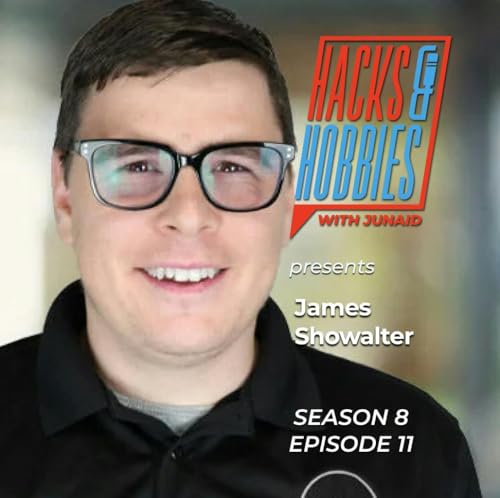
  • James Showalter — From Hurricane Survival to Disrupting a $100B Industry (Founder of Signature Solar, EG4 & Solar 76)
    Apr 8 2026
    He survived hurricanes, built a system in his backyard — and then built a company that took on the solar incumbents. In this raw, curiosity-driven conversation James Showalter explains how necessity, grit and obsessive customer focus turned a DIY garage project into a hardware and battery empire that scaled to tens of millions without VC. Expect candid stories about broken batteries, brutal permitting, value-driven pricing, and the moment he decided to build a “Solar Home Depot.” James unpacks practical technical lessons, the human side of selling resilience, and the strategic playbook he used to scale with tight cash, multiple “exit doors,” and a relentless obsession with transparency. If you want to understand how everyday homeowners can actually win against the power company — and why batteries matter more than you think — this episode is a field guide. Key takeaways: How blackout-driven curiosity evolved into a repeatable business model for resilient home energy. Why upgradeability, batteries and honest pricing beat flashy sales tactics every time. The procurement and risk-management tricks James used to scale to $70M without VC. Why whole-home battery backup changes the value equation of residential solar. The regulatory and permitting bottlenecks that block adoption — and practical workarounds. Timestamps: 00:00 — Intro: How hurricanes shaped a founder’s obsession 01:53 — The spark: First DIY systems and early tech mistakes 05:14 — Doubling capacity: panels vs. batteries — what actually moved the needle 08:59 — From hobby to business: the moment neighbors became customers 12:04 — Breaking industry norms: building a transparent “Solar Home Depot” 16:51 — Scaling without VC: cash discipline, exit doors and procurement plays 23:39 — Why batteries matter: whole-home backup vs. day-only solar Guest links: LinkedIn (James Showalter): https://www.linkedin.com/in/james-showalter-9a0599156/ SEO & distribution notes (optional to include with episode):Use keywords: James Showalter, Signature Solar, EG4, Solar76, DIY solar, battery backup, residential energy independence, solar permitting, solar procurement. Suggested episode description for platforms: “James Showalter explains how hurricane survival led to building a solar hardware business that prioritizes transparency, batteries, and real resilience — scaled to millions without VC.” Learn more about your ad choices. Visit megaphone.fm/adchoices
    Show more Show less
    43 mins
  • Tom Freiling — Publishing Powerhouse: Why AI Is Forcing Authors to Become More Human
    Apr 6 2026
    From telemarketing to shaping New York Times bestsellers — Tom Freiling’s publishing journey is a lesson in curiosity, grit and human storytelling. In this episode Tom pulls back the curtain on 30+ years in publishing, the shift from bookstore gatekeepers to Amazon-era discoverability struggles, and why the rise of AI makes the uniquely human elements of a book more valuable than ever. Tom shares hard-won operational lessons (how a bootstrap mindset scales), the mistakes that make self-published books “dead on arrival,” and practical frameworks for coaches, founders and creators who want to turn lived experience into a book that actually sells. Five key takeaways The bookstore era vs. the Amazon era: discoverability changed — best‑seller lists and reviews now act as gatekeepers. Bootstrapping shapes smarter decisions: founders without outside capital often make fewer costly mistakes. Common rookie error: one small oversight in writing, packaging or distribution can make a book DOA. AI is accelerating book production, but readers detect the lack of genuine human voice — inject your story, imperfections and point of view. Break a book into bite-sized chunks and always write with the reader’s problem/solution in mind, not just your life story. Timestamps 0:00 — Intro: How Tom’s accidental telemarketing job became a 30‑year publishing career3:30 — The Viktor Frankl lesson: why concise, meaningful books win readers’ hearts8:00 — Then vs. now: bookstores as gatekeepers and the Amazon discovery problem12:35 — Building to acquisition: first‑mover advantage + bootstrap discipline17:00 — Common first‑time author mistakes that kill book launches (DOA books)22:45 — Print on demand vs. large runs: logistics when a book unexpectedly sells out23:50 — AI and authorship: spotting AI manuscripts, why human stories still matter31:25 — Practical starter steps: breaking the book into chunks and focusing on reader outcomes Guest links Website: https://freilingagency.com Recommended reading mentioned Viktor Frankl — Man’s Search for Meaning SEO & diary-style pitch (one-liner for socials) A raw, curiosity-driven conversation with Tom Freiling — from selling books by phone to shepherding bestseller authors — about why AI will flood the market, and why the human story is now the competitive advantage every author needs. Learn more about your ad choices. Visit megaphone.fm/adchoices
    Show more Show less
    43 mins
  • How Dan Schinder Built a 100M‑View Media Brand With Zero Ad Spend — And Why Almost Everyone Is Wrong About Hashtags
    Apr 1 2026
    What if everything you’ve been taught about social media growth is wrong? In this episode, returning guest Dan Schinder — founder of Drum Talk TV, a global media brand reaching over 100 million people a year organically — breaks down how he did it without ads, SEO tricks, or jumping on every “trending” hack. From celebrating 10+ years of Drum Talk TV and launching a virtual membership playground for music fans, to dismantling the “hashtag hustle” and exposing how most creators are just copying the herd, Dan shares a radically simple but deeply disciplined approach to content, community, and long-term brand building. If you’ve ever felt exhausted by algorithms, confused about what to post, or pressured to follow every new social media “rule,” this conversation will reset how you think about marketing, audience growth, and creating content that actually converts. In this episode, you’ll learn: How Drum Talk TV still reaches ~100M people a year organically across platforms Why video is still king—and the only thing that really matters in the first 10 seconds The hashtag strategy almost everyone gets wrong (and how Dan “brands” hashtags to win) How to turn social media from a shouting match into a community engine The content ratio Dan uses: 70–80% community, 20–30% promotion—and why it works in any niche Timestamps [0:00:27] Dan returns: from pro drummer to global media brandHow Drum Talk TV went from an idea to a worldwide platform and what’s changed since his first appearance. [0:03:31] Reaching 100M people a year — with zero ad spendDan explains how Drum Talk TV still “crushes it” despite algorithm changes and without paying for traffic. [0:04:16] Inside the Drum Talk TV membership “virtual playground”The 3D virtual theaters, live stream concerts, fan Q&As, and why he built a platform away from social media chaos. [0:07:35] TikTok, logos, and when AI gets it wrongWhy TikTok keeps flagging Drum Talk TV content and how that’s shaping their platform decisions. [0:08:45] The evolution of video: from 3‑minute rules to 15‑second hooksHow Facebook’s monetization rules changed, why shorter marketing videos now work, and what stayed the same. [0:10:25] “Video is still king” — and what actually drives viewsDan reveals what truly matters more than hashtags, trends, or algorithms when it comes to watch time. [0:10:51] The brutal truth about hashtags and the “herd mentality”Why “trending” hashtags don’t help you, how to brand your own hashtags, and how that changed Drum Talk TV’s searchability. [0:17:48] Depth over vanity: building real action from contentJunaid shares his beekeeping story as a perfect example of niche content leading to real-world action. [0:25:27] Escaping the herd: succeeding beyond “monkey see, monkey do”Dan’s framework for creating content that gives value, builds brand love, and actually sells—without spamming. [0:27:55] Community content for any business (even a pooper‑scooper company)How to find endless “community-building” content ideas for car dealerships, nurseries, and the toughest niches. [0:31:21] Why spammy outreach fails and real marketing winsA candid look at spam on LinkedIn, email, and why most people refuse to truly learn marketing. Key Takeaways (DOAC‑style, curiosity‑driven) You don’t need ads to grow big. Drum Talk TV reaches about 100 million people a year organically by focusing on content, not spend. Hashtags are not what you think. Dan argues most people are playing the “hashtag hustle” wrong and shows how branded hashtags make your content discoverable and measurable. Short vs. long video isn’t the real question. The first 10 seconds of your video matter more than length, format, or platform if you want real watch time. Stop posting like a walking billboard. Dan recommends 70–80% community-building content and only 20–30% promotional—or your audience will tune you out. Think like a human, not a marketer. From car dealerships to pooper scooper services, the brands that win are the ones that teach, entertain and help first, then sell. Guest Links – Dan Schinder Drum Talk TV Membership (Virtual Playground):https://drumtalktvbrilliance.comUse code DTTVBDANFREE (all caps) for 1 free year of the first premium level (no strings attached, as mentioned in the episode). Drum Talk TV (Main Brand):Likely via Facebook & other platforms — search “Drum Talk TV” on: Facebook YouTube Instagram X (Twitter) Dan Schinder on LinkedIn:Search “Dan Schinder Drum Talk TV” on LinkedIn to connect with him and see more of his content and training. Instagram (Brand):Search “Drum Talk TV” on Instagram for curated drummer and music content, event coverage, and show clips. Learn more about your ad choices. Visit megaphone.fm/adchoices
    Show more Show less
    52 mins