• What are the Boundries of Realities in Health and Wellness
    Apr 2 2026

    doing anything, said Albert Einstein.

    My name is Kadiyali Srivatsa. I brought tears of happiness to the eyes of 1000s of adults and children who suffered, until one cold winter day in December 1989.

    A healthy boy aged 14 years walked into A&E in a hospital and died holding my hand that very evening.

    WHY?

    We scientists were so preoccupied with whether or not we could, that we did not stop to consider if we should. It is ironic that a science fiction film, Jurassic Park, aptly describes the medical crisis we face today. I am not talking about saving modern medicine, but about saving the lives of people like you. We are now confronting a mortal enemy that surpasses our own intelligence.

    A tiny microorganism has indeed brought us to our knees. It has learned from us, adapted to us, and now exploits our genetic vulnerabilities with lethal precision. Sadly, those who dare to speak up are ridiculed, ignored, dismissed, and often ostracised by members of our own profession.

    Yet the death toll mounts, while our greed, addiction toward, over enthusiastic urge to encourage consultation, perform tests, procedures, hospitalisation and antibiotic abuse escalates at alarming rates.

    Pharmaceuticals, medical device manufacturers, government, and even some doctors ignore this Elephant in the room.

    By not safeguarding the miracle drug as custodians, we have allowed antibiotics to be used to fatten chickens, treat animals, and encourage nurses with no formal medical training to utilise our skills, diagnose illnesses, prescribe drugs, and sell antibiotics without prescriptions. We have now lost the only drug that helped us fight infections, learn more about our bodies, make medical advances possible, perform surgical procedures, transplants, IVF, and save millions of lives. I sincerely hope we will change this destructive pattern of consultation and illness management.

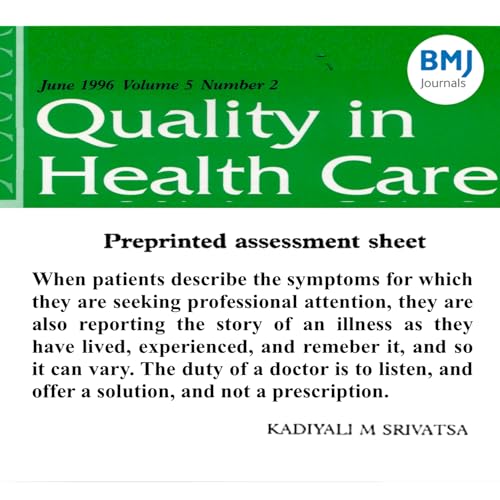
    In 1996, I published an article in the British Medical Journal to remind my colleagues that “The duty of a doctor is to listen to the story of a person”. My mission is to help encourage members of our profession to share knowledge, innovate, and develop products and methods to fight infection. Using advances in communication technology, I hope to provide basic healthcare to fellow humans, reduce healthcare costs, and decrease cross-infections that cause pain and suffering worldwide.

    We must stop greedy entrepreneurs from commercialising our service to humanity.

    Before I start rattling on about Our Ancestors, teachers, or our contribution to protecting humanity, Innovations, and fighting institutions, hospitals, and politicians for offering Sub-Standard care to fellow humans.

    I beg members of my profession to shun their Ego, Share Knowledge, communicate, Communicate And Join Hands with us and help us stop this Elephant, In The Room, that is now,

    Threatening our Profession and Our Very Existence.

    #PremaKiosk. #DrMayaAI, #DigitalHealthIndia, #HealthcareInnovation, #CommunityHealthcare, #FutureOfHealthcare,

    #PreventiveHealthcare, #AIinHealthcare, #SmartHealthcare, #HealthTechIndia, #InfectionPrevention, #PandemicPreparedness, #AntimicrobialResistance, #PublicHealthInnovation, #EarlyDetection, #HealthSecurity,, #DiseasePrevention, #OutbreakPrevention, #HealthcareSafety,#ProtectYourFamily, #HealthForAll #DignityInHealthcare, #FamilyFirstHealth, #HealthyCommunities, #ApartmentLivingIndia, #CommunitySafety, #SmartSociety, #SocialInnovation, #PurposeDrivenBusiness, #HealthcareStartup, #SocialEnterprise, #ArtificialIntelligence, #DigitalTransformation, #FutureTechnology, #TechForHumanity, #AI, #AIinHealthcare, #DrMayaAI, #DrMayaGPT, #Drkadiyalisrivatsa, #MayaMeditation, #AMR, #Antibiotics #doctors, #Doctor, #MayaAI #NewIndiaHealth,

    Show more Show less
    4 mins
  • Dr Kadiyali Srivatsa used Ancient Indian Philosophy to create revolutionary Medical Triage System "Clinical AI assisted Life Saving Medical triage
    Apr 10 2026

    Dr. Kadiyali Srivatsa made a protected disclosure after he collected evidence to prove wrongdoings he observed and identified the reason for in a pilot nurse-led practice in Woking. He was the salaried GP where nurses were allowed to consult registered patients, examine if necessary, and offer advice or treatment. The project aimed to see if the NHS could adopt this model and create an independent nurse-led practice that provides medical advice to citizens within the NHS.

    Dr Srivatsa identified numerous problems because the patient was managed by nurses in the same practice and at the three local Walk-in clinics established in Woking by Surrey PCT as a “Pilot project”. Dr Srivatsa was employed as the trainer and assessor of nurse prescribers in this pilot project.

    Once he was convinced that this method was unsafe, because there was a delay in making the correct diagnosis and providing the appropriate treatment. This is unethical because the first duty of a doctor is to make the correct diagnosis early to prevent complications, and not to "Save lives" as people have been brainwashed to believe.

    Doctors know all about drugs, dose and how they work. The only drug that cured bacterial infection was Antibiotics, but now they don’t work as they used to. Drugs rarely cure and mainly offer symptomatic treatment, such as anti-inflammatories, antidepressants, antivirals, and steroids to mask symptoms, but they are not designed to eliminate the cause.

    Allowing nurses to be the first point of contact gave patients the false impression that they have the knowledge and experience to diagnose, leading them to trust that the treatment will cure their illness. This is what he calls a false sense of security. Simple illnesses like a throat infection can result in a tonsillar abscess when the antibiotic dose is too low and serious illnesses are missed, requiring emergency care, as in many cases HE has shared.

    Once he was convinced, he collected information to prove his concern, and made a protected disclosure, assuming the Chairman of Surrey PCT would contact me, discuss, and see my evidence, but he did not.

    Three months later, he received an email informing him that the message had been passed on to the Manager of the Walk-in Clinic and the Pilot Nurse-led Practice. Unfortunately, the complaint was detrimental to them because they were the ones making the clinical errors, known as "Negligent Care."

    NotebookLM AI reviewed the documents he shared, explaining cases and reports of enquiry, and illegally removed his name from the Performers list, preventing him from working as a doctor. His case was reviewed in the Grievance Proceedings, but they did not respond to the 99 points he listed because the BMA representative told them it is not necessary to conceal the truth to protect the NHS. All she was insisting on was reinstating his name on the performers’ list. The PCT also appointed a doctor, paying him £1000 to access my confidential notes without my or the patient's consent, in violation of the "Colldicot Principle." He reported this to the GMC, but no action was taken, and the doctor was appointed as a board member.

    Show more Show less
    45 mins
  • The Deadly Cost of Tick Box Medicine
    Apr 10 2026

    Checklists are widely seen as a major achievement in modern safety. Naturally, they are used in many fields. We include checklists in airplane cockpits so pilots don't forget to lower the landing gear and prevent aircraft crashes. We have checklists in operating theatres so surgeons don't operate on the wrong limb or leave us behind. Someone. Yeah, exactly. So why wouldn't we want junior doctors to use checklists to ensure they remember to ask all the necessary questions? It's a very reasonable assumption, and honestly, that’s the very logic institutions follow when implementing these tools initially. It makes sense on paper.

    However, the key distinction that Doctor Srivatsa's letter highlights is between a safety checklist used after a decision is made and a diagnostic checklist used to make the decision in the first place. That's a really interesting difference. Yeah.

    Yes. This involves actively listening to the patient's story, picking up on their tone, noticing what they emphasise and what they omit. That is the absolute foundation of clinical medicine. It's a conversation, not a survey. Exactly. It's a highly active, dynamic cognitive process. It requires the doctor to act like an investigative detective. So how does a piece of paper disrupt that investigative process?

    Well, when you give a practitioner a preprinted sheet of prompts, you are essentially short-circuiting their independent clinical reasoning. They simply stop using their brains to dynamically collect and analyse the data in front of them because they're just reading the next line. Exactly. The psychology of the encounter shifts entirely. The practitioner's goal is no longer to solve the mystery of the patient. Their aim becomes merely to find the specific answers needed to fill in the blanks on the form. The form then dictates the conversation.

    The form truly governs the room. Yes. And the behavioural impact of this, as outlined in the sources, is so vivid and so widely recognisable. Think about the last time you were in a clinic. It physically changes the space in the room, doesn't it? It certainly does. The practitioner breaks eye contact with you. You're sitting there. You might be in severe pain, or worried about a symptom you've been experiencing, and the person who is supposed to be healing you is staring down at a clipboard. Or, more likely today, they have their back turned to you, staring into the glowing rectangle of a computer monitor, typing as you speak.

    Yes, the act of typing is maddening, and losing eye contact is devastating for the doctor-patient relationship. It truly is the first domino to fall in a misdiagnosis. So, mechanically, what happens? Well, when contact is broken due to the checklist, the patient immediately feels unheard. They feel reduced to a data point on a conveyor belt. Yeah, you just feel like a number, right?

    And the sources point out that when a patient senses that the doctor is not genuinely interested in understanding their specific problem, but is instead just processing them through a standard procedure, the patient loses confidence. This makes perfect sense, and because of that, they might actually withhold information, feeling rushed or perceiving the doctor's questions as irrelevant to what they are truly experiencing. Right, because the patient's actual problem might not fit neatly into any of the predefined boxes on that specific assessment sheet. Exactly, and that is where the delay in diagnosis occurs.

    Show more Show less
    34 mins
  • The danger of diagnosing using Preprited Assessment - Checklist that junior Doctors are forced to complete before listening to the story of the illness as you have lived, experienced and Remember it.
    Apr 10 2026

    Checklists are widely seen as a major achievement in modern safety. Naturally, they are used in many fields. We include checklists in airplane cockpits so pilots don't forget to lower the landing gear and prevent aircraft crashes. We have checklists in operating theatres so surgeons don't operate on the wrong limb or leave us behind. Someone. Yeah, exactly. So why wouldn't we want junior doctors to use checklists to ensure they remember to ask all the necessary questions? It's a very reasonable assumption, and honestly, that’s the very logic institutions follow when implementing these tools initially. It makes sense on paper.

    However, the key distinction that Doctor Srivatsa's letter highlights is between a safety checklist used after a decision is made and a diagnostic checklist used to make the decision in the first place. That's a really interesting difference. Yeah.

    Yes. This involves actively listening to the patient's story, picking up on their tone, noticing what they emphasise and what they omit. That is the absolute foundation of clinical medicine. It's a conversation, not a survey. Exactly. It's a highly active, dynamic cognitive process. It requires the doctor to act like an investigative detective. So how does a piece of paper disrupt that investigative process?

    Well, when you give a practitioner a preprinted sheet of prompts, you are essentially short-circuiting their independent clinical reasoning. They simply stop using their brains to dynamically collect and analyse the data in front of them because they're just reading the next line. Exactly. The psychology of the encounter shifts entirely. The practitioner's goal is no longer to solve the mystery of the patient. Their aim becomes merely to find the specific answers needed to fill in the blanks on the form. The form then dictates the conversation.

    The form truly governs the room. Yes. And the behavioural impact of this, as outlined in the sources, is so vivid and so widely recognisable. Think about the last time you were in a clinic. It physically changes the space in the room, doesn't it? It certainly does. The practitioner breaks eye contact with you. You're sitting there. You might be in severe pain, or worried about a symptom you've been experiencing, and the person who is supposed to be healing you is staring down at a clipboard. Or, more likely today, they have their back turned to you, staring into the glowing rectangle of a computer monitor, typing as you speak.

    Yes, the act of typing is maddening, and losing eye contact is devastating for the doctor-patient relationship. It truly is the first domino to fall in a misdiagnosis. So, mechanically, what happens? Well, when contact is broken due to the checklist, the patient immediately feels unheard. They feel reduced to a data point on a conveyor belt. Yeah, you just feel like a number, right?

    And the sources point out that when a patient senses that the doctor is not genuinely interested in understanding their specific problem, but is instead just processing them through a standard procedure, the patient loses confidence. This makes perfect sense, and because of that, they might actually withhold information, feeling rushed or perceiving the doctor's questions as irrelevant to what they are truly experiencing. Right, because the patient's actual problem might not fit neatly into any of the predefined boxes on that specific assessment sheet. Exactly, and that is where the delay in diagnosis occurs.

    Show more Show less
    26 mins
  • The danger of diagnosing by checklist - Protocol or strictly following NICE Guidlines in the NHS Primary Care in the UK
    Apr 10 2026

    Well, when you give a practitioner a preprinted sheet of prompts, you are essentially short-circuiting their independent clinical reasoning. They simply stop using their brains to dynamically collect and analyse the data in front of them because they're just reading the next line. Exactly. The psychology of the encounter shifts entirely. The practitioner's goal is no longer to solve the mystery of the patient. Their aim becomes merely to find the specific answers needed to fill in the blanks on the form. The form then dictates the conversation.

    The form truly governs the room. Yes. And the behavioural impact of this, as outlined in the sources, is so vivid and so widely recognisable. Think about the last time you were in a clinic. It physically changes the space in the room, doesn't it? It certainly does. The practitioner breaks eye contact with you. You're sitting there. You might be in severe pain, or worried about a symptom you've been experiencing, and the person who is supposed to be healing you is staring down at a clipboard. Or, more likely today, they have their back turned to you, staring into the glowing rectangle of a computer monitor, typing as you speak.

    Yes, the act of typing is maddening, and losing eye contact is devastating for the doctor-patient relationship. It truly is the first domino to fall in a misdiagnosis. So, mechanically, what happens? Well, when contact is broken due to the checklist, the patient immediately feels unheard. They feel reduced to a data point on a conveyor belt. Yeah, you just feel like a number, right?

    And the sources point out that when a patient senses that the doctor is not genuinely interested in understanding their specific problem, but is instead just processing them through a standard procedure, the patient loses confidence. This makes perfect sense, and because of that, they might actually withhold information, feeling rushed or perceiving the doctor's questions as irrelevant to what they are truly experiencing. Right, because the patient's actual problem might not fit neatly into any of the predefined boxes on that specific assessment sheet. Exactly, and that is where the delay in diagnosis occurs.

    The doctor is asking questions in the rigid sequence printed on the sheet. They are actively failing to recognize the holistic problem the patient is desperately trying to convey because their attention is just anchored to the paper. Yeah, in his 1996 letter, Doctor Srivatsa pointed out that this fill-in-the-blank mentality requires absolutely no special. History taking skill?

    Wow. That's a bold claim, but it's true. It trains an entire generation of future clinicians to be meticulous data entry clerks, but leaves them completely unequipped to analyze complex, contradictory, or ambiguous data in their own minds. Right, and in an emergency situation where intuition and rapid pattern recognition are required. Forcing A clinician to follow a rigid script instead of homing in on critical signs that can result in deadly delays. Very deadly, as we'll see. So if this was so clearly called out in 1996 as a highly dangerous practice that degrades the diagnostic process, how on earth did it become the global standard?

    That is the big question, I mean. How did we get to a point where doctors are practically penalised for not following these algorithms?

    Show more Show less
    26 mins
  • The human cost of cookbook medicine that nurses and chemist are forced to follow by healthcare providers ignoring warning published in QCJ (BMJ)1996
    Apr 10 2026

    Much darker picture, really. Yeah, it is. We're synthesising a vast array of materials today, starting with these harrowing real-world medical case histories documented by Dr Kadali Srivatsa. We're going to examine a deeply critical letter he published in the British Medical Journal's Quality Peer Journal. This was way back in 1996, warning about the exact path medicine was taking. Yeah. And we're also looking at academic papers on AI-supported shared decision making, which I know is a total mouthful. It really is a mouthful, but we will break it down.

    Exactly how it might be the lifeline this broken system actually needs, and we're going to explore extensive analysis of evidence-based medicine and the regulatory frameworks that govern how doctors are actually allowed to care for you, right? The actual rules they have to follow exactly now because our sources touch heavily on massive. Government health care policies and institutional guidelines, specifically looking at the realities of systems like the UK's national health service, the NHS, and also the US medicare rules,

    What truly happens to human biology and behaviour when a medical system puts an algorithm before the individual? And this is the core question you should keep in mind as we go on this journey today. What actually occurs when a healthcare provider looks at a checklist on a screen or a flow chart on a piece of paper instead of looking at you, the patient, sitting right in front of them? .

    OK, let's go back. We are discussing the preprinted assessment sheet. I mean, where did this even originate? It seems like doctors used to simply, you know, speak with you. Yes, they did. To trace the source of this particular crisis in clinical care, the references direct us straight to that 1996 critique. Published in the Quality Care Journal. Exactly, the doctor's letter. Doctor Srivatsa wrote a letter that served as a major warning signal to the medical establishment. He was working in clinics and hospitals and quickly noticed this growing trend. And what was that trend precisely?

    However, the key distinction that Doctor Srivatsa's letter highlights is between a safety checklist used after a decision is made and a diagnostic checklist used to make the decision in the first place. That's a really interesting difference. This involves actively listening to the patient's story, picking up on their tone, noticing what they emphasise and what they omit. That is the absolute foundation of clinical medicine. It's a conversation, not a survey. Exactly. It's a highly active, dynamic cognitive process. It requires the doctor to act like an investigative detective. So how does a piece of paper disrupt that investigative process?

    The doctor is asking questions in the rigid sequence printed on the sheet. They are actively failing to recognise the holistic problem the patient is desperately trying to convey because their attention is fixed on the paper. Yeah, in his 1996 letter, Doctor Srivatsa pointed out that this fill-in-the-blank mentality requires absolutely no special. History taking skill?

    Right, and in an emergency situation where intuition and rapid pattern recognition are required. Forcing A clinician to follow a rigid script instead of homing in on critical signs that can result in deadly delays. Very deadly, as we'll see. So if this was so clearly called out in 1996 as a highly dangerous practice that degrades the diagnostic process, how on earth did it become the global standard?

    That is the big question, I mean. How did we get to a point where doctors are practically penalised for not following these algorithms?

    Show more Show less
    38 mins
  • The System That Destroys Whistleblower Doctors Kill Medical Profession
    Apr 8 2026

    What will you say if your entire treatment is just dictated by this inflexible flow chart? So what happens when a doctor, you know, actually tries to hit the emergency stop button on that assembly line because it is literally hurting people?

    Well, based on the documents we are looking at today, the system essentially destroys them. It does. And that is exactly what we were unpacking in this deep dive. We are acting as your investigative guides today, digging into a massive, highly charged stack of whistleblower documents. Yeah, these are audio files, written statements and direct accounts from Doctor Kadali M Srivatsa. He is a veteran intensive care unit. A doctor and a General practitioner who spent over 40 years in the UK's National Health Service, right, the NHS, and just to set the parameters right up front for you listening, we have a very specific mission today.

    The claims we are exploring contain incredibly serious, politically charged allegations against a massive state. Institutions, Massive ones. We are talking about the General Medical Council with the GMC, the Royal Colleges, local medical councils, and the whole regulatory apparatus. Exactly. And to be completely clear, we are not here to take sides. We aren't endorsing specific viewpoints or declaring legal guilt.

    Our job is just to rigorously unpack the evidence and the narratives. Presented in this specific source material so you can actually understand this really profound ethical battle that the sources say is happening right now behind closed clinic doors, right? Because the core conflict here is staggering. The documents, specifically his updated statement about the GMC and his proposed solutions, alleged that. The organisations we trust to protect patients are actually colluding. Yeah, colluding to conceal systemic failures and that they actively harass, humiliate, and systematically ostracise doctors who challenge their protocols, especially doctors who challenge things like the NICE guidelines. So let's start there.

    OK, but let me play devil's advocate here for a second. If you look at a socialised system like the NHS, you are managing the health of over 60 million people. You have finite resources, right? This is a massive logistical challenge. Yeah. So standardisation isn't just a nice-to-have; it is practically an operational necessity. I mean, without flow charts, how do you manage triage? How do you stop a rogue doctor from just prescribing wild, unproven stuff? And that is exactly the institutional defence. They say standardisation. Raises the baseline of safety. But Doctor Srivatsa material forces us to look at the collateral damage of that standardisation, the people who fall outside the average. Exactly because strict adherence to a population average actively devalues outliers.

    A clinical commissioning group actually refused to follow a specific guideline because they felt there was insufficient evidence for it in that situation. They used their professional judgment, but it went to court, and the judge ruled that they simply disagreed with the guidance. It was not a sufficient legal defence. Wait, really? So even if your 40 years of experience tells you a standard treatment will hurt the specific person in front of you, the law says you have to do it anyway. Pretty much, you are legally punished for treating the individual instead of this statistic.

    Yes, nurses who are incredible but just don't have the same. Decade-long diagnostic training as doctors were being pushed to take on really complex diagnostic responsibilities. And thereis an analogy in the video sources that perfectly nails what is going on here. The structural engineer versus the electrician. It is a great analogy.

    Show more Show less
    25 mins
  • The NHS trapdoor for Medical Whistleblowers to Deter Doctors raising concerns if they identify wrong doings, unethical medical practice that inflict pain and suffering to humanity
    Apr 8 2026

    If you were a 25-year-old medical student entering the UK workforce today and witnessing this, the message is unmistakable. Staying silent is the only way to survive. The system will not protect you; it will isolate you, bankrupt you, and discard you. The human toll on Doctor Srivatsa is a profound tragedy. I will not diminish the suffering he endured due to those administrative failures, but we must not allow his specific outcome to define the tragedy. To rewrite the fundamental ethics of medicine, even when those ethics are used against doctors, the World Medical Association and the GMC's Good Medical Practice Manual are crystal clear.

    NHS Whistleblower: The Truth About Medical Negligence & Doctor-Centred Care

    Reporting unsafe colleagues is not a voluntary heroic act. It is an essential, non-negotiable duty if you witness a nurse misdiagnosing. Whether it's a rash or a systemic failure that risks transmitting superbugs, you must report it. Ethical obligations do not vanish just because the regulatory system is deeply flawed, clumsy, or because you lack a local network to support you. If medical students abandon their duty to whistleblow out of fear, the system collapses entirely and patients suffer or die.

    The moral injury of remaining silent while patients are harmed is far worse than the professional risk of speaking out. It is very easy to claim that the moral injury is worse when you aren't the one being bankrupted by the state. I am not convinced that you can ask a junior doctor to throw themselves on a grenade when the system is deliberately designed to make that grenade destroy them while safeguarding the hospital's budget. And that remains a quite bleak perspective.

    To sum up my stance from our discussion, the documented retaliation against Doctor Srivatsa violently reveals a regulatory system that suppresses. It prioritises protecting institutional reputation and finances over individual doctors. When a doctor highlights the risks of substituting medical expertise with algorithms and untrained staff, institutions weaponise their investigative protocols, breach confidentiality, and entertain fabricated claims. They also use scientifically unqualified tribunals to remove the threat. While administrative failures and local management corruption may cause severe human suffering, the fundamental frameworks—standardised care and protocols—remain essential and are based on solid scientific principles.

    The source material offers much more to explore regarding regulatory capture, systemic bias, and patient protection. We leave it to you to decide whether the current system can be relied upon to uphold the truth or if pulling that ‘red cord’ merely risks opening a trap door beneath your own feet.

    NHS whistleblower story, medical negligence NHS, patient safety failures UK, unethical healthcare system, doctor-centred care dangers, healthcare corruption UK, NHS scandal real story, medical ethics violation, patient-centred care vs doctor-centred care, healthcare system failure documentary, hidden truth about NHS, shocking medical negligence story, destroyed by the healthcare system, truth doctors won’t tell, victims of medical system, healthcare injustice real case, whistleblower exposed, institutional betrayal healthcare, system failed me story, medical harm cover up, NHS whistleblower full story podcast, real story of medical negligence UK doctor, how healthcare system destroyed my life, why doctor centred care is dangerous, truth about NHS patient safety failures, how misdiagnosis ruined a family, healthcare system corruption explained, doctor exposing unethical medical practices, podcast on medical injustice UK, doctor

    Show more Show less
    21 mins