Power Up Recovery with Nutrition Podcast Podcast By Academy for Addiction and Mental Health Nutrition cover art

Power Up Recovery with Nutrition Podcast

Power Up Recovery with Nutrition Podcast

By: Academy for Addiction and Mental Health Nutrition
Listen for free

Explore the powerful connection between nutrition, mental health, and addiction recovery with Christina Veselak, a trailblazer in nutritional mental health and founder of the Academy for Addiction and Mental Health Nutrition. This interview-based podcast, "Power Up Recovery with Nutrition," dives deep into how amino acids and targeted nutritional strategies can transform brain chemistry, build resilience, and support sustainable recovery. Christina's expertise is showcased through engaging interviews with leading experts, practitioners, and inspiring voices from the recovery community, as well as solo episodes addressing key topics in the field. Whether you're on a personal recovery journey, a functional nutritionist seeking advanced tools, or a healthcare professional eager to expand your knowledge, this podcast offers practical advice, compelling stories, and the latest innovations. Academy members will find it an invaluable resource for deeper learning and staying connected to cutting-edge practices. Explore how Christina Veselak bridges the gap between nutrition and mental well-being, one conversation at a time. Fuel your recovery, elevate your practice, and empower transformation. It's time to make nutrition part of the conversation. Tune in to "Power Up Recovery with Nutrition" and join us as we unlock the potential of targeted nutrition to support mental health and addiction recovery.2025 Hygiene & Healthy Living
Episodes
  • How Nutrition, Detox & Gut Healing Rebuild Your Brain with Suzanne Roth-Paul S02E29
    Mar 25 2026
    In this episode of Power Up Recovery with Nutrition, Christina Veselak sits down with Suzanne Roth Paul, a Primal Health Coach and wellness educator who transformed her life after decades of chronic illness, brain fog, and emotional instability. Suzanne shares her deeply personal journey of navigating autoimmune challenges, toxin exposure, gut dysfunction, and nutrient depletion — and how discovering root-cause healing through nutrition, detoxification, and lifestyle changes helped her reclaim her health and mental clarity. Together, Christina and Suzanne explore how brain fog, anxiety, and emotional overwhelm are often driven by hidden imbalances such as pyroluria, poor gut health, environmental toxins, and nutrient deficiencies. They also highlight the powerful role of food, hydration, sleep, and daily detox practices in restoring the brain and body. This conversation brings together real-life experience, practical strategies, and hope — showing that you are not broken, and that true healing begins with what you put into your body. Key Topics Covered Suzanne's journey from lifelong illness to radiant health Pyroluria and how it depletes zinc and B6, impacting mental healthThe connection between gut health, leaky gut, and brain functionHow environmental toxins and heavy metals affect emotional stabilityWhy brain fog, anxiety, and memory issues are often not psychologicalThe role of nutrition in restoring clarity, energy, and resilience Eliminating gluten, sugar, and processed foods for healingThe importance of organic food and reducing toxic exposure Daily detox strategies: sleep, hydration, and reducing toxic loadThe impact of stress and trauma on physical and mental healthHow food choices directly influence mood, cognition, and recoveryWhy healing starts in your kitchen and pantry Meet Our Guest Suzanne Roth Paul is a Primal Health Coach, wellness educator, and Independent Brand Partner with LifeWave Global, a cutting-edge company focused on cellular health and detoxification. After silently battling an autoimmune condition since birth, Suzanne spent over two decades learning how to heal her body naturally. Her journey led her to uncover the deep connection between emotional pain, physical symptoms, and environmental toxins. Today, she helps individuals break free from confusion, chronic symptoms, and unhealthy cycles through her simple yet powerful 3-step protocol. Her work focuses on restoring autonomy and confidence — empowering people to take control of their health and rebuild their lives from the inside out. Through her Power in Your Pantry eGuide and eBook, Suzanne teaches that true healing begins with what we eat and how we live. She believes that many chronic symptoms are not simply signs of aging, but the result of accumulated toxins — and that by supporting cellular health through nutrition and detox, lasting vitality is possible. Her mission is clear: help others avoid the struggles she endured and guide them toward clarity, balance, and radiant health. To Connect with Suzanne Website: https://secretstoradianthealth.com LifeWave website: Lifewave.com/Suzannerothpaul Youtube Channel: Suzannerothpaul-phototherapy IG: @radianthealthwithsuzanne LI: Suzannerothpaul FB: Suzannerothpaul Practical Takeaways You are not broken — your body may simply be depleted or overwhelmed Brain fog and anxiety often stem from nutrient deficiencies and toxins Removing inflammatory foods can dramatically improve mental clarity Healing the gut is essential for healing the brain Daily detox habits like sleep and hydration are non-negotiable Organic, whole foods are foundational to long-term health Emotional and physical healing are deeply connectedTrue health starts in your kitchen — and in your daily choices Discover More Unlock a world of resources at https://aminoacidtherapy.com/ where you'll find expert insights, transformative training, and actionable tools to support your recovery journey. Whether you're looking for professional courses like our Level 1 Core Training Learn more at https://feedtherecoveringbrain.com Support Our Mission Check out our nonprofit initiative, Eating Protein Saves Lives, at https://eatingproteinsaveslives.org/ Learn how we're improving lives and communities through better nutrition, the science of amino acid therapy, and our simple yet powerful message: Eat protein every 4 hours. Also, if you're just starting out or want a solid foundation, check out Eat: A Guide to Radiant Recovery Using Food and Amino Acids to Repair the Addicted Brain and Reduce Cravings by Christina Veselak. It's a clear, powerful intro to the core concepts. Grab your copy here: https://www.eatforrecovery.com/ Disclaimer: This podcast is for educational purposes only and is not intended to diagnose, treat, cure, or prevent any disease. The information shared is meant to inform and empower listeners but should not replace professional medical advice. Always consult with a ...
    Show more Show less
    55 mins
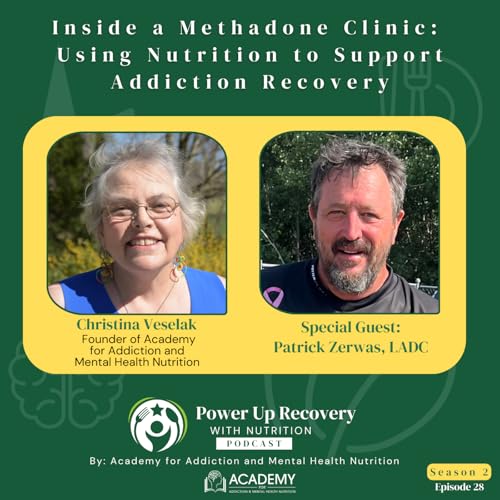
  • Inside a Methadone Clinic: Using Nutrition to Support Addiction Recovery with Patrick Zerwas S02E28
    Mar 11 2026
    In this episode of Power Up Recovery with Nutrition, Christina Veselak sits down with addiction counselor Patrick Zerwas to explore a powerful but often overlooked dimension of addiction treatment: nutrition and amino acid therapy inside a methadone clinic. Patrick shares his remarkable journey from more than two decades of active addiction to over 26 years in long term recovery and a career dedicated to helping others rebuild their lives. Now working as a Licensed Alcohol and Drug Counselor in a medication assisted treatment setting, Patrick brings a rare combination of lived experience, academic training, and clinical practice to the conversation. Together, Christina and Patrick discuss how targeted nutrition, amino acid therapy, and stable blood sugar can help restore brain chemistry during recovery. They explore how neurotransmitter depletion contributes to cravings, mood instability, and relapse vulnerability, and why feeding the brain with protein, essential nutrients, and specific amino acids can dramatically improve treatment outcomes. Patrick also shares real world examples from his work in a methadone clinic, including how nutrients such as tyrosine, glutamine, magnesium, and vitamin C can support withdrawal, reduce cravings, and stabilize mood. Through telehealth counseling and practical coaching, he is helping patients begin to understand how nutrition can complement medication assisted treatment and strengthen recovery. This episode offers an honest look inside addiction treatment and highlights how nutrition, neuroscience, and compassionate counseling can work together to support lasting recovery. Key Topics Covered How Patrick's personal recovery journey led him into addiction counseling What life inside a methadone clinic looks like for patients and clinicians Why nutrition is often the missing piece in addiction recovery programs How neurotransmitter depletion drives cravings, anxiety, and relapse risk The role of amino acid therapy in supporting dopamine, serotonin, and endorphin balance Using tyrosine to help reduce stimulant cravings and support motivation Glutamine for stabilizing blood sugar and reducing sugar cravings Vitamin C and magnesium to support withdrawal and improve medication response Why many patients in recovery are severely protein deficient How food insecurity and limited access to healthy food affect recovery outcomes Teaching practical nutrition skills within addiction treatment settings Why feeding the brain can dramatically improve therapy engagement and emotional stability The role of harm reduction and medication assisted treatment in modern recovery models How nutrition can help people gradually stabilize and rebuild brain chemistry Meet Our Guest Patrick Zerwas, LADC, brings over two decades of professional experience in addiction counseling, supported by long term personal recovery and a lived understanding of substance use disorder. Before entering the profession, Patrick spent 22 years in active addiction, an experience he often describes as being on the "research committee." His journey took him from high school dropout and homelessness to sustained recovery and academic achievement. He graduated Cum Laude from Saint Cloud State University, earning dual Bachelor of Science degrees in Alcohol and Chemical Dependency Counseling and Psychology. This combination of formal education and lived experience informs his direct, pragmatic, and client centered clinical approach. Patrick is currently employed as a Licensed Alcohol and Drug Counselor at STS Specialized Treatment Services in Minneapolis, where he works within a Medication Assisted Treatment setting. He also owns and operates Evolution Counseling Services, providing counseling services focused on recovery stabilization, nutrition, behavioral health, and long term change. In addition to his clinical credentials, Patrick is a Level One Certified Recovery Nutrition Coach. He is particularly interested in the intersection of addiction recovery, mental health, neurobiology, and nutrition, and how metabolic health influences relapse risk, mood regulation, and cognitive function. Patrick brings a grounded, evidence informed, and experience tested perspective to conversations about addiction, recovery systems, medication assisted treatment, and the evolving role of nutrition in addiction and mental health treatment. Practical Takeaways Addiction recovery requires rebuilding brain chemistry, not just stopping substances. Many people entering recovery are severely depleted in nutrients and protein. Targeted amino acids can help restore neurotransmitter balance and reduce cravings. Stable blood sugar and regular protein intake are foundational for emotional stability. Vitamin C, magnesium, and amino acids may support withdrawal and medication assisted treatment. Nutrition education can empower people in recovery to rebuild their health and resilience. Feeding the brain is a powerful tool for improving mood, ...
    Show more Show less
    48 mins
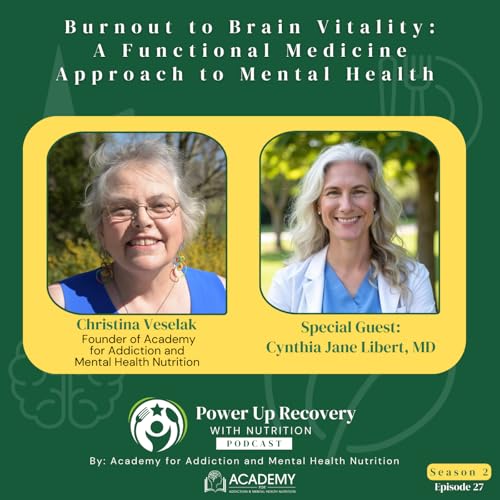
  • Burnout to Brain Vitality: A Functional Medicine Approach to Mental Health with Cynthia Libert, MD S02E27
    Feb 28 2026
    In this episode of Power Up Recovery with Nutrition, Christina Veselak sits down with Cynthia Libert, a functional and integrative physician specializing in metabolic psychiatry, brain health optimization, and cognitive decline prevention. Drawing from her own experience with professional burnout, Dr. Libert shares how she transitioned from conventional family medicine into a root-cause, nutrition-centered model of care that restores emotional and neurological resilience. Together, Christina and Dr. Libert explore the powerful intersection of nutrient status, inflammation, blood sugar regulation, and mental health. They discuss how targeted lab testing can reveal hidden drivers of anxiety, depression, cognitive changes, and burnout — and how precision nutrition can often restore balance faster than many expect. Throughout the conversation, they reference the work of pioneers in functional and integrative medicine, including James Greenblatt, Dale Bredesen, William Walsh, and Dr. John Wilson, whose clinical insights into nutrient deficiencies and individualized care helped shape modern integrative psychiatry. This episode bridges functional psychiatry, preventive brain health, and real-world clinical experience — offering both science and hope. Key Topics Covered How professional burnout can signal deeper metabolic and nutrient imbalances Why omega-3 deficiency is common — and how quickly replenishment can shift mood The role of magnesium in anxiety, migraines, muscle tension, blood pressure, and emotional regulation Why zinc and copper balance matters for mood, cognition, and postpartum mental health Low ferritin, B12, and magnesium as hidden contributors to depression and fatigue Inflammation markers (CRP) and homocysteine as early warning signs for cognitive decline Blood sugar instability and reactive hypoglycemia as drivers of irritability, anxiety, and relapse vulnerability Creatine, mitochondrial support, and sparing methylation pathways to reduce homocysteine Midlife as a critical window for preventing neurodegeneration Emerging research from Dr. Dale Bredesen's team showing potential reversal of early Alzheimer's through precision medicine Meet Our Guest Cynthia Libert, MD, is a board-certified family physician and functional medicine practitioner with over 20 years of clinical experience. She is the Founder and Medical Director of Caring for the Body, PLLC – Center for Functional Medicine in Asheville, North Carolina, where she specializes in brain health, burnout prevention, mood disorders, and the root-cause treatment and prevention of cognitive decline. Dr. Libert integrates evidence-based nutrition, lifestyle medicine, functional psychiatry, and compassionate whole-person care to help patients restore metabolic, emotional, and neurological resilience. With advanced training influenced by leaders such as James Greenblatt in integrative psychiatry and Dale Bredesen in cognitive decline research, she brings a precision, lab-guided approach to mental health care. She is passionate about the connection between nutrition, mental health, addiction recovery, and long-term brain vitality. Through her clinical work, teaching, and media platforms, Dr. Libert empowers individuals to understand their biology, nourish their brains, and step into lives marked by clarity, resilience, and lasting vitality. To Connect LinkTree: https://linktr.ee/drcindylibert References, Experts & Concept Mentioned James Greenblatt – Functional and integrative psychiatry fellowship training Dale Bredesen – Precision medicine approach to cognitive decline and Alzheimer's prevention William Walsh – Zinc, copper, methylation, and postpartum mental health research Dr. John Wilson – Environmental and integrative medicine mentor emphasizing individualized nutrient deficiencies Functional psychiatry and precision medicine approaches to cognitive decline Homocysteine as a risk marker for neurodegeneration C-reactive protein (CRP) as a measure of systemic inflammation Omega-3 fatty acid testing (EPA/DHA status) Zinc–copper balance in mood and cognitive function Magnesium threonate vs. magnesium glycinate for brain support Continuous glucose monitoring for metabolic stability Creatine for mitochondrial energy and brain resilience Reactive hypoglycemia research linking blood sugar instability to mood and behavioral disorders Practical Takeaways Burnout is often metabolic — not simply emotional. Testing nutrient status can reveal treatable drivers of anxiety, depression, and fatigue. Omega-3 replenishment can produce noticeable mood shifts in a relatively short time. Stable blood sugar and adequate protein intake are foundational for emotional stability. Magnesium, zinc, B12, ferritin, and vitamin D are frequently overlooked in conventional mental health care. Midlife is a powerful opportunity to prevent future cognitive decline through targeted lifestyle changes. Prevention of neurodegeneration begins decades ...
    Show more Show less
    48 mins
No reviews yet