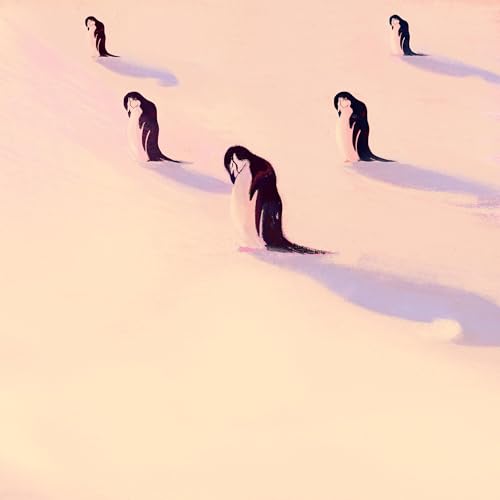
Terrestrials Podcast By WNYC cover art

Terrestrials

Terrestrials

By: WNYC
Listen for free

Welcome, nature lovers, to the home of the Terrestrials podcast and family-friendly Radiolab episodes about nature. Every other week, host Lulu Miller will take you on a nature walk to encounter a plant or animal behaving in ways that will surprise you. Squirrels that can regrow their brains, octopuses that can outsmart their human captors, honeybees that can predict the future. You don’t have to be a kid to listen, just someone who likes to see the world anew. You’ll hear a range of nature stories on this podcast. Sometimes these will be brand new Terrestrials episodes, full of original songs (by “The Songbud” Alan Goffinski) that tell a fantastical-sounding story about nature that is 100% true. Sometimes these will be our very best, shiniest, furriest, leafiest Radiolab episodes about animals or plants or nature. The stories that drop here will always be family-friendly and safe for kids. They will always be sound-rich and full of the vivid, gripping storytelling you’ve come to expect from Radiolab. They will always transport you to the beyond-human world: into the depths of the ocean, into jungles, prairies, forests, space, snow, wildflower fields and beyond. Sometimes we’ll encounter something so wild we just have to break out into song about it! Don’t worry, good voices not required. Join us on this adventure!WNYC Studios Biological Sciences Science
Episodes
  • The Red-Eyed Mascot: Loon Resilience in Minnesota
    Mar 26 2026
    What do loons have to do with courage and community? In January, we received a letter from two sisters in Minnesota - Jude and Mo. They wrote to us because their city was experiencing a lot of unrest, with immigration agents arresting members of their community and protests ringing loud in the streets as people tried to protect their neighbors. And in the middle of it all, an unexpected symbol began appearing on storefronts, stickers, and even as tattoos: the black and white, migrating waterbird known as the loon. Jude and Mo were curious: why are loons a good symbol of standing strong in the face of adversity? Loon expert Dr. Walter Piper breaks down the incredible biology of the loon and helps us decode their mysterious calls; storyteller Hope Flanagan brings us Ojibwe tales of how the loon got its famous red eyes; and biologist Dr. Leonardo Chapa Vargas teaches us about loon migration, helping us expand our definition of home. We learn why these loud and eerie birds came to stand for something very powerful: the scrappy resilience of trying over and over again, no matter how many times you get knocked down. Huge thanks to Jude, Mo and their mom, Natalie, for writing in about loons. Reminder that you can also write in about any creature you’d like to see an episode on! Email us at terrestrials@wnyc.org. Listen to “The Going Home Star” on Spotify, Apple Music, and wherever you get your music. We made special activity sheets for this episode! Coloring PageActivity Sheet We hope they will help you and your friends, family, students, or neighbors dig more deeply into the world of loons. If you want to share what you’ve made, ask an adult to share it on Instagram and make sure to tag @terrestrialspodcast, or email us at terrestrials@wnyc.org. Dig Deeper: Check out Jude and Mo’s favorite loon sculpture in St. Paul, Minnesota!To learn more about Hope Flanagan, check out Dream of Wild Health, a farm and storytelling organization restoring wellbeing in the Native community.To see Walter Piper in a cool documentary, check out Loons: A Cry from the Mist.Read Shannon Heffernan’s reporting on how kids and adults are being affected by I.C.E Raids at The Marshall Project Check out how the students of Valley View Elementary are writing letters to ICE agents detaining their friends and families by watching this video.We mentioned how Loons are generalists - flexible - like our friends from our coyotes episode. Check out The Howler: The Dog Who Joined a Coyote Pack if you want to learn more!The Rumble Strip Vermont podcast has a beautiful episode about Hold On, a song that people have been singing at various protests.When Liam Conejo Ramos was detained by ICE agents, his classmates started folding Origami Bunnies in solidarity with Liam and all students who are unsafe. Watch a video of the project here. Immigration resource links: Immigration and Families Resources (National Council on Family Relations)Resource Hub for Undocumented and Immigrant Families (Center for Migration Studies) Terrestrials was created by Lulu Miller with WNYC Studios. This episode was produced by Ana González, with sound design by Mira Burt-Wintonick. Sarah Sandbach is our Executive Producer. Our team also includes Alan Goffinski, Tanya Chawla, Joe Plourde and Natalia Ramirez. Factchecking by Angely Mercado. Support for Terrestrials is provided by the Simons Foundation, the Arthur Vining Davis Foundations, and the John Templeton Foundation. HEY GROWN-UPS!Love the show? Leave us a ⭐⭐⭐⭐⭐ rating and review on your podcast app—it helps curious listeners find us!We want to hear from you! Share your thoughts about Terrestrials with us.Subscribe to our weekly newsletter for bite-sized essays, activities, and ways to connect with the show.Follow us on YouTube, Instagram, and TikTok for behind-the-scenes extras and more.Listen to original music from Terrestrials on Spotify, Apple Music, or our music page.Got a badgering question for the team? Email us at terrestrialspodcast@wnyc.org or submit a voice memo with your name, age, and your question using this form!Terrestrials is made possible in part by listeners like you. Support the show by joining Radiolab’s membership program, The Lab—and we’ll send you a special thank-you gift from our team!
    Show more Show less
    31 mins
  • The Snowball: Extreme Squirrels in the Arctic (Replay)
    Mar 12 2026

    Middle schooler, Aanya, has an up-close encounter with a squirrel in the school yard, which leads her to an obsession with one of North America's most common critters. She tells host Lulu Miller all about the overlooked superpowers of squirrels, including one squirrel who lives way up in the Arctic, where the weather gets so cold the squirrels who live there drop their body temperatures down below freezing and somehow, miraculously, survive.

    Host Lulu travels to Alaska to meet one of these squirrels as it sleeps, and Lulu talks with biologists Dr. Kelly Drew and Dr. Brian Barnes about why this humble squirrel holds potential for treating Alzheimers, brain injury, and even helping astronauts hibernate on the long journey to Mars.

    Check out the making of this episode here! Video by Amy Pearl.

    This episode features a song with a cameo from Chicago-based musician Tasha. Check out our songs page for 'On The Other Side (ft. Tasha)' and more new singles every week.

    Special thanks to Aanya and her mom Roli for bringing us this story, and to Amy Loeffler, Clara Goulet, Loi Goulet, Ellie Bell and Ferris Jabr, the writer who first made the “pop-squirrel" joke. We came across it in a wonderful article he wrote in Scientific American. Also, check out this Wired article by Brendan I. Koerner for more on arctic ground squirrels.

    Terrestrials was created by Lulu Miller with WNYC Studios. This episode was produced by Ana González, Mira Burt-Wintonick, Alan Goffinski, Joe Plourde and Lulu Miller, with help from Tanya Chawla, Sarah Sandback and Valentina Powers. Fact checking by Natalie Middleton. Transcription by Caleb Codding.

    Our advisors are Ana Luz Porzecanski, Andy J. Pizza, Anil Lewis, Dominique Shabazz, Liza Demby, Princess Daazhraii Johnson and Tara Welty.

    Learn more about storytellers, listen to music, and dig deeper into the stories you hear on Terrestrials with activities you can do at home or in the classroom on our website, Terrestrialspodcast.org.

    Badger us on social media: @radiolab and #TerrestrialsPodcast or by emailing us at terrestrials@wnyc.org.

    HEY GROWN-UPS!
    Love the show? Leave us a ⭐⭐⭐⭐⭐ rating and review on your podcast app—it helps curious listeners find us!

    We want to hear from you! Share your thoughts about Terrestrials with us.
    Subscribe to our weekly newsletter for bite-sized essays, activities, and ways to connect with the show.
    Follow us on YouTube, Instagram, and TikTok for behind-the-scenes extras and more.
    Listen to original music from Terrestrials on Spotify, Apple Music, or our music page.

    Got a badgering question for the team? Email us at terrestrialspodcast@wnyc.org or submit a voice memo with your name, age, and your question using this form!

    Terrestrials is made possible in part by listeners like you. Support the show by joining Radiolab’s membership program, The Lab—and we’ll send you a special thank-you gift from our team!

    Show more Show less
    25 mins
  • The Snoozer: Penguin Slackerzzz Rule
    Feb 26 2026

    How rested would you feel if you took 10,000 naps a day? Chinstrap Penguins in Antarctica spend their days taking MICRONAPS, each around 4 seconds long. To learn why, Lulu meets one (played by Songbud Alan), who explains how micronaps help them conserve energy and protect their babies from “sky pirates”! Then, in a badgermania, penguin scientists Dr. Eric Wagner and Dr. Dee Boersma answer your questions! Why are penguins black-and-white? Why is their poop pink? What might they dream about? And we learn that what may look like laziness… turns out to be an evolutionary superpower.

    Don’t sleep on these articles, maybe read them before your next nap:

    Read about chinstrap penguin naps here, and here, and here.

    Learn why penguin poop is pink and how it may be helping cool the climate!

    Read about how neurons help flush waste out of the brain during sleep.

    Terrestrials was created by Lulu Miller with WNYC Studios. This episode was produced by Ana González, with sound design by Mira Burt-Wintonick. Sarah Sandbach is our Executive Producer. Our team also includes Alan Goffinski, Tanya Chawla and Joe Plourde. Factchecking by Sophie Samiee.

    Support for Terrestrials is provided by the Simons Foundation, the Arthur Vining Davis Foundations, and the John Templeton Foundation.

    HEY GROWN-UPS!
    Love the show? Leave us a ⭐⭐⭐⭐⭐ rating and review on your podcast app—it helps curious listeners find us!

    We want to hear from you! Share your thoughts about Terrestrials with us.
    Subscribe to our weekly newsletter for bite-sized essays, activities, and ways to connect with the show.
    Follow us on YouTube, Instagram, and TikTok for behind-the-scenes extras and more.
    Listen to original music from Terrestrials on Spotify, Apple Music, or our music page.

    Got a badgering question for the team? Email us at terrestrialspodcast@wnyc.org or submit a voice memo with your name, age, and your question using this form!

    Terrestrials is made possible in part by listeners like you. Support the show by joining Radiolab’s membership program, The Lab—and we’ll send you a special thank-you gift from our team!

    Show more Show less
    27 mins
All stars
Most relevant
It was all pretty good and I liked how they like. Introduced me to everything yeah

Everything

Something went wrong. Please try again in a few minutes.

This has replaced audiobooks at bedtime. My 9 yo especially loves this podcast. It’s informative and entertaining. The sound effects are cool too.

Kids love it

Something went wrong. Please try again in a few minutes.