• EP 67: Guest Michael Webb: When the Betrayed Feels Like They Have to Parent the Unfaithful
    Apr 17 2026

    If you're in infidelity recovery, you've probably felt this: the betrayed partner asks for change, the unfaithful partner tries to comply — and somehow it still feels like nothing is working. The betrayed partner wonders if their spouse is just checking a box. The unfaithful partner feels overwhelmed and like nothing they do is ever enough. Both partners end up more frustrated, more distant, and less safe than before.

    This isn't a character flaw. It's a pattern — and there's a name for it.

    My great friend and therapist Michael Webb explains it through the lens of Transactional Analysis. Every person operates from one of three ego states: the Adult, the Parent, and the Child. When infidelity enters a marriage — often on top of existing wounds like childhood trauma, addiction, or years of unspoken resentment — one or both partners can regress into a Child ego state. That inner child isn't looking for a spouse. It's looking for a parent to finally meet the needs that were never met in childhood.

    Here's where the cycle locks in: The betrayed partner, flooded with grief, fear, and abandonment pain, starts to feel like they have to remind, prompt, and monitor their spouse just to see basic recovery effort. They didn't sign up to be a parent in their marriage — but that's exactly the role they get pushed into. And the moment the betrayed starts parenting, the unfaithful slides into the Child — complying when reminded, going quiet when overwhelmed, and never quite owning their recovery from the inside out. The betrayed can feel the difference and pushes harder. The unfaithful shuts down further. Round and round it goes.

    Neither partner feels safe. Romantic and sexual attraction can disappear entirely. Both start wondering if this dynamic was always there — and whether recovery is even possible. Or much worse, each partner wonders if this will be what the relationship looks and feels like forever.

    The way out starts with awareness. When the betrayed partner steps back from pursuing and gives their spouse space to take initiative — and when the unfaithful partner stops waiting to be told what to do and begins leading their own recovery — the dynamic shifts.

    Both partners begin meeting each other as adults again, not as parent and child.

    In this episode, we break down exactly how this pattern forms, why it's so hard to see from inside it, and what both partners can do — even unilaterally — to begin changing it.

    There is hope......

    Samuel
    Samuel_healing on Instagram
    samshealingpodcast.com

    Show more Show less
    45 mins
  • EP 66: Why Our OWN Healing is So Important After Infidelity
    Mar 26 2026

    What if your own healing after infidelity wasn't just about "getting over it," but about becoming medicine—for you, for your kids, and for a world full of hurting people?

    In today's episode, I talk about why your own healing matters, no matter what happens to your marriage. Infidelity can shatter your nervous system, your faith, your sense of self. But it can also become the soil where something deeply rooted and beautiful begins to grow—not because the betrayal was good, but because of what you choose to do with your pain.

    I explore how faith moves forward in the aftermath of betrayal—not in a neat, tidy way, but in a limping, honest, "I'm still here" kind of way.

    Healing is not pretending everything's fine or rushing to reconciliation at any cost. It's allowing safe people to meet you in the wreckage, one honest step at a time, whether your spouse or partner does their work or not.

    We walk through why your healing cannot be contingent on your marriage surviving. You absolutely need to heal:

    For your own mental and emotional health

    For your children, so they don't carry the unprocessed shrapnel of this into their own relationships

    For your extended family, friendships, and future connection—romantic or otherwise

    I talk about post‑traumatic growth—the idea that while betrayal is devastating, it can, over time, deepen your wisdom, your empathy, your boundaries, and your capacity to love in healthy ways. The healing work you do now becomes your medicine to the world: the way you sit with a friend who's just discovered an affair, the way you raise your kids, the way you show up for the next broken‑hearted person who thinks they're alone.

    In the episode, I name this paradox we never forget:

    We will never forget the people who walked into our darkness with a lamp—the therapist, the coach the friend, the mentor, the stranger online who said, "You're not crazy, and you're not alone."

    And we will never forget the people who left us in the dark—the ones who minimized, disappeared, or refused to throw a lifeline when we were drowning.

    Both memories mark us, but we get to decide which one we become for somebody else.

    I'll invite you to consider: Who might one day need the version of you that has done this work? The version who can say, "I wouldn't wish this on anyone, but I know the way out of some of these woods."

    If you're in the thick of betrayal right now—whether your spouse is doing the work or not—this episode is a reminder: your healing is not optional "bonus work." It's sacred work. It's how you reclaim your mind, your body, your story, and your future. And it's how your story, over time, can become a quiet lamp for someone else still sitting in the dark.

    To Healing,

    Sam
    https://www.samshealingpodcast.com/

    Show more Show less
    17 mins
  • EP 65: Interview with a Betrayed Male Spouse: Healing from Narcissistic Abuse and Doing the Work
    Feb 11 2026

    Today you'll meet Bill. It's a rare and powerful look into what it means for a man to walk through hell and choose healing, truth, and self-respect on the other side of infidelity and abuse.

    As a betrayed male spouse who also grew up under relentless narcissistic abuse, Bill didn't just survive infidelity and emotional devastation—he confronted it head-on and rebuilt every part of his life from the ground up. The pain and confusion he carried started long before betrayal, in a childhood marked by gaslighting, control, and chronic invalidation that left him feeling defective, disposable, and utterly alone. At a painfully young age, the abuse and hopelessness ran so deep that he even considered ending his own life, convinced there was no escape and no version of himself that could ever be enough.

    What makes Bill's story so compelling is that he refuses to sugarcoat anything. He's direct, no-nonsense, and cuts through the clichés about "just getting over it," naming the rage, shame, and suicidal thoughts many male survivors quietly carry but rarely speak aloud. Instead of staying stuck in that darkness, Bill chose a different path.

    He did the deep therapeutic work, faced his trauma history, and began the slow, courageous process of reclaiming his voice, his boundaries, and his sense of worth. He stopped abandoning himself to keep the peace, learned to listen to his own body and intuition, and started building a life that was no longer organized around managing other people's egos and emotions.

    Today, Bill is not the man he once was. His life has taken a completely new turn—not just externally, but internally, where it matters most. He doesn't just enjoy life; he actually enjoys himself. He can sit in his own company without shame, look in the mirror, and see a man he respects, trusts, and genuinely loves. He talks about rediscovering joy, purpose, and simple pleasures that used to be buried under survival mode, and how his relationships changed as he began to show up grounded, clear, and unwilling to tolerate abuse in any form.

    This episode is for the warriors—the men and women who have been betrayed, minimized, or driven to the edge, yet still feel a quiet fight inside them that refuses to die. Bill stands as living proof that you can come from profound narcissistic abuse, walk through the devastation of infidelity and even suicidal despair, and still choose a life marked by dignity, strength, and peace. If you're tired of carrying shame that never belonged to you and ready to stop rescuing everyone else while abandoning yourself, Bill's story will call you higher.

    His message is clear: you are not powerless, you are not crazy, and you are not alone. There is a path to healing where you don't just get your life back—you finally get yourself back, and you learn to love and respect that man without apology.


    To Healing,

    Sam
    samshealingpodcast@gmail.com
    @samuel_healing

    Show more Show less
    34 mins
  • EP 64: Adam Nisenson Discusses The Elephant in the Room for Betrayed Men and Women
    Jan 29 2026

    Infidelity is often the "elephant in the room" of a relationship—everyone feels its weight, but few know how to name it, let alone heal from it. In this episode of Sam's Healing Podcast, Sam sits down with Adam Nisenson for a raw, compassionate conversation about what betrayal really does to us and how we can move from silent survival into honest, lasting recovery.

    Sam and Adam explore the devastation of infidelity for both the betrayed and the unfaithful: trust shattered, identity shaken, and an entire shared story suddenly called into question. Instead of dealing with that pain, many of us do what we were trained to do—stuff things down, "endure hard things," and keep moving. The hurt gets stored instead of processed: sleepless nights, intrusive thoughts, anger that comes out sideways, and bodies that carry what mouths won't say.

    They talk about the deep ego wounds—"Am I unlovable? Am I broken? Am I the villain?"—and how those wounds feed massive shame and confusion on both sides. Men in particular often feel enormous shame for wanting and needing help, so they don't talk, don't ask questions, and don't admit how lost they are. That silence becomes its own kind of betrayal: of self, of partner, and of any chance at true healing.

    A central theme of the episode is learning to acknowledge the injuries of infidelity instead of minimizing them. Sam and Adam name what has actually been harmed—safety, attachment, self‑worth, spiritual and sexual integrity—and why pretending "it wasn't that bad" keeps everyone stuck. From there, they move into what it means to bring that pain into vulnerable, safe spaces: trusted community, skilled helpers, and conversations where both partners can feel and speak without being annihilated.

    This isn't just an autopsy of what went wrong; it's a roadmap toward ultimate growth. Sam and Adam describe how, when we stop storing and start processing—when we stop white‑knuckling and start telling the truth—infidelity can become the catalyst for a deeper honesty, humility, and courage than either person has ever known. If you've been stuffing things down, staying quiet, or secretly wondering if you're beyond repair, this episode invites you to stop carrying the elephant alone and begin the kind of vulnerable work that actually transforms you.

    To Healing,

    Sam
    samshealingpodcast@gmail.com
    @samuel_healing

    Show more Show less
    33 mins
  • EP 63: Healing is Feeling: Learning How to Feel Again After Infidelity
    Jan 15 2026

    Feeling anything after infidelity can feel impossible.

    As the unfaithful, you may believe you don't deserve feelings—or that if you let yourself feel, you'll drown in shame, grief, fear and more compounding failure.

    As the betrayed, your world has exploded into rage, panic, hypervigilance, and a kind of pain that feels like it will never stop. In today's episode, I'll do my best to slow all of that down and make room for both stories—without excusing harm and without minimizing anyone's trauma.

    I'll begin by naming a hard truth many unfaithful partners never say out loud: most of them have no idea what to do with their emotions after disclosure. They often believe they've lost the right to feel sad, scared, or confused because "I caused this." So they shut down. Go numb, intellectualize, perform apologies, or rush into doing tasks and checklists—anything but actually feel the weight of what they've done and what's been lost.

    I'll also unpack how this shutdown is rarely new; it's usually a survival strategy learned in childhood in homes where big feelings weren't safe, welcomed, or understood.

    At the same time, the betrayed partner is often living in a body that feels hijacked by massive, relentless emotion. I'll discuss the difference between ordinary hurt and the PTSD/CPTSD many betrayed partners face: flashbacks, intrusive images, startle responses, spiraling thoughts, and a nervous system that never truly rests. Their feelings are valid and necessary—but without boundaries, that raw rage and pain can become a second layer of trauma in the relationship. I'll also walk you through why honoring the betrayed partner's experience is essential and why creating limits around verbal explosions, threats, or self‑destruction is part of genuine care, not selfishness.

    A key theme of the episode is this: your spouse, no matter how remorseful or supportive, cannot do enough work to heal you. Their repair efforts are important—they matter deeply—but they will never substitute for your own internal work.

    I'll help both parties: to the betrayed who long for true transformation, transparency and changed behavior to finally feel okay again; and to the unfaithful who secretly hope that if they just do "all the right things," they can avoid facing their own story, their own childhood wounds, and their own capacity for harm.

    I'll also unpack a powerful and necessary reframe: no one is coming to save you except the healed version of you. That doesn't mean white‑knuckling alone or rejecting help; it means recognizing that no coach, therapist, pastor, podcast, or partner can feel your feelings for you.

    Healing requires massive personal courage: learning to sit with grief instead of outrunning it, to name shame instead of hiding behind defensiveness, and to allow anger and fear to move through the body instead of freezing into numbness or exploding onto everyone around you.

    "Healing is feeling" isn't just a catchy phrase—it's an invitation: to stop outsourcing your healing, to stop waiting for someone else to fix what's broken, and to start becoming the version of you who can hold the full truth of what happened and move toward a different future. There is hope.

    To Healing,

    Sam

    Show more Show less
    14 mins
  • EP 62: How to Guarantee Personal Transformation In Healing from Infidelity
    Jan 7 2026

    If there's one question almost everyone asks after infidelity or betrayal it's this:
    "Can I or we ever really heal from this devastation?"

    In todays episode, I share the one real guarantee that exists in recovery—not a gimmick or quick fix, but a way of showing up to your own healing that works whether you were betrayed or you were the one who did the betraying.

    This is the same approach that helped me rebuild my own life after my own worst failures and has supported countless clients walking through the wreckage of affairs and deception.

    You can't control what your partner chooses to do next—but you do have a say in how you respond to the devastation, even if it's devastation you helped create. In today's honest and direct conversation, I gently walk you through a practical, hope‑filled path you can start following today, no matter where your relationship stands.

    To Healing,

    Sam
    samshealingpodcast@gmail.com
    @samuel_healing

    To Book a Session with me please click here: https://linktr.ee/affair.recovery?utm_source=linktree_profile_share

    Show more Show less
    12 mins
  • EP 61 Guest Judith Nisenson Discusses Why Women Also Cheat the Shame of the Unfaithful Female
    Dec 4 2025

    Today you'll meet Judith Nisenson, a certified coach and expert in dealing with unfaithful women. She's also Adam Nisenson's wife whom many of you will also know as The Betrayal Shrink who has appeared on the podcast multiple times.

    Judith Nisenson is the founder of Women'sWRK, a Certified Life Coach (ICF-ACC) and Betrayal Trauma Coach (APSATS-CPC) specializing in helping women who have betrayed their partners. Her work focuses on guiding women to face the truth of their actions, dismantle denial and rationalizations, and step into authentic accountability and transformation.

    Judith's compassionate but direct approach is reshaping the conversation around infidelity. By supporting women betrayers through the difficult process of accountability and repair, she is helping to bring balance, truth, and healing to a space that has long been overlooked.

    Women betrayers remain one of the most underserved populations in betrayal recovery. Cultural narratives often frame infidelity as something men do, leaving women who cheat without support, resources, or a clear path to healing. Judith's work is groundbreaking in that it creates space for women to take ownership of the harm they've caused while also understanding the deeper wounds, unmet needs, and impaired thinking that contributed to their choices.

    To Healing,

    Sam

    Show more Show less
    27 mins
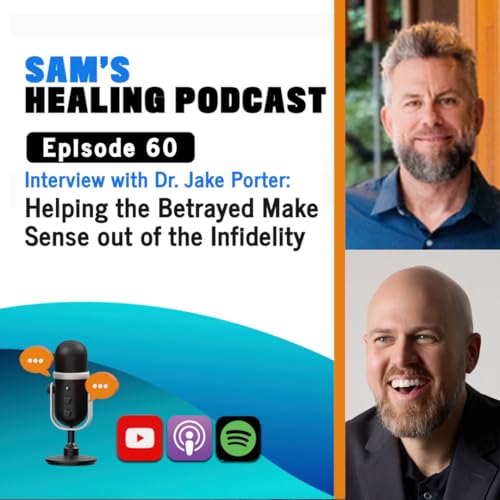
  • EP 60 Dr. Jake Porter "How Can the Betrayed Ever Make Sense Out of Their Partner's Infidelity?"
    Nov 20 2025

    How can someone betrayed by infidelity and/or addiction ever begin to make sense of the experience?

    When your world is turned upside down by something as devastating and disorienting as betrayal, it's natural to wonder: How do I even process this loss? Where do I turn for answers? How do I make sense of something so nonsensical?

    In this episode, Dr. Jake Porter—renowned counselor, trauma specialist, educator, and creator of the Couple–Centered Recovery® model—offers practical wisdom and clear, trauma-informed guidance for those seeking to understand both the betrayed and the unfaithful.
    Dr. Porter explores the mindset and decision-making behind infidelity and addiction, breaking down the mechanics of grief and the emotional aftermath for everyone involved.

    What you'll gain from this conversation:

    *Expert insight into the psychology of the unfaithful partner

    *Clear, actionable insight for betrayed spouses navigating the shock and turmoil

    *A deeper understanding of grief, trauma, and the path forward after relational betrayal

    Dr. Porter's compassionate approach, clinical expertise, and innovative model have helped countless couples heal and rebuild after infidelity. If you're searching for clarity, validation, and hope, this episode will guide you through understanding the seemingly inexplicable—and illuminate your journey toward healing.

    It's not as impossible as it may seem.....

    To Healing,

    Sam
    samshealingpodcast@gmail.com

    Show more Show less
    34 mins