Publisher's summary

Got a situation? Steve Harvey and Shirley Strawberry deliver unfiltered advice on love, relationships, family, work, and life. Send your letter, subscribe, and get real talk every day!

Every weekday, the Steve Harvey Morning Show tackle a listener-submitted “Strawberry Letter”... a real-life dilemma ranging from romantic entanglements to career choices, family drama to money struggles, and everything in between.

With a blend of wisdom, wit, and brutal honesty, they offer candid commentary and heartfelt guidance, often sparking conversation (and laughter) among the rest of the morning show crew.

Submit your Strawberry Letter at www.steveharveyfm.com for a chance to be featured, and get the truth, Steve Harvey style!

2026 iHeartMedia, Inc. © Any use of this intellectual property for text and data mining or computational analysis including as training material for artificial intelligence systems is strictly prohibited without express written consent from iHeartMedia
Episodes
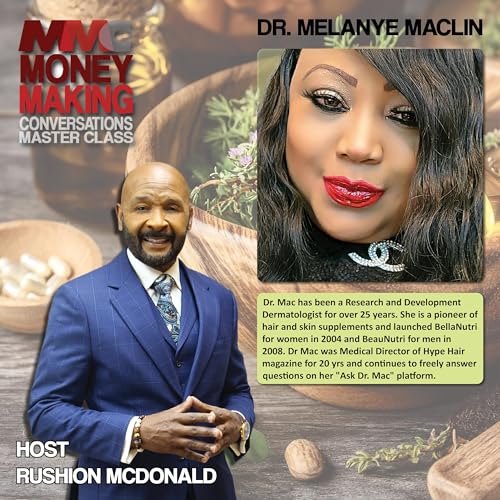
  • Health Risks: She discusses the serious health risks associated with hair relaxers, permanent dyes, and synthetic braids—particularly among Black women.
    Mar 31 2026
    Listen and subscribe to Money Making Conversations on iHeartRadio, Apple Podcasts, Spotify, www.moneymakingconversations.com/subscribe/ or wherever you listen to podcasts. New Money Making Conversations episodes drop daily. I want to alert you, so you don’t miss out on expert analysis and insider perspectives from my guests who provide tips that can help you uplift the community, improve your financial planning, motivation, or advice on how to be a successful entrepreneur. Keep winning! Two-time Emmy and Three-time NAACP Image Award-winning, television Executive Producer Rushion McDonald interviewed Dr. Melanye “Dr. Mac.” Maclin joins Rushion McDonald to discuss the serious health risks associated with hair relaxers, permanent dyes, and synthetic braids—particularly among Black women. Drawing from over 25 years of research and patient experience, she explains how chemicals used in these products absorb through the scalp, disrupt hormones, and significantly increase the risks of breast cancer, ovarian cancer, uterine cancer, early puberty, fibroids, and infertility. The conversation also highlights systemic resistance from the beauty industry, government agencies, and even consumers themselves—primarily due to financial incentives and lack of awareness. Dr. Mac advocates for safer hair practices, increased education, and protective measures to reduce exposure. She also discusses her pioneering internal hair‑health supplements, Bella Nutri, for women (2004) and men (2008), and how she helped introduce the U.S. market to nutritional hair support long before it was mainstream. Purpose of the Interview The purpose of the interview is to: 1. Educate listeners about the hidden health dangers …of chemical hair treatments including relaxers, permanent dyes, and synthetic hair containing benzene. 2. Advocate for informed hair‑care decisions Dr. Mac wants women—especially Black women—to understand how beauty practices impact long‑term health. 3. Encourage the beauty industry to adopt safety protocols Such as scalp protection, warning labels, and honest communication about risks. 4. Highlight Dr. Mac’s work and products Including her Bella Nutri supplements and educational platforms (Ask Dr. Mac). 5. Empower parents to protect children By avoiding chemical treatments on young girls whose bodies are especially vulnerable. Key Takeaways 1. Chemical relaxers and permanent hair dyes are strongly linked to increased cancer risks. Permanent dyes raise the risk of breast, uterine, and ovarian cancer.Black women exhibit a 45% increased risk of breast cancer when using permanent dyes.Combining dyes with relaxers significantly compounds the danger. 2. The danger comes from chemical absorption into the scalp. Relaxer chemicals include sodium, calcium, guanine, and lithium hydroxide.These chemicals burn through the scalp, entering the bloodstream and disrupting hormones, leading to early puberty, fibroids, infertility, and cancer. 3. Synthetic braiding hair contains benzene—a carcinogen. Benzene exposure affects both the stylist and the client.Risks include lung cancer and leukemia. 4. The beauty industry resists change because of profit. Salons rarely display warnings because “it affects business.”The relaxer–damage→hair‑loss→extensions cycle creates a lucrative revenue loop. 5. Children are especially vulnerable to chemical exposure. Relaxers on children under 10 can cause: early pubertyfibroidsinfertilityearly hysterectomiesincreased cancer risk Dr. Mac advises never relaxing a child’s hair, but if done, the product must stay on no more than 5–10 minutes with complete scalp protection. 6. Scalp protection is essential for anyone still using relaxers. Use petroleum jelly over the entire scalp, not just the hairline.This reduces chemical absorption during both application and rinsing. 7. Dr. Mac pioneered the U.S. hair‑supplement industry. Developed Bella Nutri after research with a Finnish company (Scalp).Initially dismissed as a “witch doctor,” but now the hair‑supplement market is mainstream. 8. She refuses to participate in relaxer‑related lawsuits. Because she has warned people for 20+ years, she cannot ethically testify for those who ignored repeated warnings. Notable Quotes On the impact of chemicals: “The chemicals burn through the scalp… getting into the main bloodstream and causing hormone disruption.” On the increased cancer risk: “African‑Americans have a more than 45% increased risk when we use permanent hair dyes.” On synthetic braids: “As long as that synthetic hair is on her head, she is breathing in benzene.” On industry pushback: “People are about the green‑eyed devil called money.” On relaxing children’s hair: “Hopefully a mother doesn’t take her child to get a relaxer.”“Hair chemicals can lead to early puberty, fibroids, infertility, even hysterectomies before age 40.” On the vicious cycle of damage and profit: ...
    Show more Show less
    27 mins
  • Uplift: Conversation centers on holistic health, purpose after pain, mental health—especially in the Black community.
    Mar 31 2026
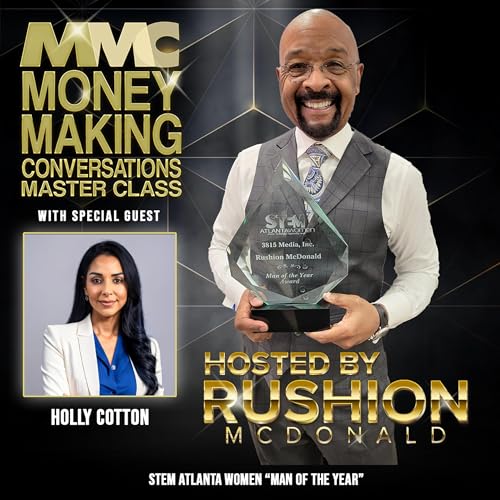
    Listen and subscribe to Money Making Conversations on iHeartRadio, Apple Podcasts, Spotify, www.moneymakingconversations.com/subscribe/ or wherever you listen to podcasts. New Money Making Conversations episodes drop daily. I want to alert you, so you don’t miss out on expert analysis and insider perspectives from my guests who provide tips that can help you uplift the community, improve your financial planning, motivation, or advice on how to be a successful entrepreneur. Keep winning! Two-time Emmy and Three-time NAACP Image Award-winning, television Executive Producer Rushion McDonald interviewed Holly Cotton.Titles: Wellness Expert, Registered Nurse (MSN), Bestselling Author, Breast Cancer Survivor, Life Coach, SpeakerHost: Rushion McDonaldPodcast: Money Making Conversations Masterclass Holly Cotton shares her journey from nursing to authorship and wellness advocacy, shaped profoundly by surviving breast cancer. The conversation centers on holistic health, purpose after pain, mental health—especially in the Black community—and empowering women and youth to live authentically and intentionally. Purpose of the Interview The interview aims to: Humanize success by showing how trauma and diagnosis can redirect life toward purpose and impact.Redefine holistic wellness to include financial, mental, physical, and spiritual health.Destigmatize mental health conversations, particularly in Black families and communities.Inspire women and survivors to pursue authenticity, confidence, entrepreneurship, and joy after adversity.Highlight youth empowerment, especially adolescent mental health, through Holly’s books and advocacy. Key Themes & Takeaways 1. Nursing as a Foundation, Not an Identity Holly entered nursing for stability and financial security but later recognized it as a platform, not her full identity.She breaks the stereotype that nurses must work bedside or in hospitals.Her career evolved into management, teaching, wellness, and entrepreneurship. Takeaway: A degree can fund your life without defining your final destination. 2. A Holistic Lifestyle Goes Beyond Spirituality Holly reframes “holistic” living as a three‑part alignment: Mental HealthPhysical HealthFinancial Health She argues finances are critical because financial stress disrupts mental and physical well‑being. Key insight: You can’t fully heal or grow if one area—especially finances—is constantly in crisis. 3. Mental Health Is No Longer a Silent Topic Holly explains how social media and generational shifts have helped destigmatize therapy and emotional vulnerability.She contrasts the old “suck it up” mentality with today’s openness.Community, language, and exposure help people recognize anxiety, depression, and stress earlier. Takeaway: Awareness + access = healing. 4. Breast Cancer as a Turning Point, Not an Ending Diagnosed in 2012, Holly discovered her cancer at her physical peak, which made the diagnosis more shocking.She went through cycles of shock, anger, and resentment before finding clarity.Her perspective shifted from “Why me?” to “Why am I still here?” That question led her to: Become a peer support resource for newly diagnosed patientsWrite her autobiography, Strong More Than MusclesStep into public storytelling and advocacy Key message: Pain can push you into purpose. 5. Turning Survival Into Service Holly’s book has reached readers worldwide, including cancer patients internationally.She emphasizes visibility—showing strength, femininity, confidence, and joy after trauma.Her presence challenges stereotypes about survivors, mothers, and professional women. Takeaway: Representation heals people you may never meet personally. 6. Empowering Youth Through Mental Toughness Holly’s Freeze Your Mind, Your Magic book series focuses on adolescent mental health: Covers topics like self‑worth, pressure, body image, toxic relationships, stress, and chronic illnessIncludes affirmations and conversation startersDesigned to create safe dialogue between parents and childrenVersions for: GirlsYoung menSpecial needs youthChildren with chronic illness Available in English and Spanish Core belief: We invest heavily in kids’ physical strength—but neglect mental resilience. 7. Living Authentically Attracts Success Holly stresses that alignment brings fulfillment: When you live authentically, the money followsThe impact, relationships, and purpose are invaluableSuccess isn’t just financial—it’s how many lives you uplift Notable Quotes “Holistic health is when your mental, physical, and financial health are all in sync.” “If your money isn’t right, everything else starts falling apart.” “I stopped asking ‘Why me?’ and started asking ‘Why am I still here?’” “Pain will push you to your purpose if you let it.” “We’re worried about kids being physically strong, but we need them mentally tough too.” “When you live your life authentically, everything ...
    Show more Show less
    26 mins
  • Financial Tips: Her platform offers 300+ hours of videos and tools, helping members open 3,000+ investment accounts and invest $7.4M collectively.
    Mar 31 2026
    Listen and subscribe to Money Making Conversations on iHeartRadio, Apple Podcasts, Spotify, www.moneymakingconversations.com/subscribe/ or wherever you listen to podcasts. New Money Making Conversations episodes drop daily. I want to alert you, so you don’t miss out on expert analysis and insider perspectives from my guests who provide tips that can help you uplift the community, improve your financial planning, motivation, or advice on how to be a successful entrepreneur. Keep winning! Two-time Emmy and Three-time NAACP Image Award-winning, television Executive Producer Rushion McDonald interviewed Ashley M. Fox. Summary of the Interview In this episode of Money Making Conversations Masterclass, Rushion McDonald interviews Ashley M. Fox—former Wall Street analyst, Howard University alum, financial educator, and founder/CEO of Emplify, a fintech platform focused on making wealth‑building accessible to everyday people. Ashley shares her journey from working with ultra‑high‑net‑worth clients on Wall Street to becoming an entrepreneur determined to bring financial education and empowerment to communities traditionally excluded from wealth conversations. She discusses the creation of Amplify, her financial fall and recovery, her work in schools and prison systems, and how digital content has allowed her to scale her mission globally. The discussion emphasizes mindset, self‑belief, access, and a practical path to wealth, even starting with as little as $20. Purpose of the Interview The interview aims to: 1. Inspire financial empowerment Ashley explains how anyone—regardless of background or starting point—can begin building wealth and shift generational outcomes. 2. Demystify investing and wealth-building She breaks down how simple investing can be, the power of small consistent contributions, and how wealth isn’t limited to entrepreneurs or high earners. 3. Highlight her fintech platform Emplify She shares how Amplify democratizes financial education through online tools, community, and accessible investing classes. 4. Encourage a mindset shift Ashley stresses the importance of eliminating fear, building confidence, and using logic instead of emotion when making financial decisions. Key Takeaways 1. Wealth Begins with Belief and Mindset Ashley learned on Wall Street that the biggest difference between wealthy and non-wealthy people is not education—it's self-belief. Many people don’t believe wealth is possible for them because they've never seen it. 2. You Don’t Need a Lot of Money to Start Investing She urges people to start with $20, even buying fractional shares. It’s consistency—not starting amount—that builds wealth. 3. You Can Invest in Others’ Ideas—Not Just Your Own Building wealth doesn’t require launching a business. Buying stock is one of the easiest ways to participate in wealth creation. 4. Ashley’s Own Journey Included Failure After leaving Wall Street, she was evicted, slept on her parents’ couch for two years, and maxed out credit cards. Her purpose kept her going. 5. Financial Education Should Start Early She developed financial education programs for schools, prison systems, and everyday families because adults often learn too late. 6. Emplify Scales Wealth Education Her platform offers 300+ hours of videos and tools, helping members open 3,000+ investment accounts and invest $7.4M collectively. 7. Social Media Is Her Biggest Access Point Ashley reaches millions by being authentic, relatable, and consistent—meeting people where they are. 8. You Must Pay Yourself First Most people pay bills, companies, and creditors before investing in themselves. She emphasizes reversing that pattern. 9. Logic Over Emotion Wealth requires logical decision‑making, especially in the market. Emotional reactions undermine long-term financial growth. Notable Quotes (Taken From the Transcript) On Wealth Mindset “When you think and know and believe you have the power to create wealth and you deserve wealth, you move a different way.” “There is no president that can build the wealth that you can create for your family.” On Starting Small “You don't have to have a lot of money to start. You just have to have the will to begin.” “A whole lot of $20 can get you to a million—as long as you don’t stop.” On Investing “Consider the companies you give your money to and own them, because they are a lot cheaper than you think.” “If I’m helping you build a billion‑dollar business by using your products, I deserve a piece of the pie.” On Self-Reliance “You pay everybody… the bartender, the mortgage company—and you’re the one without money. Who’s going to worry about you?” On Purpose and Identity “My story never changed. The mission was always dedicated to the people I didn’t see coming into that building on Wall Street.” “Emplify is the movement. It just has my DNA.” #SHMS #STRAW #BESTSee ...
    Show more Show less
    33 mins
All stars
Most relevant
Two VERY DIFFERENT things! it's super annoying two combined these. I come to SL for escapism,not to learn. I love learning but thus should be two different channels. Change this now please.

Separate Faith and Business from Strawberry Letter

Something went wrong. Please try again in a few minutes.

Please separate the strawberry letters. I love listening to the letters while working, but it’s very annoying when I have to skip over the business podcasts. The business podcasts are great, but I just want to listen to the strawberry letters.

Super Annoyed

Something went wrong. Please try again in a few minutes.