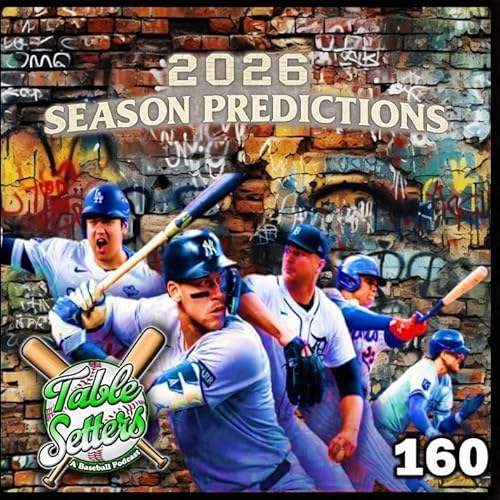
The 2026 MLB season has arrived, and this episode of TableSetters takes a comprehensive look at the postseason landscape and the performances most likely to define it. From roster construction to organizational philosophy, we examine how contenders are built to navigate the six-month grind and position themselves for October.
The starting point is clear. The Dodgers enter the season not simply as a favorite, but as the structural benchmark for the sport. Their roster is layered with impact at every level. The lineup blends power, discipline, and depth, while the pitching staff reflects both top-end talent and organizational stability. This is a team designed to withstand the natural variance of a long season and still arrive in October with multiple ways to win. The question is not whether they will contend, but whether anyone can match their completeness when the margins tighten.
From there, the focus expands across the league. Each division presents a different competitive dynamic that shapes the path to October.
In the American League East, the conversation centers on ceiling versus sustainability. The Yankees bring one of the highest ceilings in the sport, though early pitching questions loom. Baltimore continues to emerge as a legitimate long-term contender, driven by a young, dynamic core. Toronto offers balance, but depth remains a variable. Boston’s shift toward pitching and defense raises its floor, while Tampa Bay continues to maximize its roster and remain firmly in the mix.
In the National League East, the Phillies hold a slight edge based on continuity and postseason experience, but both the Mets and Braves have clear pathways to take control of the division. The Central divisions remain fluid in both leagues, where internal development, health, and in-season adjustments are likely to determine outcomes more than preseason projections. Out West, the Dodgers stand apart, though teams like Arizona and San Francisco are positioned to capitalize if opportunities emerge.
The postseason format continues to reward structure and adaptability. Securing a bye has become increasingly valuable, while the Wild Card round introduces volatility that can quickly reshape expectations. Each season produces at least one team that redefines its trajectory, whether through a bold deadline approach or a late surge that carries into October.
Projecting a World Series matchup at this stage is less about certainty and more about identifying profiles. The National League runs through Los Angeles on paper, but the field behind them is capable of closing that gap. In the American League, the margin between contenders is thinner, with several teams possessing viable paths depending on health, depth, and in-season evolution. The eventual matchup is likely to reflect not just talent, but which organization best adapts over the course of the year.
The award races follow a similar pattern. The MVP conversation should be driven by impact and consistency within competitive lineups. The Cy Young race will test both dominance and durability across a deep pool of arms. The Rookie of the Year field reflects the growing influence of young talent, where immediate contributions can shift both team outlooks and long-term expectations.
This episode brings these elements together into a cohesive framework, examining how teams are constructed, how they evolve, and how those decisions translate over 162 games into postseason viability.
The Dodgers set the standard entering 2026. The season will determine who can match it.
Subscribe and follow Listen on Spotify, Apple Podcasts, and YouTube Follow us on Instagram and Twitter: @tablesetterspod
Who is your pick for MVP and the 2026 World Series champion? Share your predictions and join the conversation.


 1 hr and 15 mins
 1 hr and 38 mins
 1 hr and 10 mins
 1 hr and 16 mins
 Mar 18 202631 mins
 57 mins
 Mar 17 20261 hr and 2 mins
 Mar 16 202626 mins