Wardley Mapping 4 Startups Podcast By Mark Craddock cover art

Wardley Mapping 4 Startups

Wardley Mapping 4 Startups

By: Mark Craddock
Listen for free

Unlock the full potential of your AI startup with Navigating the AI Frontier: Wardley Mapping for Startups. This podcast empowers founders, executives, and strategists to chart a clear course through the complex and rapidly evolving landscape of AI, with a special focus on generative AI. Discover how to leverage Wardley Mapping, a powerful strategic tool, to identify opportunities, mitigate risks, and stay ahead of the competition. Hosted by Mark and Tom, each episode provides a comprehensive roadmap for success in the AI-driven future. Learn how to craft a robust business model, build high-performing teams, and tackle technical challenges, all while navigating the ethical and regulatory hurdles of the AI space. With actionable strategies and real-world insights, you’ll master the art of strategic thinking, ensuring your startup not only survives but thrives in this dynamic ecosystem. Don’t just ride the AI wave—learn to navigate it with precision and foresight. Your journey to building a resilient, innovative, and ethically sound AI startup starts here!Copyright 2024 All rights reserved. Economics Leadership Management & Leadership
Episodes
  • #001 - ArcKit: Arreglando la Gobernanza de la Arquitectura Rota
    Apr 7 2026
    Resumen del Episodio En este episodio, exploramos ArcKit, un conjunto de herramientas diseñado para arreglar la gobernanza rota de la arquitectura empresarial. La arquitectura tradicional a menudo sufre por documentos dispersos en Word, Confluence y PowerPoint, lo que lleva a una aplicación inconsistente y a la pérdida de trazabilidad. Discutimos cómo ArcKit transforma este proceso en un flujo de trabajo estructurado y asistido por IA que empodera a los arquitectos empresariales y a los equipos de adquisiciones. Únete a nosotros para descubrir cómo ArcKit aprovecha los asistentes de IA, específicamente a través de herramientas como Claude Code, Gemini y Codex, para automatizar el trabajo pesado de la generación de documentos, permitiendo a los arquitectos concentrarse en la toma de decisiones críticas. Temas Clave Cubiertos en Este Episodio:
    • El Flujo de Trabajo de ArcKit: Cómo el kit de herramientas guía los proyectos desde el análisis inicial de las partes interesadas y la evaluación de riesgos hasta la creación de Casos de Negocio de Esquema Estratégico (SOBC) y modelos de datos detallados.
    • IA y Agentes Autónomos: Un vistazo a cómo ArcKit utiliza agentes de investigación autónomos para evaluar proveedores, descubrir fuentes de datos y consultar documentación fidedigna en la nube (AWS, Azure, GCP) sin saturar la conversación principal.
    • Mapeo Estratégico de Wardley: Cómo ArcKit genera Mapas de Wardley estratégicos para ayudar a los equipos a visualizar la evolución de los componentes y tomar decisiones sobre "construir vs. comprar".
    • Cumplimiento del Gobierno del Reino Unido: Una inmersión profunda en los marcos integrados de ArcKit para la entrega en el sector público, incluyendo evaluaciones automatizadas para el Código de Práctica Tecnológica (TCoP), Seguro por Diseño (Secure by Design) e incluso requisitos específicos del Ministerio de Defensa (MOD).
    • Trazabilidad de Extremo a Extremo: Cómo este conjunto de herramientas basado en Git garantiza que la trazabilidad se mantenga, detectando brechas automáticamente y vinculando los requisitos con el diseño.
    Ya sea que estés diseñando una plataforma de múltiples lados, modernizando la infraestructura gubernamental o simplemente tratando de poner orden en tu arquitectura empresarial, este episodio te mostrará cómo aprovechar la IA para hacer cumplir la calidad y el cumplimiento en todo el ciclo de vida de tu proyecto
    Show more Show less
    30 mins
  • #001 - ArcKit: Fixing Broken Architecture Governance
    Apr 7 2026

    In this episode, we explore ArcKit, an open-source toolkit designed to fix broken enterprise architecture governance. Traditional architecture often suffers from scattered documents across Word, Confluence, and PowerPoint, leading to inconsistent enforcement and lost traceability. We discuss how ArcKit transforms this process into a structured, AI-assisted workflow that empowers enterprise architects and procurement teams.

    Join us as we unpack how ArcKit leverages AI assistants—specifically through tools like Claude Code, Gemini, and Codex—to automate the heavy lifting of document generation, allowing architects to focus on critical decision-making.

    Key Topics Covered in This Episode:

    • The ArcKit Workflow: How the toolkit guides projects from initial stakeholder analysis and risk management to creating Strategic Outline Business Cases (SOBC) and detailed data models.
    • AI & Autonomous Agents: A look at how ArcKit uses autonomous research agents to evaluate vendors, discover data sources, and query authoritative cloud documentation (AWS, Azure, GCP) without cluttering the main conversation.
    • Strategic Wardley Mapping: How ArcKit automatically generates strategic Wardley Maps to help teams visualise component evolution and make data-driven "build vs. buy" decisions.
    • UK Government Compliance: A deep dive into ArcKit's built-in frameworks for public sector delivery, including automated assessments for the Technology Code of Practice (TCoP), GDS Service Standards, Secure by Design, and even MOD-specific requirements.
    • End-to-End Traceability: How the Git-based toolkit ensures that every technical requirement and vendor capability traces directly back to a measurable stakeholder goal.

    Whether you are designing a multi-sided platform, modernising government infrastructure, or simply trying to bring order to your enterprise architecture, this episode will show you how to leverage AI to enforce quality and compliance across your entire project lifecycle.

    Show more Show less
    20 mins
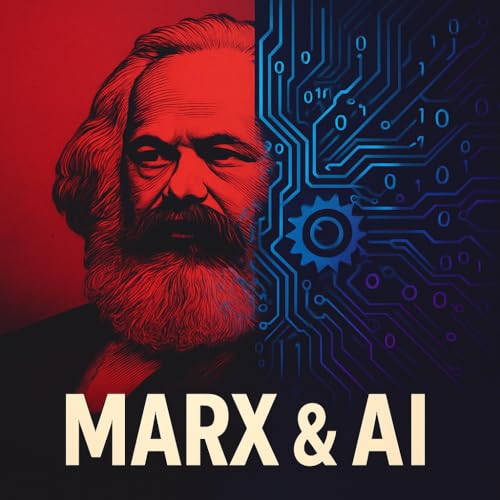
  • #024 - Marx & AI: Navigating the Future of Value, Labour & Governance
    Jul 22 2025

    Unpack the profound implications of Artificial Intelligence through the enduring lens of Karl Marx's economic theories. This podcast delves into how AI is fundamentally reshaping our understanding of value, labour, and capital, offering crucial insights for governments and public services grappling with the AI era. We explore Marx's foundational concepts and apply them directly to AI:

    • AI as Constant Capital: Understand why human work is the real value creator and how AI, as advanced machinery, functions as a powerful tool that boosts efficiency but does not create new value itself. Learn how data serves as the digital raw material for AI, deriving its value from human generation and processing.
    • The Paradox of Productivity: Discover how AI's automation leads to diminishing living labour, creating a puzzle where we produce more "useful stuff" (use-value) but face challenges in generating and distributing "exchange-value" (money and profit).
    • The Profit-Rate Paradox & AI's Acceleration: Examine Marx's prediction of the tendency of the profit rate to fall and how AI intensifies this by dramatically increasing constant capital share while potentially reducing variable capital share. This drives capital concentration and centralisation, where wealth and power gather in fewer hands.
    • Amplified Crisis Tendencies: Understand how AI can exacerbate existing economic problems, leading to overproduction, financial instability, worsening inequality, and increased pressure on public services.
    • Impact on Jobs & Well-being: Dive into the realities of labour displacement and wage stagnation, as AI takes over tasks and reduces the need for human labour, leading to precarity and widening global disparities
    • Crucially, the podcast provides insights into policy responses and alternatives for governments: • Rethinking Economic Systems: Moving beyond traditional GDP metrics to prioritise shared prosperity and societal well-being. • Strategic Investments: Focusing on reskilling and upskilling the workforce to adapt to human-centric roles that AI cannot replicate. • Fair Distribution Mechanisms: Exploring solutions like Universal Basic Income (UBI) to ensure a safety net and address inequality. • Public Ownership & Ethical Governance: Considering public ownership of AI and robust ethical frameworks to ensure powerful AI systems serve the public good, rather than just private profit.
    • Rethinking Taxation: Exploring new tax models for the AI age to fund essential public services.

    If you're a public sector leader, policymaker, or simply curious about how AI is transforming our world from an economic and social justice perspective, "Marx & AI" offers a critical framework for understanding and shaping a more equitable and stable future for all citizens.

    Show more Show less
    24 mins
No reviews yet