• World of Payne | Fire & Facts: Iran War, $3.72 Gas & The Polymarket Scandal
    Mar 19 2026
    Conservative current events: Iran war, gas prices, Polymarket scandal, and theborder fight — all five stories, all the facts, no spin.


    Day 17 of the Iran war and the story nobody is telling you: how this conflictconnects to the petrodollar system, the U.S. dollar's global dominance, and afifty-year financial architecture that underwrites American power. Gas is at $3.72a gallon — up 74 cents in seventeen days — and we break down exactly what thatmeans for your household budget.
    Then: the Polymarket prediction market scandal. Six anonymous accounts made $1.2million betting the U.S. would strike Iran on February 28th — placing trades 71minutes before news broke publicly, when the platform showed a 17% probability.The documented connections.


    The dropped investigations. The question every Americanshould be asking.

    Plus: Democrats' latest move to block ICE and CBP funding — the sixth attempt inCongress this week. And Treasury Secretary Bessent in Paris, negotiating with Chinaover soybeans, semiconductors, rare earth minerals, and the future of the dollar.


    Every claim sourced. Every analysis grounded in conservative principle.Opens and closes with prayer. This is Fire and Facts with Tanner Payne.
    Episode 1. March 16, 2026.

    Become a supporter of this podcast: https://www.spreaker.com/podcast/world-of-payne--4732235/support.

    🔗 Connect With Us
    • X (Twitter): World of Payne
    • Facebook: Facebook
    💼 Sponsored By
    • ValorBuilt Apparel – http://valorbuilt.us/P2S
    • GetSequence.io- https://sequence.pxf.io/WoP
    Show more Show less
    1 hr and 38 mins
  • Farm Subsidies: Protect Farmers, Fix the System
    Mar 1 2026
    In this episode of World of Payne, we take on one of the most misunderstood issues in America: agriculture and farm subsidies—and we do it with the framing the country desperately needs right now: pro-farmer, pro-food security, and relentlessly anti-corruption. Let’s get this straight from the start: farmers are the foundation, not the villain. Food isn’t a luxury. It’s national stability. It’s cost of living. It’s local economies. It’s the difference between a country that can stand on its own and a country that becomes dependent when global shocks hit. Farm safety-net programs often begin with good intentions—stabilize production, protect communities from collapse, and keep food supply reliable. But when systems grow too large, too complex, and too political, a new problem shows up: waste, loopholes, and back-room influence. And that rot doesn’t just hurt taxpayers—it hurts honest farmers first, because it destroys public trust and turns rural America into a political punching bag. This episode walks through the full moral and economic reality:
    We cover how citizens benefit, the hidden costs and market distortions, the places fraud and abuse patterns tend to appear, and why enforcement can be weak when politics and influence get involved. Then we shift hard into the solutions: reduce administrative waste, tighten loopholes without punishing honest operators, modernize oversight, increase transparency, and cut off regulatory capture. Finally, we ask the big question: is there a way out—can subsidies ever be reduced—or are stabilization tools a permanent reality in a serious nation that wants food independence? We end with a message the entire country needs: compassion and accountability can coexist. Respect for farmers and zero tolerance for corruption can coexist. Because this isn’t about left versus right—it’s about right versus wrong. Sponsor: ValorBuilt Apparel — integrity, community, responsibility, and purchases that stand for more than what arrives at your door.

    Become a supporter of this podcast: https://www.spreaker.com/podcast/world-of-payne--4732235/support.

    🔗 Connect With Us
    • X (Twitter): World of Payne
    • Facebook: Facebook
    💼 Sponsored By
    • ValorBuilt Apparel – http://valorbuilt.us/P2S
    • GetSequence.io- https://sequence.pxf.io/WoP
    Show more Show less
    48 mins
  • EV Mandates: Who Pays, Who Profits, Who Loses?
    Feb 15 2026
    EVs are a tool. Electrification is a trend. Innovation is real. But mandates change the game—because once government forces the timeline, the costs don’t disappear… they get shifted, hidden, and paid by regular people. In this episode, we separate EV technology from EV policy and follow one question all the way down:

    Who pays, who profits, and who loses? We hit the pressure points leaders keep dodging:
    Grid reliability and peak demand reality

    The “two bills” problem: sticker price AND system-wide infrastructure costs

    Subsidies, “standards,” and rules that function like backdoor mandates

    Minerals and batteries: mining, refining, processing, and geopolitical leverage
    Why rural America and working families get squeezed first
    How central planning turns innovation into compliance Then we lay out a better path that’s pro-energy, pro-worker, pro-stewardship, and pro-freedom:
    Technology-neutral policy instead of government picking winners
    Permitting reform so infrastructure and power generation can actually keep up
    Domestic mining + refining + recycling capacity built here
    Grid upgrades that are honest about timelines and costs
    A serious role for nuclear and next-gen baseload power
    And one principle that solves a lot: let consumers choose, let markets compete, and let America build Call to Action:
    If this episode hit you, share it with one person who thinks mandates are “just speeding up progress.” The bill is coming—whether they admit it or not.

    Become a supporter of this podcast: https://www.spreaker.com/podcast/world-of-payne--4732235/support.

    🔗 Connect With Us
    • X (Twitter): World of Payne
    • Facebook: Facebook
    💼 Sponsored By
    • ValorBuilt Apparel – http://valorbuilt.us/P2S
    • GetSequence.io- https://sequence.pxf.io/WoP
    Show more Show less
    1 hr and 26 mins
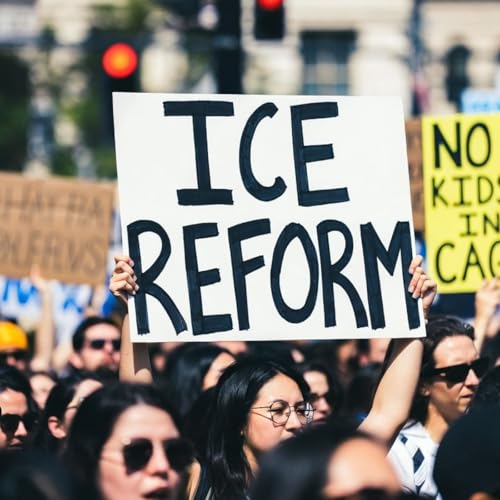
  • Stop the Chaos: Fund ICE Reform, Protect Rights, Secure the Nation
    Feb 7 2026
    We’re living in a moment where the loudest people get rewarded for being the least responsible. Politicians fundraise off outrage. Mainstream media amplifies half-context. Activists get pushed into moral certainty—and moral certainty can become moral permission. That’s how peaceful protest drifts into interference. That’s how lawful enforcement turns into a street-level powder keg. And that’s how America loses: not because we debated hard issues, but because we stopped telling the truth long enough to fix them. This episode is a right-leaning, reform-forward case for ICE modernization that strengthens the mission while protecting civil liberties. You can support secure borders and still demand discipline, transparency, and humane custody standards. You can defend protest rights and still draw a hard line against obstruction. You can appreciate the work ICE does to keep communities safe and still admit the agency isn’t perfect—because no agency made of human beings is perfect. Here’s the core principle: if we want better outcomes, we need better tools and higher standards—not a starved system running on burnout and improvisation. What we cover:1) The protest reality nobody wants to say out loudPeaceful protest is protected in America. Recording government is protected. Criticizing enforcement is protected. But in some hotspots, protests have shifted into coordinated interference—real-time warning networks, following operations, surrounding vehicles, and disorienting tactics like horns and whistles. The result is predictable: more confusion, more risk, more chances for something to go wrong, and more “viral moments” that get weaponized into instant verdicts.2) The narrative war is an accelerantWhen politicians and mainstream media paint every ICE action as evil by default, they don’t just polarize the country—they create permission. They push people to feel justified in obstruction, harassment, intimidation, property damage, and escalation. We demand a leader standard: verify before you amplify, speak with precision, and stop monetizing division.3) Body cameras as truth insurance—especially for agentsBody cameras aren’t a trap. They’re a shield against selective editing and false narratives. In a world where the verdict comes before the facts, full footage protects agents, citizens, and the public’s trust. We lay out what a serious body cam program requires: clear activation rules, secure storage, audit trails, privacy protections, penalties for tampering, and a lawful, timely process to prevent misinformation vacuums from driving unrest. 4) Training that matches modern chaosYou don’t get professional outcomes on a starvation diet. We argue for expanded scenario training built for today’s environment: de-escalation under provocation, crowd dynamics, rights boundaries under stress, stress inoculation, and post-operation learning loops (after-action review) that improve procedure without turning everything into PR.5) Backup and crowd-control planning without crushing speechA larger, well-trained, disciplined presence doesn’t have to mean “militarization.” Done correctly, it creates distance and stability, reduces friction, and lowers the odds of force. Thin staffing creates closeness. Closeness creates confrontation. We talk about perimeters, operational planning, specialization, and leadership temperament—so professionalism stays intact even when crowds are trying to bait a reaction. 6) Noise-canceling comms devices and clearer protocolsIf comms go down, coordination collapses. When noise is used to disrupt communication, mistakes become more likely. Noise-canceling comms and standardized protocols don’t silence protest—they keep teams safe and reduce confusion so lawful work can happen without escalation.7) Funding with accountability—because “defund” is not reformReform requires resources: training hours, body cams and storage, comms upgrades, staffing capacity, detention standards, and real oversight. We make the conservative case for targeted funding tied to measurable outcomes and audits. Fund what fixes it. Measure what you fund. Punish waste. Reward professionalism.8) Detention reform: federal responsibility, federal standards, humanitarian careDetention issues didn’t start yesterday. If the federal government detains people, the federal government owns the moral responsibility. We argue for federal standards, enforcement of those standards, and movement toward federal facilities where feasible. Humane care isn’t open borders—it’s legitimacy. A serious nation enforces law without losing its moral center. Bottom line: America deserves better than chaos and lies. Secure borders, protected rights, humane standards, truth over narrative, reform over sabotage. This episode is your blueprint.Become a supporter of this podcast: https://www.spreaker.com/podcast/world-of-payne--4732235/support.🔗 Connect With UsX (Twitter): World of ...
    Show more Show less
    1 hr and 48 mins
  • Powder Keg Politics: Storms, the Fed, War Powers—and Minneapolis
    Jan 30 2026
    This episode is a hard look at the real currency underneath every other currency: trust. When trust collapses, everything gets more expensive—safety, stability, cost of living, and the fabric of local community. We cover five major current events through one consistent lens: What happened, why it matters to working families, what’s missing in the framing, who benefits, who pays, and what reforms restore accountability. Then we take the main course: a developing Minneapolis story tied to federal immigration enforcement. We keep it conservative and responsible—supporting ICE’s mission to remove violent offenders and predators, while refusing to declare a verdict without complete evidence. We reject narrative warfare, demand verified facts, and push for transparent investigation so legitimacy isn’t destroyed by politics and media incentives. Inside this episode:
    • Winter storm disruption and the reality test of competence and infrastructure resilience
    • Supreme Court + the Fed: independence, power, and the impact on rates, inflation, and families
    • War powers and Venezuela: Congress dodging responsibility while the public pays
    • Syria ceasefire extension: why foreign instability hits domestic safety and budgets
    • ISS medical emergency: competence matters when there’s no room for spin
    • Minneapolis deep dive (developing): competing claims, partial footage, incentives, and why truth-first is the only adult posture
    Sponsor: ValorBuilt Apparel — purpose-driven gear for people who still stand for faith, grit, and community.

    Become a supporter of this podcast: https://www.spreaker.com/podcast/world-of-payne--4732235/support.

    🔗 Connect With Us
    • X (Twitter): World of Payne
    • Facebook: Facebook
    💼 Sponsored By
    • ValorBuilt Apparel – http://valorbuilt.us/P2S
    • GetSequence.io- https://sequence.pxf.io/WoP
    Show more Show less
    1 hr and 9 mins
  • The Trust Crisis: Renée Good, ICE, Syria Strikes, Shutdown Deadline, Tariffs, and the Economy
    Jan 23 2026
    America doesn’t just have political disagreement — it has a legitimacy problem. When people stop trusting institutions to tell the truth, every moment gets more dangerous: law enforcement encounters, protests, court decisions, budgeting deadlines, and foreign policy decisions. This episode starts where the trust crisis became brutally real: the Renée Good–ICE shooting in Minneapolis. We cover it with humanity for everyone involved—refusing to turn people into symbols—and we separate what’s been reported from what’s still disputed. We talk about how adrenaline, confusion, and the “narrative temperature” in America can turn a street-level moment into a disaster that nobody can rewind. Then we zoom out and connect the dots across five major flashpoints shaking the country right now:
    • Syria strikes / ISIS posture
    • Shutdown deadline pressure / governing by crisis
    • Tariffs + emergency powers + constitutional brakes
    • The economy’s squeeze, price sensitivity, and cost pressures
    • And what all of it reveals about a country that’s losing trust in its own systems
    This isn’t a hot take episode. It’s a standards episode—personal responsibility and government restraint, truth and transparency, ordered liberty and moral clarity. Listener warning: This episode discusses death, violence, and traumatic events. Support the show:
    Sponsor: ValorBuilt Apparel — goal wear for people who refuse to drift. Join the community:
    Find us on Facebook, YouTube, X, Instagram, and Rumble (links in the show notes).
    Clips, follow-ups, and conversation live there between episodes.

    Become a supporter of this podcast: https://www.spreaker.com/podcast/world-of-payne--4732235/support.

    🔗 Connect With Us
    • X (Twitter): World of Payne
    • Facebook: Facebook
    💼 Sponsored By
    • ValorBuilt Apparel – http://valorbuilt.us/P2S
    • GetSequence.io- https://sequence.pxf.io/WoP
    Show more Show less
    1 hr and 31 mins
  • Subsidies, Strings, and Small Business: Inside the SBA Maze
    Jan 15 2026
    Main Street doesn’t get the same benefit of the doubt that Wall Street gets — and that double standard is killing trust, killing momentum, and crushing the builders who keep towns alive. In this episode, we unpack how SBA loans, federal grants, government-backed subsidies, and procurement incentives were created to be a bridge for real entrepreneurs… but too often get hijacked by fraudsters, insiders, pass-through schemes, and “paper” small businesses gaming the rules. We break down the programs that shape who gets a real shot at growth — and who gets shut out:
    • PPP & EIDL: why emergency speed created massive openings for fraud, and how fraud doesn’t just steal money — it steals trust.
    • SBA 7(a): how guarantees can turn “no” into “yes” for legit operators, but also how incentives can drift when underwriting weakens.
    • SBA 504: how fixed-asset financing can help a shop expand into a bigger building and create better jobs — and how valuations and projections have to be disciplined.
    • 8(a) & set-asides: when “small business” becomes a costume through pass-throughs and front-company schemes, stealing real opportunity from honest firms.
    • Reforms that actually bite: modern verification, transparency, real ownership/control enforcement, lender accountability, contract performance audits, and real consequences for cheaters — so the ladder stays for honest builders and the grifters get kicked off.
    This episode is for the owner trying to make payroll without laying people off. It’s for the business outgrowing a small shop and wanting to expand to create quality jobs. It’s for the entrepreneur doing everything right — and watching the system reward the people who don’t. The message is simple: Main Street deserves the same seriousness, competence, and fair chance we’ve historically handed Wall Street.


    If this episode hit you in the chest, don’t let it stop with you. 1) Share it
    Send this to one small business owner, one builder, or one worker who’s tired of rigged systems. 2) Follow / Subscribe
    Turn on notifications so you don’t miss the next episode in this series. 3) Leave a Rating + Review
    • Spotify: tap the rating
    • Apple Podcasts: write a quick review
      Reviews help this message reach more Main Street listeners.
    4) Comment Your Story (Keep It Clean)
    Have you used SBA loans, PPP, EIDL, 7(a), 504, or dealt with government contracting?
    Tell your story — but don’t name private individuals and don’t dox anyone.

    Become a supporter of this podcast: https://www.spreaker.com/podcast/world-of-payne--4732235/support.

    🔗 Connect With Us
    • X (Twitter): World of Payne
    • Facebook: Facebook
    💼 Sponsored By
    • ValorBuilt Apparel – http://valorbuilt.us/P2S
    • GetSequence.io- https://sequence.pxf.io/WoP
    Show more Show less
    1 hr and 28 mins
  • Pills, Profits, and Promises: How Hospital and Pharma Subsidies Save Lives—and Get Hijacked
    Dec 13 2025
    Most subsidies in America started with good intentions: to help people through hard times and get them back on their feet. They were built for the couple who just found out they’re having a baby and are terrified of the hospital bill. They were built for the parent who just lost a job and is scrambling to keep health coverage. They were built for the grandparent whose body can’t do it anymore after forty years of work. They were built for the person who just heard the word “cancer” and now needs help paying for food, childcare, and gas to get to chemo. They were not built so hospital CEOs and their minions could turn compassion into a business model. In this fiery World of Payne deep dive, Tanner pulls the curtain back on how hospitals and pharmaceutical companies use government subsidies like 340B drug discounts, Disproportionate Share Hospital (DSH) payments, NIH research funding, rural hospital support programs, and nonprofit tax breaks. On paper, these subsidies are supposed to keep safety-net hospitals alive, expand access for low-income patients, fund breakthrough research, and keep rural ERs from going dark. In reality, many have been quietly hijacked and turned into profit engines that inflate costs, drive consolidation, and enrich executive teams while families drown in medical debt. Tanner breaks down how 340B really works in the wild—hospitals buying drugs at steep discounts, billing full price, and pocketing the spread with almost zero transparency about how much actually reaches poor patients. He exposes how nonprofit hospitals collect tax exemptions and DSH dollars in the name of charity while still suing low-income families, garnishing wages, and slapping liens on homes. He walks through NIH funding and overhead, showing how universities and health systems can treat taxpayer-funded research as a revenue stream while labs fight for scraps. He takes you into rural America, where nearly 200 rural hospitals have closed in two decades, almost half of those left are losing money, and one closure can turn a 10-minute ambulance ride into a 45-minute gamble. This isn’t just a rant—it’s a conservative blueprint for reform. Tanner lays out how to force radical transparency on subsidies, tie nonprofit and 340B privileges to real charity care and clear patient benefits, cap and expose NIH overhead bloat, and make rural support money follow actual access instead of political connections. He argues for a “subsidy-light” future where we attack the root price disease—insane hospital facility fees, opaque drug pricing, rigged contracts, and monopoly power—so we can shrink and sharpen subsidies instead of endlessly throwing more money at a broken system. If you’re tired of being told “healthcare is complicated, just trust us,” this episode gives you the receipts and the language to start asking the questions no one in power wants to answer. It’s unapologetically conservative, fiercely compassionate toward patients and families, and absolutely ruthless toward the hospital systems, pharma giants, and academic empires that have turned safety-net programs into cash machines. “Pills, Profits, and Promises” will leave you informed, fired up, and ready to demand a healthcare system where compassion isn’t a marketing slogan—it’s the standard.

    Become a supporter of this podcast: https://www.spreaker.com/podcast/world-of-payne--4732235/support.

    🔗 Connect With Us
    • X (Twitter): World of Payne
    • Facebook: Facebook
    💼 Sponsored By
    • ValorBuilt Apparel – http://valorbuilt.us/P2S
    • GetSequence.io- https://sequence.pxf.io/WoP
    Show more Show less
    1 hr and 31 mins