(don't) Waste Water! | Water Tech to Solve the World Podcast By Antoine Walter cover art

(don't) Waste Water! | Water Tech to Solve the World

(don't) Waste Water! | Water Tech to Solve the World

By: Antoine Walter
Listen for free

❓ Ever wondered how the #WaterIndustry was reacting to our World's Water Challenges? Water Scarcity? #SDG6? PFAS? Climate Change? Circular Economy? Digitization and Smart Water? 💪 Get the Water Market pulse for free. In one hour per week, while you do the dishes! 📈 We talk water investment, water tech, water entrepreneurship and water market with entrepreneurs, thought leaders, book authors, scientists, investment funds, VCs, and C-Level experts from water majors. ➡️ Leverage their insights, advice & experience and ensure to stay on top of best practices 🗓️ Tune in every Wednesday (don't miss out! 😅) 🌐 Find all the detailed episode notes, interviews, infographics, and more at http://dww.show Currently in its 10th Season, the "(don't) Waste Water" podcast has already welcomed around 250 guests from Water Majors (SUEZ, Veolia, Jacobs, Xylem, Kemira, Evoqua, Aquatech, SKion Water...), Scale-Ups (Cambrian Innovation, Epic Cleantec, Gradiant, Liqtech, 374Water, Gingko Bioworks...), Start-Ups (Puraffinity, KETOS, 120Water, ZwitterCo, Membrion, Source...), Universities (Berkeley, the Columbia Water Center), Investment Funds (Sciens Water, Mazarine, Burnt Island Ventures...), Business Accelerators (Imagine H2O, Elemental...), Book Authors (Seth Siegel, David Sedlak, David Lloyd Owen...) or Market Intelligence Companies (BlueTech Research, Global Water Intelligence, World Bank, OECD, Isle Utilities...). Or simply water legends like Gary White, Mina Guli or Andrew Benedek! On the "(don't) Waste Water" podcast, I strive to make the Water Industry easy to understand for everyone, starting with water professionals, executives, and investors. Hence, he opens the microphone to seasoned, inspirational water experts to discuss their field of excellence. No one can claim an all-around in-depth understanding of a matter as complex as Water. But piece by piece, you can rebuild the puzzle. With curiosity, patience, and passion, Antoine Walter explores topics such as Advanced Treatment Technologies, Water-Energy Nexus (Hydrogen, Lithium...), PFAS removal, Nature-Based Solutions, Wastewater Reuse, Distributed Water Treatments, Water Finance, and Water Entrepreneurship. I actually firmly believe that regular listeners of the "(don't) Waste Water" podcast may, in the end, claim a "Water MBA!" A particular field of interest is how innovation forms, grows and gets widely adopted in a complex and conservative field like the Water Industry. This may be one of the keys to achieving the United Nations Sustainable Development Goal n°6 - #SDG6. Oh, and in short, about me: I'm a water engineer turned avid student of the water business, market, finance, and tech. I'm married, a happy father of three, and I'm French (nobody's perfect 😅). Hosted on Ausha. See ausha.co/privacy-policy for more information.Antoine Walter Natural History Nature & Ecology Science
Episodes
  • Forget Russia & Qatar: Europe has a New Gas Source (spoiler: it's wastewater biogas)
    Mar 27 2026

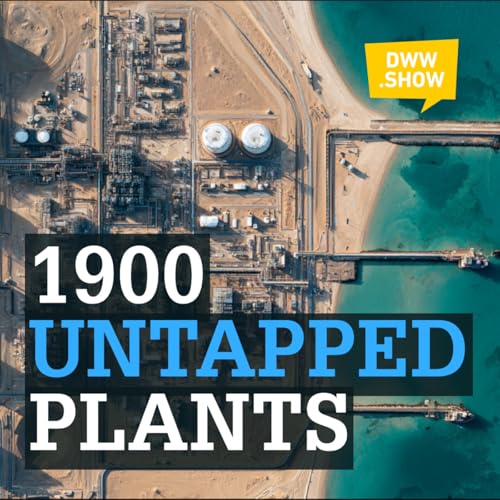
    Can Europe's Sewage Plants Replace Russian Gas? (aka: the €1.9 Billion Biomethane Opportunity)


    Europe's wastewater treatment plants are sitting on a massive untapped energy reserve. With the right upgrades, roughly 1,900 facilities across Europe could produce 13.4 billion cubic meters of biomethane per year — matching Russia's remaining pipeline gas deliveries in 2024. Let me break down the economics, the technology, and the investment landscape driving this shift.


    🌶️ KEY SPICES 🌶️

    ⛽ One oil price spike dropped profitable plant thresholds by 15-47% and made ~600 additional facilities viable for biomethane grid injection overnight

    📊 Only 30% of cost-competitive plants have installed grid injection equipment — Denmark leads at 88%, Poland trails at 6.7% ⚖️ The EU's recast Urban Wastewater Treatment Directive mandates energy neutrality by 2045, creating a regulatory demand floor independent of gas prices

    🏭 Cambi's thermal hydrolysis revenue trajectory points to their first €100M year, with EBITDA jumping from near-zero to €20M in two years

    💰 NextGen biogas companies are funded by energy infrastructure capital (ENGIE, Pennybacker, Hitachi), not water-focused VCs


    🥜 IN A NUTSHELL 🥜

    Why did 600 European wastewater plants suddenly become profitable gas producers? The Iran-triggered gas crisis pushed TTF prices from €32 to €60 per MWh, dropping minimum viable plant sizes by 15-47% and making biomethane grid injection economically attractive across most of Europe.

    How much gas could European wastewater produce? Europe's ~1,900 unequipped wastewater plants could produce 13.4 billion cubic meters of biomethane per year, equivalent to Russia's 2024 pipeline gas to Europe, worth €1.9 billion annually.

    What is the regulatory driver behind this shift? The EU's November 2024 recast of the Urban Wastewater Treatment Directive mandates energy neutrality for all European wastewater utilities by 2045, making biogas production a compliance requirement regardless of gas prices.

    Who is winning in the biogas technology space? Cambi leads thermal hydrolysis with revenue potentially reaching €100M, while Veolia and SKion Water pursue platform approaches. Anaergia's bankruptcy serves as a cautionary tale that timing matters as much as thesis.

    Where is the investment capital coming from? Energy infrastructure funds and corporate venture arms (ENGIE New Ventures, Pennybacker Capital, Hitachi) dominate NextGen biogas funding, while traditional water VCs remain largely absent from the space.


    ***


    Europe faces a significant energy challenge, highlighted by a potential natural gas shortage following recent events. This situation underscores the broader global energy crisis and its impact on energy markets. We also touch upon the unusual idea of Europe's sewage as a potential gas source, a concept that could impact oil and gas discussions moving forward. The discussion includes analysis from the International Energy Agency regarding supply disruptions and an update on the iran war.


    Hosted on Ausha. See ausha.co/privacy-policy for more information.

    Show more Show less
    26 mins
  • His First Two Inventions Made Billions - Number Three Just Went Live
    Mar 21 2026

    How Did Pierre Côté Build Two Unicorn Water Technologies - and Why Is He Now Betting on Algae?


    Pierre Côté is arguably the most successful water technology inventor alive. With over 100 patents across four decades, he created ZeeWeed (the membrane that launched the $3.63 billion MBR market) and co-invented ZeeLung (anchoring the ~$500 million MABR market). Now in his seventies, he's co-founded AlgaFilm Technologies to tackle nutrient removal with algae biofilm.


    🌶️ KEY SPICES 🌶️

    🧬 Two unicorn technologies from one inventor — ZeeWeed created the MBR category ($3.63B market), ZeeLung anchors MABR (~$500M and growing)

    💰 $689 million exit — GE Water acquired Zenon in 2006 at 3.29x revenue, despite Zenon being loss-making

    🌿 AlgaFilm's Algae Forest — patented inverted-cone photobioreactors with 12:1 surface-area-to-footprint ratio, claiming 80% energy reduction

    📊 Forced regulatory demand — San Francisco Bay faces $10.8B in nutrient removal costs; Netherlands spending €2.8B in two years; 8,000+ US lagoons need upgrades

    🏭 Competitive validation — Gross-Wen Technologies at TRL 9 with 30+ installations and $15M annual revenue proves the algae biofilm category

    ❄️ The winter test — Kingsville, Ontario demonstration (started March 10, 2026) will face a full Canadian winter, the single biggest unknown


    🥜 IN A NUTSHELL 🥜

    Who is Pierre Côté? A civil engineer from École Polytechnique de Montréal with a PhD from McMaster, who joined Zenon Environmental in 1989 and invented ZeeWeed — the immersed hollow-fiber membrane technology that created the commercially viable MBR market.

    What is AlgaFilm Technologies? A BC-based startup co-founded in November 2023 by Côté and Ahren Britton (former Ostara CTO) that grows algae as a fixed biofilm on engineered carriers to remove nitrogen and phosphorus from wastewater, replacing chemical dosing.

    Why does this matter now? Regulatory pressure is forcing massive non-discretionary spending on nutrient removal — $10.8 billion in San Francisco Bay alone — while the resource recovery market has inflected from $1.5 billion to $2.88 billion since 2020.

    What are the risks? AlgaFilm sits at approximately TRL 8, has just kicked off its first plant, and must prove winter uptime through Canadian conditions during its 12-month Kingsville demonstration.

    Who validates the category? Gross-Wen Technologies (Iowa, 2014) operates 30+ algae biofilm installations at TRL 9, with $15M annual revenue and operational profitability, proving the commercial viability of the approach.


    #️⃣ Mentioned Links #️⃣

    - AlgaFilm Technologies: https://algafilm.com/

    - Burnt Island Ventures blog entry: https://www.burntislandventures.com/blog/fsu1j27imhhsfnbyxi2k2udd30m57e

    - DWW — The Algae Revolution with Martin Gross (GWT): https://dww.show/the-algae-revolution-how-gross-wen-technologies-is-cleaning-our-water-through-natures-filter/

    - My conversation with Andrew Benedek: https://smartlink.ausha.co/dont-waste-water/s5e12-how-to-be-alone-early-crazy-but-actually-right-the-history-of-zenon


    Hosted on Ausha. See ausha.co/privacy-policy for more information.

    Show more Show less
    33 mins
  • This French Lab Wants to Replace Every Pump in Desalination (ilion Water Technologies)
    Mar 16 2026

    Can 4 Volts of Electricity Replace 60 Bars of Pressure in Seawater Desalination?


    ilion Water Technologies is a 2025 spinout from the Physics Laboratory of the École Normale Supérieure in Paris.

    Their VIRO (Voltage-Induced Reverse Osmosis) technology claims to replace the high-pressure pump train in seawater desalination with an alternating electric field applied to engineered composite membranes, operating at atmospheric pressure.


    🌶️ KEY SPICES 🌶️

    ⚡ VIRO generates ~15 equivalent bars of pressure per applied volt, targeting the 60-bar threshold used in industrial seawater RO

    💰 ilion closed a €3.8M ($4.46M) pre-seed co-led by Demea Sustainable Investment and Critical Path Ventures, plus €1.3M non-dilutive from Bpifrance, CNRS Innovation, PSL, and the ERC

    🔬 The underlying research is peer-reviewed in Nature Materials with a scientific lineage tracing back to a 2013 Physical Review Letters paper

    👨‍🔬 Scientific advisor Lydéric Bocquet (CNRS Innovation Medal 2024) previously took nanofluidics from lab to industrial pilot with Sweetch Energy (€40M raised, Rhône river deployment in 2024)

    📊 The global RO + nanofiltration market reaches $6.14B TOTEX by 2030 at 6.1% CAGR, with RO commanding ~90% of dissolved solids removal

    🪦 The graveyard of RO alternatives is pretty full with the recent addition of Aquaporin (21 years → collapse), to the existing Oasys Water ($31M fire sale), or memsys ($3M)


    🥜 IN A NUTSHELL 🥜

    How does VIRO actually work? Instead of mechanically forcing saltwater through a membrane at 60 bars, VIRO uses an alternating electric field on a composite membrane with nanoscale charge properties, creating an "osmotic diode" that rectifies water flow while blocking salt.

    What is ilion's current maturity level? TRL 4 (lab-validated), with no published specific energy consumption in kWh/m³, no salt rejection at scale, no membrane lifetime data, and zero physical deployments. Why has every RO alternative failed before? Forward osmosis, membrane distillation, and biomimetic membranes all failed to cross the gap between lab performance and industrial reliability, while RO kept improving toward its thermodynamic floor of ~1.0 kWh/m³.

    What makes ilion different from previous attempts? Bocquet's track record with Sweetch Energy, the Nature Materials peer review, a deep-science investor stack, and positioning as an RO enhancer (retrofit-compatible) rather than an RO replacement.

    What should investors watch over the next 2 years Three milestones: real-water performance at the Île-de-France pilot, XPRIZE Water Scarcity semifinal testing in Q4 2026, and membrane fabrication scalability beyond handcrafted lab specimens.


    #️⃣ Mentioned Links #️⃣

    🔗 ilion Water Technologies — https://ilion-watertech.com/

    🔗 Sweetch Energy — https://www.sweetch.energy/

    🔗 NALA Membranes on the podcast — https://smartlink.ausha.co/dont-waste-water/s13e9-nala-membranes

    🔗 the Active Membranes episode — https://smartlink.ausha.co/dont-waste-water/s13e6-this-200-hack-makes-desalination-50-cheaper


    Hosted on Ausha. See ausha.co/privacy-policy for more information.

    Show more Show less
    36 mins
All stars
Most relevant
Exactly what it says on the tin. A great resource for people interested in wastewater or who want to keep up with recent developments particularly from an environmental perspective. Only negative is that sometimes mic quality can be noticeably low, though it varies depending on the speaker and does not impact ability to understand.

Great resource

Something went wrong. Please try again in a few minutes.