whistlekick Martial Arts Radio Podcast By whistlekick Martial Arts Radio cover art

whistlekick Martial Arts Radio

whistlekick Martial Arts Radio

By: whistlekick Martial Arts Radio
Listen for free

Martial Arts Radio is a bi-weekly show featuring interviews and comments on traditional martial arts topics. From the famous to the not-so, we speak to people from all over the world, in every martial arts discipline. Karate, taekwondo, kung fu, jujutsu, BJJ, HEMA, capoeira, FMA, tai chi, tkd, kungfu, kickboxing, arnis, escrima, tangsoodo,kempo, and everything else you can think of. Brought to you by whistlekick.All episodes are copyright Whistlekick, LLC, All Rights Reserved. Exercise & Fitness Fitness, Diet & Nutrition Hygiene & Healthy Living
Episodes
  • Episode 1117 - Martial Things with Andrea Harkins
    Apr 9 2026

    SUMMARY

    In this episode, Andrea Harkins and Andrew Adams engage in a free-flowing conversation about martial arts, social media, and the importance of community engagement. They discuss the evolution of Andrea's social media presence, particularly on TikTok and Facebook, where she poses thought-provoking questions to the martial arts community. The conversation also delves into the role of competition in martial arts, the definition of greatness, and the importance of motivation and inspiration in the martial arts journey. In this conversation, they delve into the multifaceted world of martial arts, discussing personal experiences, the significance of history, and the evolving nature of training. They also explore the importance of individual journeys in martial arts, the relevance of the belt system, and the value of personal growth over competition. The dialogue emphasizes that martial arts can serve various purposes beyond fighting, including self-awareness and confidence building.

    TAKEAWAYS

    • Social media can be a powerful tool for community engagement.
    • Posing questions can spark meaningful conversations in martial arts.
    • Competition is not a requirement for being a great martial artist.
    • Greatness in martial arts is subjective and personal.
    • Motivation and inspiration are key to encouraging others in martial arts.
    • Engaging with different opinions can broaden perspectives.
    • Martial arts can be pursued for various personal reasons.
    • Martial arts can be a personal journey rather than just a fighting art.
    • Understanding the history of martial arts can enhance appreciation but isn't essential for practice.
    • Competition can provide valuable pressure testing for skills learned.
    • The belt system in martial arts is often misunderstood and varies by school.
    • Martial arts training can lead to personal growth and self-discovery.
    • The reasons for training in martial arts can change over time.

    Join our EXCLUSIVE newsletter to get notified of each episode as it comes out!
    Subscribe — whistlekick Martial Arts Radio

    Show more Show less
    43 mins
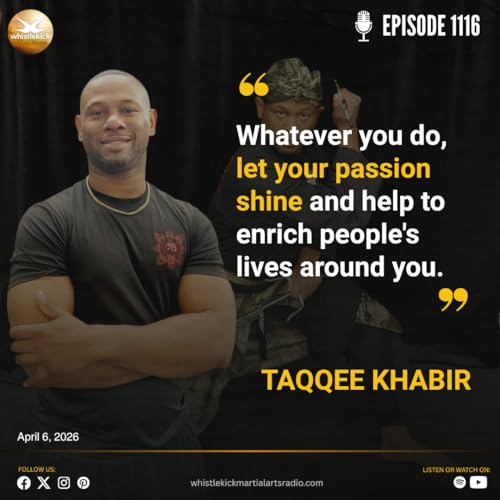
  • Episode 1116 - Taqqee Khabir
    Apr 6 2026

    SUMMARY

    In this conversation, Taqqee Khabir shares his journey into martial arts, influenced by his father's background and his own experiences with competition and injury. He discusses the importance of personal growth, the challenges he faced, and the lessons learned through various martial arts disciplines. The conversation highlights the significance of mindset and adaptability in overcoming obstacles and pursuing one's passion for martial arts. He shares his transformative journey from chronic pain to healing through martial arts and yoga. He discusses the influence of his parents on his approach to natural healing and the importance of movement for health and longevity. Taqqee emphasizes the significance of teaching and sharing knowledge with others, highlighting the ripple effect of positive influence in the community. His story illustrates the power of resilience, personal growth, and the impact of martial arts on mental and physical well-being.

    TAKEAWAYS

    • Taqqee's early exposure to martial arts came from watching kung fu movies with his father.
    • His father emphasized education over fighting, leading Taqqee to explore martial arts on his own.
    • Taqqee faced bullying in school, prompting his father to teach him self-defense techniques.
    • His first formal training was in Taekwondo and Hapkido, where he learned foundational skills.
    • A pivotal moment in Taqqee's journey was a cage fight that highlighted gaps in his training.
    • He adopted a growth mindset after realizing the need to learn grappling arts like judo and jiujitsu.
    • Taqqee's experiences in competition taught him the importance of strategy and adaptability.
    • Injury from training led to significant health challenges, prompting a reevaluation of his approach to martial arts.
    • Taqqee's resilience and determination to continue practicing martial arts define his journey.
    • He emphasizes the importance of seeking alternative solutions to health issues rather than rushing into surgery.
    • He found inspiration in martial arts and natural healing practices.
    • The importance of understanding pain as a messenger was emphasized.
    • Taqqee avoided opioids and focused on natural healing methods.
    • He discovered yoga and chiropractic care as effective treatments.
    • He experienced a shift from personal recovery to community impact.
    • He encourages others to let their passion shine and help others.

    Join our EXCLUSIVE newsletter to get notified of each episode as it comes out!
    Subscribe — whistlekick Martial Arts Radio

    Show more Show less
    52 mins
  • Episode 1115 - Quitting Your Martial Arts School: The Aftermath
    Apr 2 2026

    SUMMARY

    This episode is a follow up to episode 1107 (Leaving Your School: Why, When & How). Hosts Jeremy Lesniak and Andrew Adams delve into the aftermath of leaving a martial arts school. They explore the emotional struggle of such a decision, the impact on relationships with instructors and peers, and the importance of communication during the departure process. The conversation is enriched with personal anecdotes and insights, emphasizing the significance of understanding one's reasons for leaving and navigating the social dynamics that follow. The hosts encourage listeners to reflect on their own experiences and the broader implications of leaving a martial arts community.

    TAKEAWAYS

    · Leaving a martial arts school can be an emotional experience.

    · The aftermath of leaving involves more than just the instructor.

    · Personal experiences shape how one navigates relationships after leaving.

    · Communicating reasons for leaving should be handled with care.

    · It's important to maintain integrity when discussing past experiences.

    · Friendships may change or end after leaving a school.

    · The reasons for leaving can affect how others perceive the situation.

    · Not all departures are on good terms; some may involve conflict.

    · It's crucial to respect others' training experiences and choices.

    · Freedom in martial arts includes the right to choose where and how to train.

    Join our EXCLUSIVE email newsletter to get notified of each episode as it comes out! https://www.whistlekickmartialartsradio.com/subscribe

    Show more Show less
    43 mins
No reviews yet