• 697: 'I think my resignation, that woke up a lot of people'
    Apr 22 2026

    When Oliver County Commissioner Dave Berger -- a veteran of more than 50 years of local public service -- stepped down amid what he describes as an abusive and slanderous backlash over a data center proposed by Applied Digital, it illustrated the dark side of two debates.

    One is the debate over data centers. There are good arguments to be made on both sides of the debate, but some elements involved in it have become incapable of acknowledging that it's possible to disagree in good faith.

    The other is the debate over public service itself, and how difficult its become in an era where social media has made it possible for an angry and overwrought minority to hound those in public service.

    "The slander, the judgment of my character, my integrity. They just call it into question like I never existed before," Berger told us on this episode of Plain Talk, say he's been accused of taking bribes on the data center issue. "Then the calls with the swearing at me, you know, the f-word, the a-word. "If you want to have a conversation, I'll just lay [the phone] on the counter, they can cuss at the counter."

    "I've got nothing to hide," Berger added, noting that there have been open records requests filed for his communications and financial information.

    The ironic thing is that Berger says he hasn't actually made up his mind on whether Applied Digital should build a data center in Oliver County. "I have never told anyone but my wife how I feel about it because I'm not sure how I feel," Berger said. "And Dave with Applied Digital, when he first called...I just told him, I'm not sold on it. What you got to sell it to is the public. And that's that's how I got to base my opinions, right? You've got to listen to both sides."

    Berger is no longer in office -- he's said that he plans on spending more time with his family in retirement -- but he did have some advice for people who see stories like his and are afraid of serving in office: "Keep going forward," he said.

    Also on this episode, guest co-host Rep. Zac Ista and I talk about whether U.S. House candidate Trygve Hammer is trying to peel some populist voters away from incumbent U.S. Rep. Julie Fedorchak as well as the controversy of the U.S. Supreme Court's so-called "shadow docket."

    If you want to participate in Plain Talk, just give us a call or text at 701-587-3141. It's super easy — leave your message, tell us your name and where you're from, and we might feature it on an upcoming episode. To subscribe to Plain Talk, search for the show wherever you get your podcasts or use one of the links below.

    Apple Podcasts | Spotify | YouTube | Pocket Casts | Episode Archive

    Show more Show less
    1 hr and 6 mins
  • 696: 'Hopefully we can regain the public trust in what we do'
    Apr 17 2026

    If you get into a scrape involving local government in North Dakota -- say a garbage truck side swipes your car, or you get hurt on park district property -- the organization you'd likely seek relief through is the North Dakota Insurance Reserve Fund. This is an entity created by local governments, and funded by local tax dollars, which acts essentially like an insurance company.

    But the organization has come under fire, with critics saying NDIRF can be ruthless when it comes to claims filed by the public, even as the organization passes along millions in conferments to its members.

    On this episode of Plain Talk, NDIRF CEO Keith Pic said the organization serves North Dakota by keeping costs down for local governments. "I think the important part here is that the coverages that we provide are unique to North Dakota," he said. "We can be responsive to North Dakota. We don't have the entire United States impacting the rates that would be charged for the risk that our political subdivisions have."

    I recently wrote an article critical of NDIRF over the organization's handling of the Northwood school bus crash, where dozens of students were injured. That happened back in 2023, but the litigation around it is still lingering, with some families and legal representatives blaming NDIRF for bogging the process down.

    "The easy thing for NDIRF in that situation would have been to just pay the $300,000 and just be done with it," Pic said, referring to the underinsured motorist coverage for the school district that is at issue. "But I think there would have been some major inequities that would happen or would have happened from that global settlement if we had participated in it. And here you had kids that were still treating well into 2025. Well, we don't know the extent of those injuries in 2024 when that global mediation happened."

    Pic also argued that the millions in conferments the organization has made back to local governments have nothing to do with claims decisions. "There's no thought as to how is this going to affect our financials. Our claims adjusters are very much examining, what is the legal liability? What's a legal standard as to what can make up this claim and is it an allowable claim to be paid?" he said. "Ultimately, the claims decisions are made afterwards after the year's over. We have an actuarial analysis that's completed to make sure that our our liabilities are set. So I think it's a misconception that there's this incentive uh to make that happen."

    Pic says he's an "open book" for critics. "I'm certainly hopeful that I can help resolve some of the issues that have come up. Every day is a day of improvement, little by little, and hopefully we can regain the public trust in what we do."

    Also on this episode, we talk about political troll Brandon Prichard directing inquiries about his organizations campaign finance disclosures to Saul Goodman, and the reality of North Dakota's three political parties.

    If you want to participate in Plain Talk, just give us a call or text at 701-587-3141. It's super easy — leave your message, tell us your name and where you're from, and we might feature it on an upcoming episode. To subscribe to Plain Talk, search for the show wherever you get your podcasts or use one of the links below.

    Apple Podcasts | Spotify | YouTube | Pocket Casts | Episode Archive

    Show more Show less
    1 hr and 6 mins
  • 695: 'This is not a place where you can burn a lot of bridges'
    Apr 15 2026

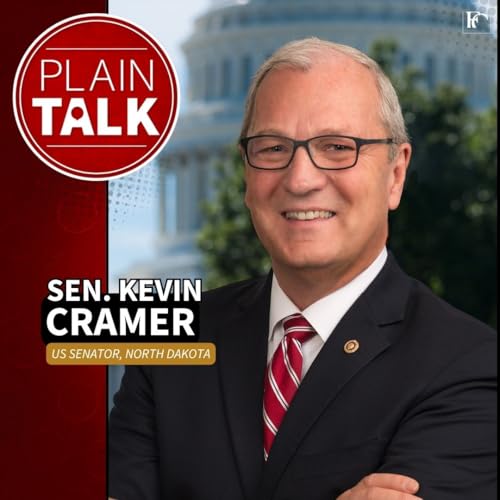
    Sen. Kevin Cramer and I have had a running dispute over President Donald Trump and his approach to politics. Cramer says media critics like me are too focused on Trump's antics. I say people like Cramer are too muted in their own criticism.

    "I'm a United States senator from North Dakota who has a really good personal relationship with the president of the United States," Cramer said in defense of his stance on this episode of Plain Talk, "and there is a long list of advantages for the people of North Dakota because of that relationship."

    "This is not a place where you can burn a lot of bridges," he added.

    Cramer also accused the news media of not being focused enough on the accomplishments of the Trump era, including tax reform.

    "My complaint is not just that they aren't covering the tax cuts enough. It's that certain media outlets are so fascinated by the rants and raves of people about the evils of Donald Trump and Republicans, but they don't write about the accomplishments with the samem," he said. "In fact, they almost don't publish any of it."

    He also talked about the war President Donald Trump has launched against Iran, and whether it needs congressional approval.

    "In the case of the War Powers Act, there's a pretty strong argument -- it's never been tested, mind you, but pretty strong argument -- that the War Powers Act as a piece of legislation as a power that Congress has passed in law is not even constitutional," he said. "But having said that, as it stands, the War Powers Act is what requires the president to, when he does enact a kinetic conflict like we're in with Iran right now, he has 60 days in which to either get out of it or inform Congress or he can extension."

    Cramer says he believes Trump should want congressional approval.

    Also on this episode, Cramer talks about his efforts to improve U.S. relations with Canada, and co-host Chad Oban and I discuss the out of state money funding Together for School Meals, the ballot measure campaign to have the state cover the cost of school meals for parents.

    If you want to participate in Plain Talk, just give us a call or text at 701-587-3141. It's super easy — leave your message, tell us your name and where you're from, and we might feature it on an upcoming episode.

    Show more Show less
    1 hr and 3 mins
  • 694: 'Represent us for who we actually are'
    Apr 10 2026

    Corey Johnson is the chief of the Williston Fire Department and a candidate for the state House in District 23. Unlike one of the incumbents in District 23, state Rep. Nico Rios, who has made headlines with an ugly arrest for DUI and erratic behavior on social media, Johnson says he wants to cast his community and his region in a positive light.

    "I want a representative down in Bismarck that's going to be good on the policy and work to represent Williston and the northwest region, but also somebody that's going to represent us for who we actually are and not give us that negative image that comes back on our community from time to time. That is not what Williston is," he said on this episode of Plain Talk.

    Johnson is also the chair of the District 23 Republicans, and has received pushback on his candidacy from the populist faction of Republicans that has captured control of the state party, in part because he's opted to run in the June primary despite losing the endorsement at his local convention.

    He said that he brought his kids to that convention, even knowing he might lose, because "I want them to see failure."

    "I want them to see defeat and how you react to that and how you move forward," he continued. "But also, that is one step in the process and it didn't go the right way. It was a defeat, but it wasn't the end of the process. So, we moved on to round two and now we're going to the primary election. So, on principle, I think it's the right thing to do."

    Johnson says his experience as a first responder will bring an important perspective to the Legislature. As the state is coming in to a time when revenues may be dropping, Johnson says he's for trimming budgets, but not in an across-the-board way. He also said he'd like to work on the 3% cap on property tax increases passed during the last legislative session, particularly focusing on how it impacts smaller government entities like ambulance districts.

    Also on this episode, me and guest co-host Megan Indvik of Americans for Prosperity talk about the need for North Dakota to hit the reset button on its budget, how the state advances its tax code after property tax reform, and the controversy around the North Dakota Insurance Reserve Fund.

    If you want to participate in Plain Talk, just give us a call or text at 701-587-3141. It's super easy — leave your message, tell us your name and where you're from, and we might feature it on an upcoming episode. To subscribe to Plain Talk, search for the show wherever you get your podcasts or use one of the links below.

    Apple Podcasts | Spotify | YouTube | Pocket Casts | Episode Archive

    Show more Show less
    1 hr and 3 mins
  • 693: 'We haven't gotten better deals' out of Trump's trade war
    Apr 8 2026

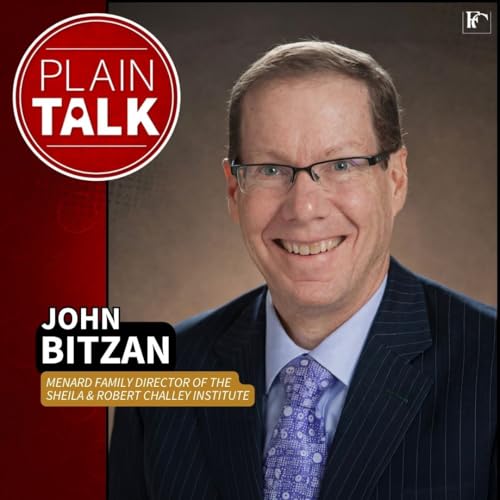
    When asked on this episode of Plain Talk about the justification that President Donald Trump's erratic regime of tariffs is necessary to flex America's economic might and negotiate better deals, John Bitzan, director of the Challey Institute at North Dakota State University, argued that the strategy has not worked.

    "We haven't gotten better deals out of this," he said.

    He pointed out that the goal of getting better deals was only used as a justification after the tariffs were already imposed. In a standard negotiation, "you tell people upfront what you're trying to negotiate...instead of putting the tariffs in place ahead of time," he said.

    Bitzan stated that if you look at the roughly 20 trade deals that have been made, they "are actually less beneficial to us than what existed prior to the tariffs." Plus, it's hard to say how meaningful the supposedly beneficial parts of those deals even are. He explained that commitments from entities like the European Union or South Korea to invest in the U.S. are likely hollow because they either lack the mechanism to compel private businesses to invest, or their parliaments haven't ratified the commitments.

    Recently Bitzan wrote a column for the Bismarck Tribune nothing that the State of North Dakota has had to step in with a loan program through the Bank of North Dakota to try and protect farmers from the impacts of these tariffs. "It is unusual for farmers to need this kind of support based on an action that has been taken by our government," he said.

    "That's the thing that I think is very disturbing about this, is that you think about if there's a drought or some kind of a natural disaster or something like that, well, yeah, then farmers are going to experience financial difficulty and we want to help them out," he continued. "But this is a situation where we're actually causing the harm ourselves to them by our policies."

    Also on this episode, me and guest co-host Matt Fern discuss Rep. Julie Fedorchak's use of congressional franking privileges to promote her re-election campaign, former state lawmaker Judy Estenson pursuing the Republican nomination in a legislative district she doesn't live in, and we respond to listener feedback.

    If you want to participate in Plain Talk, just give us a call or text at 701-587-3141. It's super easy — leave your message, tell us your name and where you're from, and we might feature it on an upcoming episode. To subscribe to Plain Talk, search for the show wherever you get your podcasts or use one of the links below.

    Apple Podcasts | Spotify | YouTube | Pocket Casts | Episode Archive

    Show more Show less
    1 hr and 1 min
  • 692: 'You need not be convicted for them to take and keep your property'
    Apr 3 2026

    What is civil asset forfeiture? It's the process through which law enforcement can "seize your property on the basis of suspicion that it's involved in a crime," Patrick Reasonover told us on this episode of Plain Talk. What's worse? The cops often get to keep the proceeds. Or, at least, their departments do.

    Reasonover is one of the producers of the documentary, "When Cops Become Robbers," which was recently screened by the Challey Institute at North Dakota State University. The film tells the stories of three people who had their money and property taken by law enforcement despite not having been involved in any crime. It also includes interviews with people on both sides of the issue.

    But the conclusion of the film is that civil asset forfeiture isn't anything like justice. "They need not arrest you or charge you with the crime," Reasonover said. "You need not be convicted for them to take and keep your property. You have to then prove the innocence of the property that it was not used to commit a crime or is the proceeds of a crime in order to get it back."

    In North Dakota, lawmakers have passed some reforms for civil asset forfeiture in recent legislative sessions. Police must now adhere to the "clear and convincing evidence" standard for linking seized property to a crime. There is also a conviction requirement, though it's a weak one, as it does not apply if the owner fails to contest the forfeiture in court or if the owner reaches a settlement with the state. State law also still provides a financial incentive for law enforcement to seize property by allowing them to keep the proceeds up to $200,000 per year (after which the revenues go to the state's general fund).

    Worst, perhaps, is that North Dakota still allows "equitable sharing" agreements with federal law enforcement, which is a handy way to do an end-run around state law. Reasonover says that's exactly how it was designed to work.

    "What's important to know about this equitable sharing loophole is it actually wasn't really designed as a loophole," he said. "The federal government designed this system to work exactly as it's working. They wanted to incentivize local police jurisdictions to get involved in the drug war. They wanted them to actively go out, pull over and seize money. And they wanted to incentivize them to do it."

    Local law enforcement still gets to keep the majority of the revenue from the seized property. "If they make it a federal seizure, which is super easy to do, then the local jurisdiction sends 20% of the money to the feds," Reasonover said.

    Also on this episode, me and co-host Chad Oban talk about the Afroman kerfuffle, the problem with always "backing the blue," and a conspiracy theory about the Byron Noem revelations.

    If you want to participate in Plain Talk, just give us a call or text at 701-587-3141. It's super easy — leave your message, tell us your name and where you're from, and we might feature it on an upcoming episode. To subscribe to Plain Talk, search for the show wherever you get your podcasts or use one of the links below.

    Apple Podcasts | Spotify | YouTube | Pocket Casts | Episode Archive

    Show more Show less
    57 mins
  • 691: $36 million in North Dakota revenues for every $1 dollar in oil prices
    Apr 1 2026

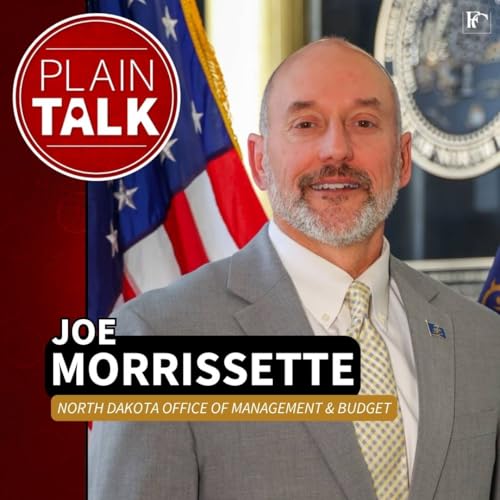
    How hard is it to do revenue forecasts for the State of North Dakota, which is heavily dependent on revenues from commodity-driven industries like agriculture and energy? On this Plain Talk, Joe Morrissette, director of the Office of Management and Budget, gave one example: For 1$ that oil prices move, there's a roughly $36 million swing in state revenues.

    The war in Iran hasn't just driven oil prices $1 over projects. It's as much as $30 over, with no real certainty on where it will level off. "It's a significant significant swing in the state's financial picture in just a short time," Morrissette said.

    Still, all that additional revenue isn't expected to change production activity -- oil and gas producers aren't going to invest heavily in chasing a price that's probably not going to be sustained -- and doesn't change the state's budget picture all that much.

    "Even though we've got this inflow of oil tax revenues, it's really not changing significantly," he said. "Changing a little bit, but not significantly changing our budget challenge in the next biennium."

    Also on this episode, co-host Chad Oban and I react to all the controversy stemming from the North Dakota Republican Party's divisive and dismal state convention. The populist activists who now control the party are attacking incumbents for not attending the convention, yet many of them have skipped past conventions, and even campaigned against convention-endorsed candidates.

    Former lawmaker Rick Becker, for instance, participate in a press conference that was critical of incumbents for skipping the convention. Yet Becker skipped the 2026 vacation to take a vacation in Belize. In 2024, he campaigned against convention-endorsed candidate Alex Balazs for the U.S. House. In 2022, he campaigned against convention-endorsed Sen. John Hoeven in the U.S. Senate race.

    Plus, we react to some listener feedback, including one message which argues that Democrats ought to use the votes some Republican lawmakers cast against approving a school meals bill against them this cycle.

    If you want to participate in Plain Talk, just give us a call or text at 701-587-3141. It's super easy — leave your message, tell us your name and where you're from, and we might feature it on an upcoming episode. To subscribe to Plain Talk, search for the show wherever you get your podcasts or use one of the links below.

    Apple Podcasts | Spotify | YouTube | Pocket Casts | Episode Archive

    Show more Show less
    1 hr and 5 mins
  • 690: 'Life's good in North Dakota'
    Mar 27 2026

    In the world of journalism, it's a truth that we can tend to focus on the negative. "Safe airplane landings aren't news," the adage goes.

    There's a reason for that. The proverbial airplanes are supposed to land safely. When they don't, and when people and property are hurt, we want to know what happened, and why it happened, and who is responsible. Sometimes, though, it behooves us to talk about the planes that land safely.

    When we report about economic development programs, we tend to focus on the fails. The marginal companies that gobbled up lots of public dollars and then went out of business, or got preferential treatment because they were owned and operated by someone related to someone else in a position of power in government.

    We need to tell those stories, but sometimes we also need to tell the success stories.

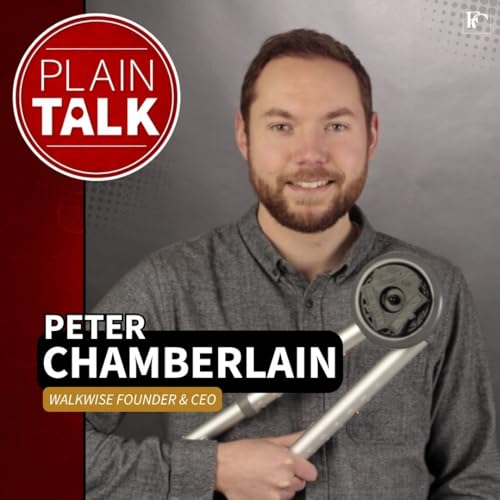
    Peter Chamberlain is the founder and CEO of WalkWise, a North Dakota-based startup that sells a product that attaches to the walkers and canes of the elderly and infirm, allowing family and medical professionals to track activity, monitor movement, and be alerted when there might be a problem.

    Chamberlain doesn't have any strong roots in North Dakota. What drew his business and his family here was the opportunities made available by the state's economic development efforts. "This is the world's first and only smart mobility aid attachment," Chamberlain told us of his product on this episode of Plain Talk.

    "I feel very confident in saying I would not be here today, WalkWise would not exist today, if it weren't for the programs that exist in North Dakota, that frankly don't exist other places," he added. "Life's good in North Dakota."

    It's not just the direct investment and support he's received through endeavors like the Legacy Fund's in-state investment program. Chamberlain also credits "ecosystem builders" working in the Commerce Department and elsewhere who helped him connect with people and other businesses, including a manufacturer in tiny Cayuga, North Dakota, where the WorkWise product is made.

    He emphasized how much he likes working with a local manufacturer because he can physically visit the plant and the owners are "invested personally" in the product's success.

    Also on this episode, me and co-host Chad Oban talk about the upcoming NDGOP convention, the party's efforts to keep me from attending to report on the event, and whether political parties ought to continue to have special access to the state ballot.

    If you want to participate in Plain Talk, just give us a call or text at 701-587-3141. It's super easy — leave your message, tell us your name and where you're from, and we might feature it on an upcoming episode. To subscribe to Plain Talk, search for the show wherever you get your podcasts or use one of the links below.

    Apple Podcasts | Spotify | YouTube | Pocket Casts | Episode Archive

    Show more Show less
    59 mins