• The Story of The Man Behind ESA BIC
    Apr 17 2026

    Frank Salzgeber (sometimes called the "Father of ESA BIC") was initially handed a broken ESA tech transfer programme with a billion euros unaccounted for and told to fix it. Nobody asked him to build an incubator. He just had enough freedom and used it.


    What followed was 19 years inside ESA watching the European space startup scene grow from nothing — Isar Aerospace, Leaf Space, ClearSpace - watching them go from founders with a crazy idea to some of the most recognised names in European New Space industry. Then Saudi Arabia called, and he left to do it all over again from scratch in the Middle East.


    In this episode, Frank breaks down how ESA BIC actually works, how to get a yes, what kills most space startups before they ever get there, and what Europe needs to urgently fix before it gets left behind completely.


    Get in touch with Frank:

    https://sa.linkedin.com/in/frank-salzgeber


    -----------------------------------------------


    Chapters:

    (00:00) Introduction

    (01:22) What Is ESA BIC and Why It Exists

    (03:02) How to Apply to ESA BIC Today

    (12:09) What Steve Jobs Taught Frank About Branding, Hiring, and Building Teams

    (16:11) Why Branding Matters More Than Most Founders Think

    (19:31) What Running Your Own Startup Teaches You That Nothing Else Can

    (25:15) The Right Balance Between Startup Speed and Institutional Structure

    (28:08) How Frank Flew Under the Radar to Launch ESA BIC

    (33:42) The ESA BIC Selection Process: Three Things That Make Frank Say Yes

    (40:35) Common Thread Between the Biggest Successes and Failures

    (44:03) What ESA BIC Could Have Done Better and What Founders Should Push For

    (46:30) is When to Use Soft Funding vs Equity-Based Funding

    (56:49) Most Undervalued Space Opportunity Right Now

    (57:35) Why Promising Space Companies Die and How Founders Can Avoid It

    (58:06) Europe vs Middle East: Where to Base Your Space Company

    (58:58) The Difference Between a Fundable Idea and a Research Project

    (01:02:53) The Most Important Lesson for Building a Space Company in 2026


    -----------------------------------------------


    You will learn:

    - What Frank took from his years at Apple that he applied in building ESA BIC

    - The 3 things that get you a yes from ESA BIC

    - How Frank convinced ESA to fund something they'd never done before

    - The one thing Frank looks for in a pitch that will never show up in your deck

    - Why your tech is never the problem and what actually kills startups

    - The exact line between a fundable space idea and a research project

    - Why Frank thinks ESA BIC's 75% startup survival rate is actually a bad sign

    - The most undervalued space market opportunity right now


    Show more Show less
    1 hr and 6 mins
  • Dead Satellites Are Worth Billions. This Solo Founder Figured Out How to Save Them.
    Apr 3 2026

    Amin Chabi (founder of Lúnasa Space) didn't set out to build a company. He graduated with a master's in space and astronautics, COVID hit, nobody was hiring — and starting alone was the only option left. What he stumbled into was one of the most overlooked crises in space: thousands of dead satellites cluttering orbit, threatening the GPS, banking, internet and telecom infrastructure the entire modern world depends on.


    In this episode, Amin shares how Lunasa went from a blank incorporation form to a full acquisition by Infinite Orbit in just five years, what it actually takes to build rendezvous and docking technology that enables satellites to be serviced in orbit, and the exact blueprint he'd follow to make a European space startup acquirable as fast as possible.


    Get in touch with Amin:

    https://www.linkedin.com/in/aminchabi/


    -----------------------------------------------


    Chapters:

    (00:00) Introduction

    (01:34) Who Is the Founder and What Does Lunasa Space Do

    (04:18) The Space Fan Who Dropped Out at 16 to Support His Family

    (08:33) How COVID Killed His Job Hunt and Forced Him to Start a Company

    (17:09) Surviving the First Months With No Funding and No Safety Net

    (20:00) Why Storytelling and Marketing Matter More Than Engineers Think

    (26:22) How He Hired a Full Team Using LinkedIn Cold Messages

    (29:13) Landing the First Public Partnership and Getting on the Radar

    (38:24) The Right Way to Think About Fundraising in Deep Tech

    (41:32) Getting the R&D Grant That Broke the Chicken-and-Egg Problem

    (46:12) Building the Full Tech Stack In-House From Scratch

    (01:12:07) The Acquisition by Infinite Orbits and Why He Said Yes

    (01:19:00) What Actually Made Lúnasa Acquirable

    (01:24:30) Post-Acquisition Integration - What Happens Now

    (01:27:58) Quick Fire Round and Final Advice for Founders

    -----------------------------------------------


    You will learn:

    - How Amin got his first £10,000

    - Why space is one of the most underrated industries when it comes to marketing, and what Amin did differently

    - Why he deliberately avoided raising too much private capital

    - How he built his entire network from scratch as a solo founder who knew nobody in the industry

    - Why in-orbit manufacturing is the most overrated bet in space right now

    - What Europe gets catastrophically wrong about building space companies

    - What Infinite Orbits actually saw in Lúnasa that made them want to buy it

    - The exact blueprint Amin would follow to make a European space startup acquirable as fast as possible

    Show more Show less
    1 hr and 50 mins
  • We Built a Pizza Drone. Now We Defend Ukraine.
    Mar 20 2026

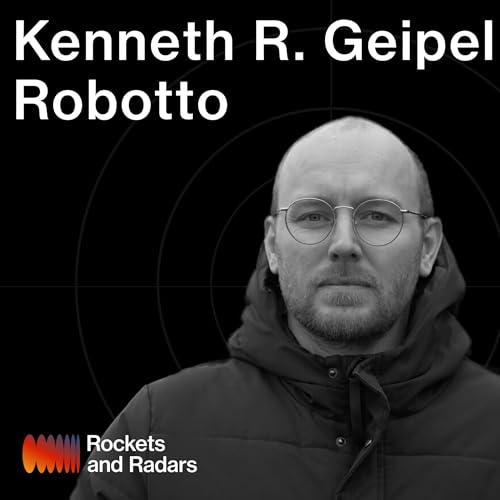
    Kenneth Richard Geipel (co-founder of Robotto) started his career not in a lab or a startup — but in the Danish Armed Forces, where he served three combat deployments. When he left the military, he went back to university to study robotics. His thesis project? A drone to deliver pizza from 500 meters away, because he and his classmates were too lazy to walk.


    What nobody expected is what happened next. A summer of record wildfires across Europe pulled that pizza drone into something more serious — autonomous wildfire detection software built with real firefighters in the field. Then COVID hit, nearly killing the company four days before their first major demo abroad. Then in 2022, a phone call from a former fellow veteran whose wife was Ukrainian changed everything. Kenneth had spent years turning down requests to weaponize his technology — but when a fellow soldier asks for help, you say yes.


    In this episode, Kenneth shares how Robotto went from a pizza drone thesis to deploying GPS-free autonomous software on Ukrainian frontlines daily, how they got selected for NATO's DIANA accelerator out of 3,500 applicants across 24 nations, and why he thinks the entire European defence industry is getting one thing catastrophically wrong.


    Get in touch with Kenneth:

    https://www.linkedin.com/in/kenneth-richard-geipel-081309186/


    -----------------------------------------------


    Chapters:

    (00:00) Introduction

    (00:33) Who Is Kenneth and What Does Robotto Do

    (01:37) Why a Soldier Became a Robotics Founder

    (03:50) What Deployments Taught Him That No Startup Book Will

    (08:27) The Pizza Drone Thesis That Started Everything

    (09:18) Pivoting from Pizza to Wildfire Detection

    (10:48) How Two Students Got a Meeting With a Government Agency

    (11:59) Incorporating Robotto — With Just a POC and Two Papers

    (16:33) COVID Hits Four Days Before Their First Major Demo

    (24:15) Fundraising After Near-Bankruptcy — and Why Radical Honesty Won

    (29:05) The Phone Call From a Veteran That Pulled Them Into Defence

    (31:17) The Ethical Conversations They Had Before Saying Yes

    (33:17) How They Got Their First Ukrainian Partner and Built in Two Weeks

    (35:44) Tracking Elephants in Thailand and Fighting Fires — at the Same Time

    (41:23) How Product Iteration Works When Your Customer Is on the Frontline

    (47:21) How Civilians Get It Catastrophically Wrong Selling to Military

    (49:49) What NATO's DIANA Gives You That Money Can't Buy

    (51:02) Robotto UA — Planting a Flag in Ukraine

    (54:25) Is the Future of War Fully Autonomous?

    (57:50) The Most Overrated Thing in the Drone Industry Right Now


    -----------------------------------------------


    You will learn:

    - Why building with end users is non-negotiable in defence — and what happens when you don't

    - How to get your first meeting with a government agency when you have nothing but a thesis and stubbornness

    - Why nearly going bankrupt made Kenneth a better fundraiser and what he told investors that most founders never would

    - How Robotto built and shipped their first frontline prototype in 2 weeks — and what brutal feedback from Ukrainian soldiers actually sounds like

    - Why civilians get it catastrophically wrong when they try to sell to the military

    - How to find the non-obvious accelerator programs you actually qualify for

    - What NATO's DIANA programme gives you that money simply cannot buy — and what it doesn't

    - Why Kenneth voluntarily gave up his CEO title — and why most founders should think harder about theirs

    - Why AI is the most overrated word in the drone industry right now

    - What Kenneth would do differently in the first 12 months if he started Robotto again tomorrow


    -----------------------------------------------


    Follow Martin Majercin on X:

    https://www.x.com/monsfrost


    Follow Martin Majercin on LinkedIn:

    https://www.linkedin.com/in/monsfrost/


    Follow Robotto on LinkedIn:

    https://www.linkedin.com/company/robottoai/

    Show more Show less
    1 hr and 2 mins
  • NASA's Spacesuits Are 50 Years Old. He's Building The Next One.
    Mar 6 2026

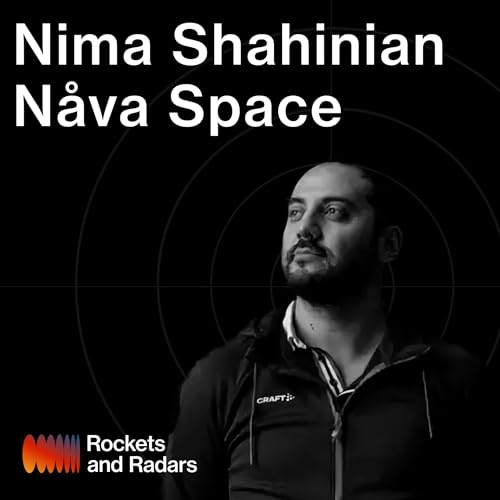
    Nima Shahinian (co-founder of Nåva Space) had one dream: go to space. He trained for it, negotiated for it, and got closer than almost any private citizen ever has. Then in a single morning, everything collapsed after Russia invaded Ukraine in 2022. So he did the next best thing. He decided to rebuild the spacesuit instead.

    What people don’t know is that NASA has a handful of operational suits left, all 50 years old and becoming dangerous. Plus, Europe has never built a commercial suit yet, so Nima decided to do so.

    In this episode, Nima shares how Nåva Space went from a cardboard prototype to testing a next-generation spacesuit with a real ISS astronaut in just 11 months, why an investor he deeply respected told him it could never be done in Europe and why the biggest problem in European space isn't money or talent.


    Get in touch with Nima:

    https://www.instagram.com/astro_nims/

    https://www.linkedin.com/in/nima-j-shahinian-6b059086/


    -----------------------------------------------


    Chapters:

    (00:00) Introduction

    (03:01) Background: Designer, Soldier, Would-Be Cosmonaut

    (06:57) What the Military Taught Him That No Startup Book Will

    (16:33) Applying to ESA Without Qualifications

    (36:01) How Nima Funded His Own Cosmonaut Training

    (42:30) How He Walked Away from the Cosmonaut Program

    (51:01) Starting Nåva Space Broke, Wounded, and with No Clear Focus

    (56:36) The Global Spacesuit Crisis No One Is Talking About

    (01:05:01) How Nåva Went from Cardboard to ESA Astronaut Testing

    (01:10:01) Why Every Technology Nåva Builds Has to Work on Earth Too

    (01:13:00) Why They Started with a Human, Not an Engineering Spec

    (01:18:01) When to Stop Internal Testing and Bring in Real Users

    (01:23:00) How a Norwegian Startup Got Access to ESA's Astronaut Center

    (01:28:40) Why Nåva Sources a Spacesuit from a Norwegian Boot Maker

    (01:39:30) The Investor Who Said You'll Never Build a Suit in Europe

    (01:48:01) Final Message: Everything Around You Was Built by Someone


    -----------------------------------------------


    You will learn:

    - Why NASA's spacesuit crisis is more dangerous than anyone is admitting

    - How to go from zero to flight-ready spacesuit in 11 months- Why starting with cardboard beats starting with CAD every time

    - What an investor who said "you'll never build a suit in Europe" got wrong

    - How to find and hire world-class talent for a category that has never existed

    - How a spacesuit becomes a defence and industrial product — and why that's the only way to build the business

    - When to push 100% and when to stop, the work-life of building in space

    - Why Norway is one of the hardest places in Europe to build a space startup

    - Why the only question that matters when starting something impossible is: why not you?#spacesuit #nasa #space #spacex

    Show more Show less
    1 hr and 49 mins
  • 90% of Naval Warfare Will Be Autonomous
    Feb 20 2026

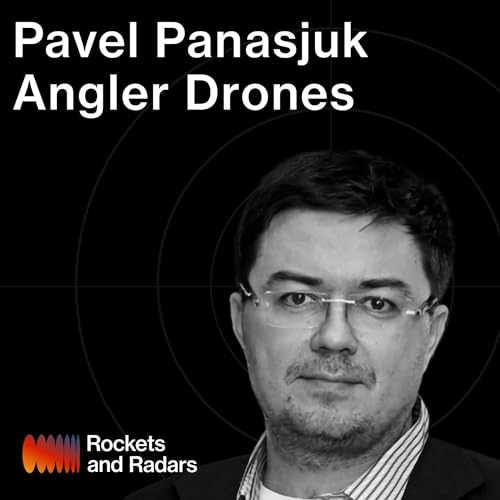
    Pavel Panasjuk was running cleantech startups when Russian missiles started hitting Ukraine in 2022. He had zero defencetech experience—his only military knowledge came from reading history books as a hobby. Like many Ukrainian entrepreneurs, he and his co-founder Oleksandr started by buying medkits, cars, ammunition, and bulletproof vests to supply friends in the army. But after a few months, they shifted from buying supplies to building something. So they made a crazy bet—instead of fixing today's problems, they'd design autonomous submarines for the war 15 years from now. They asked "what comes AFTER Ukraine's surface drones dominate the Black Sea?" Their answer: AI-powered mini-subs that make tactical decisions independently underwater.


    In this episode, Pavel shares how thinking ahead of the current war became Angler's strategy: why he believes human navies are finished and 90% of naval warfare will be autonomous by 2035, how Ukrainian startups move at 6-month cycles while watching Western contractors plan decade-long programs for systems that'll be obsolete before they launch, why European VCs frustrated him by acting "more like bankers lending money" instead of betting on breakthrough technology like American investors do—and the two things Ukrainian defence founders understand that Western founders are completely blind to: speed and affordability, because when your relatives live near the front line, you don't have time for 10-year development cycles.


    -----------------------------------------------


    Chapters:

    00:00 Introduction

    01:28 What Angler Actually Does

    02:32 From CleanTech to DefenceTech

    03:39 February 2022: The Decision to Build for War

    04:42 Finding Your Technical Co-Founder

    18:25 Customer Discovery: Who Actually Buys This

    20:31 The Pivot: Why We Went Hybrid

    21:49 First Prototypes: Garage to Water Testing

    30:40 How to Actually Raise from European VCs

    36:50 Building Fast vs Building Perfect

    42:35 Where to Incorporate as Ukrainian Founder

    52:27 Getting to Revenue Without 5-Year Timelines

    53:41 How Much Tech to Show Investors

    55:29 What Ukrainian Founders Know About Speed

    55:47 The 6-Month Product Cycle Rule

    56:15 The Unsexy Thing That Kill you Company


    -----------------------------------------------


    You will learn:

    - Why Pavel talked to military customers BEFORE building anything

    - The "cheap, good enough" rule that Ukrainian founders understand but Western defence companies completely miss

    - How Pavel found his first investor after cold emails failed

    - Why most defence tech pitches fail at the secrecy/disclosure balance

    - Why 90% of naval warfare will be autonomous within 10 years


    -----------------------------------------------


    Follow Martin Majercin on X:https://www.x.com/monsfrost


    Follow Martin Majercin on LinkedIn:https://www.linkedin.com/in/monsfrost/


    Follow Pavel Panasjuk LinkedIn:https://www.linkedin.com/in/ppanasjuk


    Follow Angler on their website:https://anglerdrones.com


    #defence #drone #maritime #defencetechnology #startup #ukraine

    Show more Show less
    58 mins
  • The Burnout That Built Spain's First Space Rentry Capsule
    Feb 6 2026

    Francesco Cacciatore, a space engineer who spent 20 years designing missions to Mars, Mercury, and comets at companies like Deimos and Sener, co-founded Orbital Paradigm in 2023. When most thought reentry was a closed market dominated by established players, his team did the unthinkable: they built Spain's first reentry capsule in 11 months—working nights and weekends while still employed—and got it flight-qualified. Today, Orbital Paradigm is the only payload that survived the catastrophic PSLV failure in January 2025, with their capsule enduring 35Gs (more than double design limits) and transmitting data all the way down.


    In this episode, Francesco shares the unfiltered journey of building Europe's newest reentry company: how a personal health crisis made him stop "watching life from the bench" and finally start something, how they qualified flight hardware faster than anyone expected by over-engineering for the wrong mission profile, and why European founders need to stop chasing manager titles and feeling guilty about wanting to get rich.


    -----------------------------------------------


    Chapters:

    00:00 Introduction

    01:40 What Orbital Paradigm Actually Does

    28:05 The Health Crisis That Pushed Me to Quit

    35:02 Why MBAs Are Useless for Space Founders

    45:39 First Weeks: Building While Working Full-Time

    50:50 The Pivot: From In-Space Robotics to Reentry Capsules

    01:09:24 Build vs Buy: Being Cleverly Integrated

    01:14:16 Finding Your First Customers: Pulling the Thread

    01:19:35 Fundraising Mistakes: Stop Leading with Step One

    01:28:24 Launch Day: When the Rocket Failed Mid-Flight

    01:33:20 How KID Survived 33Gs (When It Should Have Died)

    01:44:16 The Biggest Lie Investors Tell Founders

    01:48:03 Final Message: Why It's Worth It


    -----------------------------------------------


    You will learn:

    - What's the biggest mistake engineers make with investors and how to fix it

    - Why European founders need to stop chasing titles

    - Why to design for customers, not capabilities

    - Why "vertical integration" myth is bullsh*t

    - What kills most of the deep tech companies


    -----------------------------------------------


    Follow Martin Majercin on X:https://www.x.com/monsfrost


    Follow Martin Majercin on LinkedIn:https://www.linkedin.com/in/monsfrost/


    Follow Francesco Cacciatore LinkedIn:https://www.linkedin.com/in/francescocacciatore/


    Follow Orbital Paradigm on LinkedIn:https://www.linkedin.com/company/orbital-paradigm

    Show more Show less
    1 hr and 51 mins
  • Our Rockets Run on Paraffin. Yes, Like Candles
    Dec 12 2025

    Christian Schmierer, an aerospace engineer who grew up next to Europe's largest rocket test center, co-founded HyImpulse in 2018. When every expert dismissed hybrid rockets as failed technology from the 1960s, his team did the unthinkable: they built rockets powered by paraffin—essentially candle wax.


    Today, HyImpulse has raised over €45 million and became Germany's first privately-funded company to successfully launch a rocket—spending just €15 million to get there while competitors burned through ten times that amount.


    In this episode, Christian shares the unfiltered journey of building Europe's most unconventional launch company: how breaking world records as students made founding a company feel inevitable, why four engineers leaving stable jobs at the German Aerospace Center (DLR) turned out to be the right choice and why they had to ship their rocket halfway around the world to the Australian desert for a mission aptly named "Light This Candle.


    -----------------------------------------------


    Chapters:

    (00:00) Introduction

    (02:50) From Childhood Curiosity to Student Rocket Team

    (09:55) Why Hybrid Rockets? The Technology No One Believed In

    (14:32) Failure at 2 Kilometers: Our First Launch Attempt

    (22:49) Breaking the World Record: 32.3 Kilometers

    (24:04) The 16-Month Gap: From Students to Founders

    (31:23) How We Landed Our First Investor

    (35:37) Scaling from 4 Founders to 50 People

    (42:33) Cracking the Code: Winning EU Funding on the Third Try

    (48:25) Light This Candle: Germany's First Private Rocket Launch

    (51:21) How One Launch Changed Everything with Investors

    (53:05) Raising €45M and Planning the Orbital Rocket

    (58:21) The 10-Year Vision

    (01:05:03) Advice to Space Founders


    -----------------------------------------------


    Takeaways:

    1) Just get started - Europe rewards those who try: "If you have a great idea then there is definitely room in Europe to do this and follow your dream or your idea and you just have to get started because initially there will be people who say it's impossible or no one needs it."


    2) Learn to speak different languages to different stakeholders: "The way how I explain it to a potential investor is completely different whether it's a VC or a strategic, but then if I have to explain it to an authority it's again completely different - I have to use a different language that they understand." Your pitch to a VC, a government agency, and a customer should sound completely different.


    3) Capital efficiency is a competitive advantage, not a limitation: HyImpulse launched their first rocket for just €15 million total. "We are actually very capital efficient but of course if you want to build amazing things, big things, then it also requires capital." Being scrappy forces you to make smarter decisions.


    4) Start where you have the edge, not where VCs tell you to start: While other rocket startups bought hired experienced engineers, HyImpulse started with basic research on hybrid rockets with paraffin. "We had to start with basic research whereas everyone else, if they wanted, they could have bought an engine."


    5) Resilience built in student days becomes the foundation for your company: As students, their first rocket failed at just 2 kilometers after years of work. They built two more rockets and broke the world record at 32.3 kilometers on their third attempt. That "fail, learn, try again" DNA carried directly into HyImpulse - where the stakes were exponentially higher but the resilience was already battle-tested.


    6) A successful launch changes everything - but only for non-engineers: "For us as rocket engineers, already in the testing phase on ground it was clear okay this will work at some point. But for non-engineers this is a different story. I can explain to people as many times 'yeah with candle wax, with paraffin you can launch into space' and people say 'yeah okay.' But with that launch, that of course changed - people say 'oh it looks like a real rocket!'"

    Show more Show less
    1 hr and 9 mins
  • Why I Had to Go to the North Pole to Build My First Satellite
    Nov 28 2025

    Rafel Jorda Siquier, an aerospace engineer from Mallorca, founded Open Cosmos in 2015. When they landed their first satellite contract, every university—including his own—refused to give them clean room access. So they went to the Arctic Circle to assemble their first satellite. Today, Open Cosmos has secured over €120 million in contracts in the last year alone, building satellites faster and cheaper than the industry thought possible—while actually turning a profit.


    In this episode, Rafael shares the unfiltered reality of building Europe's fastest-growing space company: how launching stratospheric balloons as a student led to an internship that showed him starting a space company was actually possible, why he walked away from a dream job at Airbus—Europe's largest aerospace company—to chase a purpose he couldn't ignore, and why Open Cosmos is now pushing AI capabilities directly into orbit.


    -----------------------------------------------


    Chapters:

    (00:00) Introduction

    (02:22) From Stratospheric Balloons to Life Purpose

    (09:55) "Is That Even Possible?" - Leaving Airbus at 25

    (17:06) Why I Chose Europe Over the US

    (21:11) How to Land Your First Contract in 3 Months

    (25:58) Convincing My CTO to Quit His Dream Job

    (28:53) Why We Assembled our First Satellite near the North Pole

    (43:40) Start Where You Have the Edge, Not Where VCs Tell You

    (46:40) How to Kill a Product That Doesn't Sell

    (48:28) COVID Hit. Everything Broke at Once.

    (53:21) How We Became Profitable During a Pandemic

    (55:04) How to Build Investor Trust

    (57:01) Companies Exist to Solve Problems, Not Raise Money

    (01:00:50) Get Traction, Sell, Then Raise

    (01:10:34) Advice to Young Founders


    -----------------------------------------------


    1) Naivety is your most powerful weapon as a founder - don't lose it: "Naivety is essential as a founder because few things are so empowering as naivety to take that first step."


    2) Companies exist to solve problems and earn money - not to raise it: "Companies are not out there to raise money. Companies should be out there to solve problems and to earn money on the back of solving those problems." Open Cosmos bootstrapped their first satellite and only raised when they needed to scale into a new product line.


    3) Find customers before you find investors: "Get traction, prove the market - sell and then raise. Guys, we did it with satellites. So if we've done it, bootstrapping a satellite, maybe there are multiple industries where this approach may also work."


    4) Don't start the company the sake of starting - do it for purpose and need: The entrepreneurial drive should come from seeing a real problem that nobody else is solving, not from wanting to be a founder.


    5) Start where you have the edge, not where the market tells you to start: "For me, it was very clear that we had to start where we had an edge. Our edge was we were good system engineers with good design capabilities with an understanding of supply chain, unit economics. So we started building probably the hardest bit - the hardware."


    6) Take care of yourself - the founder journey is a marathon: "Make sure you take better care of yourself because the journey as a founder, it's a marathon... Probably I could have achieved the same while not necessarily having to grind it so crazily."


    7) When everything breaks at once, speed of decision is everything: "In these situations, if you doubt during two weeks or three weeks or a month to take a decision, you've burned a lot of that extra time. So we took extremely prompt decisions." When COVID hit, Open Cosmos furloughed half the team within days and brought everyone back four months later.


    8) Pay your suppliers on time - especially when you can barely afford it: "During those COVID months, we didn't miss or delay a single payment to our suppliers because we didn't want that to be done to us. I know for a fact that many of the suppliers went through that period relying on our payment."

    Show more Show less
    1 hr and 14 mins