• Ep. 49: Is It Really ADHD? How Smartphone Use and Digital Addiction are Disrupting Attention
    Apr 12 2026

    We’re seeing more attention problems than ever—especially in kids.But what if it’s not always ADHD?And what if our smartphones are playing a bigger role than we think?

    In this episode, Dr. Suzette Glasner explores the growing conversation around ADHD—highlighted in part by Mel Robbins’ reflections on the nuances of diagnosis, especially in girls — and examines an often overlooked question:

    What if some of the attention difficulties we’re seeing today are not just ADHD, but are being shaped by constant smartphone use—scrolling, notifications, and the pull to check our devices throughout the day?

    From kids who can’t sit through homework without reaching for a device, to adults who find themselves checking their phones every few minutes, these patterns are becoming so common that they can be mistaken for something else entirely.

    As rates of inattention, distractibility, and difficulty focusing continue to rise in both children and adults, this episode takes a closer look at how excessive digital media use—particularly social media, gaming, and constant device engagement—may be influencing the brain in ways that can closely resemble ADHD.

    You can watch the full episode on The Dr. Suzette Glasner Podcast here:

    Dr. Glasner breaks down the latest research on how technology affects attention, impulse control, and reward pathways, including findings that suggest high-frequency digital media use may contribute to the development of attention problems over time. She also explores how patterns of addictive behavior around technology can reinforce these symptoms, making it increasingly difficult to disengage and sustain focus.

    Through clinical examples, this episode highlights the important distinction between ADHD as a neurodevelopmental condition and attention challenges that may be learned—and potentially reversible—through environmental and behavioral factors.

    If you or someone you care about is struggling with focus, attention, or constant device use, this episode offers a thoughtful, evidence-based framework to better understand what may be driving those symptoms—and what you can do about it.

    Have a question about today’s episode? Or a topic you’d like me to cover in a future episode?

    Email: askdrglasner@gmail.com


    This is a public episode. If you would like to discuss this with other subscribers or get access to bonus episodes, visit drglasner.substack.com
    Show more Show less
    21 mins
  • Ep. 48: Tiger Woods & Addiction: Why Success Doesn’t Prevent Relapse
    Apr 5 2026

    Has Tiger Woods finally hit rock bottom — or is that the wrong question entirely?

    In this episode, I examine Tiger Woods’ latest DUI arrest and crash through the lens of addiction science. Despite access to world-class care, financial resources, and global support, Woods continues to struggle with a pattern of substance use and high-risk behavior — raising important questions about how addiction actually works.

    As a clinical psychologist and addiction scientist, Dr. Suzette Glasner breaks down why addiction persists even in the presence of success, and why insight — not access — is often the missing piece in recovery.

    You can watch the full episode here:

    This episode explores:

    * Why addiction is a brain disease that impairs judgment and decision-making

    * The role of prescription opioids like hydrocodone in driving impairment

    * How polysubstance use significantly increases risk

    * How chronic pain, trauma, and loss contribute to relapse

    * Why practical solutions (like hiring a driver) don’t address the core issue

    * What meaningful, sustained recovery actually requires

    For those who are struggling with addiction — or who love someone who is — this episode offers a clearer understanding of why change can be so difficult, and what actually helps move the needle toward recovery.

    Tiger Woods’ story is not just about a public figure — it’s a powerful example of addiction as a human issue that can take hold of a life.

    📩 Questions or topic ideas? Reach out at: askdrglasner@gmail.com

    If you found this episode helpful, consider subscribing and sharing it with others who might benefit.


    This is a public episode. If you would like to discuss this with other subscribers or get access to bonus episodes, visit drglasner.substack.com
    Show more Show less
    18 mins
  • RFK Jr. on Sugary Drinks: What’s Missing on Mental Health and Addiction
    Mar 29 2026

    Sugary drinks are back in the spotlight, with renewed national attention on the health risks of added sugar. But while much of the conversation—highlighted recently by RFK Jr.—has focused on obesity, diabetes, and metabolic health, there may be an important piece we’re overlooking.

    In this episode, Dr. Glasner explores the growing evidence linking sugar-sweetened beverages to mental health outcomes, including mood, anxiety, sleep, and patterns of addictive behaviors. What happens in the brain when we consume high amounts of liquid sugar? Why can these drinks be so hard to cut back on? And how much is too much?

    From Starbucks lattes and Dunkin’ iced coffees to soda, boba tea, and energy drinks, these beverages are a daily habit for many. This episode takes a closer look at how they may be affecting not just our bodies—but our minds.

    You can watch the full episode here:

    You’ll learn:

    * What current research says about sugary drinks and mental health

    * How blood sugar swings and reward pathways influence mood and cravings

    * Why sugary drinks can promote addictive behaviors

    * Practical ways to reduce intake without feeling deprived

    If you’re thinking about your own habits—or your kids’—this episode offers a thoughtful, evidence-based perspective on a very common part of modern life.

    📩 Questions or topic ideas? Reach out at: askdrglasner@gmail.com

    If you found this episode helpful, consider subscribing and sharing it with others who might benefit.


    This is a public episode. If you would like to discuss this with other subscribers or get access to bonus episodes, visit drglasner.substack.com
    Show more Show less
    15 mins
  • Ep. 46: When AI Companions Start to Feel Like Relationships
    Mar 22 2026

    We tend to think of digital experiences as tools, entertainment, or care.

    But AI companions are starting to blur those boundaries.

    Some users aren’t just interacting with them—they’re forming attachments. In some cases, romantic relationships. Connections that feel responsive, personalized, and emotionally meaningful.

    What’s driving that shift?

    In this episode, addiction scientist and clinical psychologist Dr. Suzette Glasner examines how AI companions create a form of interaction that differs from traditional digital experiences. Through continuous responsiveness, adaptive feedback, and simulated emotional attunement, these systems can begin to function less like products and more like relational partners.

    That distinction matters.

    Because the same mechanisms that support a sense of connection may also reinforce repeated engagement—making these interactions feel increasingly difficult to step away from.

    Drawing on behavioral science, Dr. Glasner explores how these dynamics emerge, why they don’t map cleanly onto existing models of digital addiction, and what it means when a technology begins to occupy a role that looks—and feels—like a relationship.

    Watch the full episode here:

    The episode also examines how romantic and emotional engagement with AI companions challenges existing frameworks for understanding digital behavior, raising new questions about attachment, reinforcement, and the role of technology in meeting psychological needs.

    This is an early look at a shift that may become increasingly relevant as these systems continue to evolve.

    📩 Questions or topic suggestions? Email AskDrGlasner@gmail.com

    🔗 Subscribe for evidence-based discussions on addiction, recovery, and mental health: https://www.YouTube.com/@drglasner


    This is a public episode. If you would like to discuss this with other subscribers or get access to bonus episodes, visit drglasner.substack.com
    Show more Show less
    15 mins
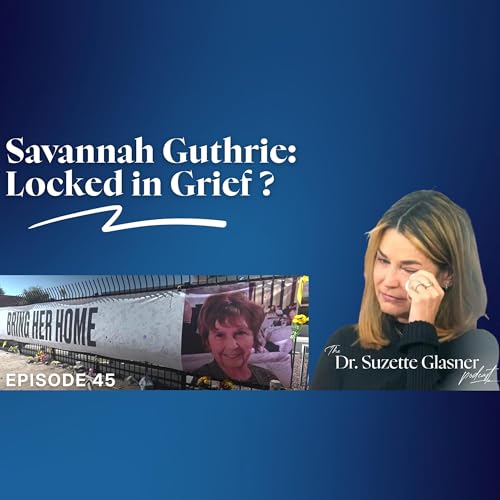
  • Ep. 45: Ambiguous Loss: Why Savannah Guthrie’s Grief Feels Personal
    Mar 13 2026

    When someone we love disappears, grief becomes trapped between hope and despair. But ambiguous loss also occurs when addiction or illness changes someone we love.

    Savannah Guthrie’s mother, Nancy Guthrie, was abducted more than a month ago — a tragedy that has captured national attention and stirred a powerful emotional response from people who have never met the family.

    Why do stories like this affect us so deeply?

    In this episode, addiction scientist and clinical psychologist Dr. Suzette Glasner explores the psychology of ambiguous loss, a term coined by family therapist Pauline Boss to describe a uniquely painful form of grief that occurs when a loved one is physically absent but psychologically present — such as in cases of missing persons, disappearances, or unresolved tragedies.

    But ambiguous loss doesn’t only occur when someone goes missing. It can also happen when someone we love is physically present but psychologically changed by illness. Conditions such as dementia, severe mental illness, and addiction can create a similar experience of grief, as families struggle with the painful feeling that the person they once knew is “here, but not here.”

    Drawing on decades of psychological research, Dr. Glasner explains the emotional experience reported by families navigating ambiguous loss — including the constant tension between hope and despair, guilt over moments of happiness, and the profound psychological toll of grief without closure.

    Watch the full episode here:

    The episode also explores why highly publicized tragedies can create a shared emotional experience across society — a phenomenon known as collective ambiguous loss — and how public grief unfolds in the age of social media.

    Finally, Dr. Glasner discusses psychological traits and therapeutic approaches that can help people cope with uncertainty and loss when answers may never come.

    Ambiguous loss is not limited to missing persons cases. Families coping with addiction, dementia, and severe mental illness often describe a similar experience of grief for someone who is still physically present but psychologically altered. One therapeutic approach that has shown promise in helping people cope with this kind of uncertainty is Acceptance and Commitment Therapy (ACT), which focuses on developing psychological flexibility and learning to live meaningfully even when answers or closure may never come.

    Learn More About Acceptance & Commitment Therapy (ACT)• Association for Contextual Behavioral Science – https://contextualscience.org• Get Out of Your Mind and Into Your Life – Steven C. Hayes• The Happiness Trap – Russ Harris

    📩 Questions or topic suggestions? Email AskDrGlasner@gmail.com

    🔗 Subscribe for evidence-based discussions on addiction, recovery, and mental health:: https://www.YouTube.com/@drglasner


    This is a public episode. If you would like to discuss this with other subscribers or get access to bonus episodes, visit drglasner.substack.com
    Show more Show less
    13 mins
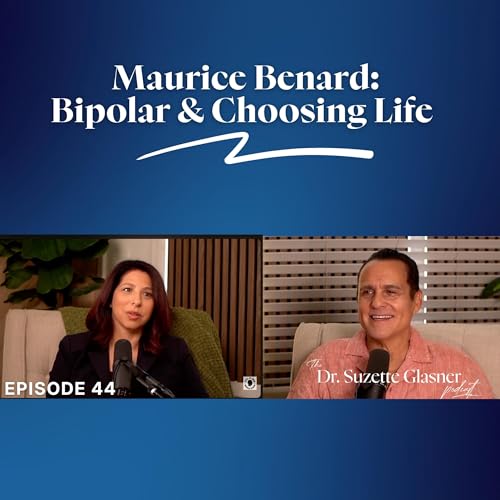
  • Ep. 44: Maurice Benard on Bipolar Disorder, Suicidal Thoughts, and Choosing Hope
    Mar 8 2026

    Bipolar disorder can bring periods of severe depression, hopelessness, and suicidal thoughts. In this episode, Dr. Glasner reflects on a powerful conversation with Emmy Award–winning actor Maurice Benard about living with bipolar disorder and how people can find hope during their darkest moments.

    What does it feel like to live through the darkest moments of bipolar disorder — and choose to keep going? In this episode, Dr. Glasner reflects on her recent conversation with Maurice Benard about suicidal thoughts, treatment, and the fight to hold onto hope.

    Watch the full episode here:

    In This Episode

    * Maurice Benard’s experience living with bipolar disorder

    * What suicidal thoughts can feel like during bipolar depression

    * Why hopelessness is one of the most dangerous symptoms

    * The importance of staying connected to treatment and support

    * How people can get through the darkest moments of mental illness

    Bipolar Disorder, Suicidal Thoughts, and Choosing Hope

    In this episode, Dr. Glasner reflects on a powerful conversation with Emmy Award–winning actor Maurice Benard about bipolar disorder, suicidal thoughts, and suicide prevention.

    Maurice Benard has lived with bipolar disorder since his early twenties and has openly shared his mental health journey with millions of people. Dr. Glasner recently joined Maurice on his podcast, State of Mind, where they spoke candidly about surviving the darkest moments of bipolar disorder and finding reasons to keep going.

    Maurice Benard is a suicide survivor. At different times in his life, he experienced intense suicidal thoughts and impulses, but he did not act on them. Instead, he chose to stick with treatment, and continue fighting through the most difficult periods of the illness.

    Dr. Glasner reflects on the insights from their conversation, including how moments of deep hopelessness can arise during mood disorders and how treatment, support, and persistence can help people move through these periods.

    Maurice’s story offers hope to anyone living with bipolar disorder, depression, or suicidal thoughts, and to those who care about someone who may be struggling. Dr. Glasner also shares clinical insights about how individuals and families can better anticipate and navigate periods of severe emotional distress.

    About Maurice Benard

    Maurice Benard is an Emmy Award–winning actor, best known for his role as Sonny Corinthos on General Hospital. He has lived with bipolar disorder since his early twenties and has become one of the most visible advocates for mental health awareness.

    Maurice hosts the podcast State of Mind, where he speaks openly with guests about mental health, trauma, resilience, and recovery in order to reduce stigma and encourage honest conversations about mental illness.

    Learn more about Maurice Benard’s podcast State of Mind:https://www.mbstateofmind.com

    Mental Health Support Resources

    If you or someone you know is experiencing emotional distress or suicidal thoughts, confidential support from a trained counselor is available 24/7 through the 988 Suicide & Crisis Lifeline.

    Call or text 988Visit:

    https://988lifeline.org

    You can also contact the Substance Abuse and Mental Health Services Administration (SAMHSA) National Helpline, available 24/7 for treatment referrals and information about mental health and substance use disorders.

    Call: 1-800-662-HELP (4357)TTY: 1-800-487-4889

    Frequently Asked Questions

    What does bipolar depression feel like?Bipolar depression can involve intense sadness, hopelessness, low energy, difficulty concentrating, and sometimes suicidal thoughts. Therapy, medication, and support can significantly improve outcomes.

    Where can someone get help for suicidal thoughts?In the United States, the 988 Suicide & Crisis Lifeline provides free, confidential support 24/7 by calling or texting 988.

    If this episode helped you, consider sharing it with someone who might benefit from hearing this conversation about bipolar disorder, hope, and suicide prevention.


    This is a public episode. If you would like to discuss this with other subscribers or get access to bonus episodes, visit drglasner.substack.com
    Show more Show less
    18 mins
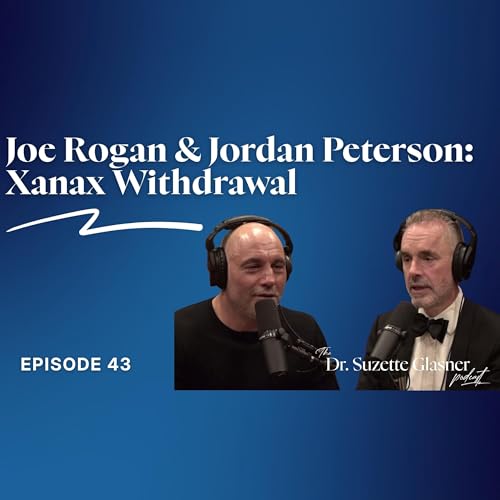
  • Ep. 43: What Joe Rogan and Jordan Peterson Got Right (and Wrong) About Xanax Withdrawal
    Feb 27 2026

    In a widely viewed conversation several years ago, Joe Rogan and Jordan Peterson discussed Peterson’s experience with benzodiazepine dependence and withdrawal. The exchange brought significant public attention to the challenges some individuals face when discontinuing medications like Xanax.

    But how closely did that conversation align with clinical evidence?

    In this episode, clinical psychologist and addiction scientist Dr. Suzette Glasner examines what Rogan and Peterson accurately captured about benzodiazepine withdrawal — and where important nuance may have been missing. Drawing on research, clinical guidelines, and what is known about protracted withdrawal, suicide risk, and physical dependence, this episode informs cultural narrative with clinical science.

    Watch the full episode here:

    Episode Breakdown

    00:00 How Long Does Xanax Withdrawal Really Last?00:34 Why Xanax & Ativan Became So Popular02:00 The Hidden Cost of “Quick Relief”02:43 Jordan Peterson’s 2-Year Withdrawal Battle03:50 The Truth About Short-Term vs. Long-Term Use05:00 Why Stopping Benzos Cold Turkey Can Be Dangerous05:24 Protracted Withdrawal: Why Symptoms Can Last Years06:17 Anxiety, Depression & Rebound Symptoms Explained07:10 Akathisia, Psychosis & Misdiagnosis Risks09:00 Can You Die From Benzodiazepine Withdrawal?10:09 Tapering Off Benzodiazepines11:00 Who’s Most at Risk for Severe Withdrawal?12:37 How Long Does a Safe Taper Actually Take?14:34 Xanax + Alcohol & A Final Message of Hope

    Listen to Episode 43 now to learn how evolving science, media influence, and public perception intersect in the ongoing conversation about anxiety and its treatment.

    📩 Questions or topic suggestions? Email AskDrGlasner@gmail.com

    🔗 Subscribe for evidence-based discussions on addiction, recovery, and mental health:: https://www.YouTube.com/@drglasner


    This is a public episode. If you would like to discuss this with other subscribers or get access to bonus episodes, visit drglasner.substack.com
    Show more Show less
    16 mins
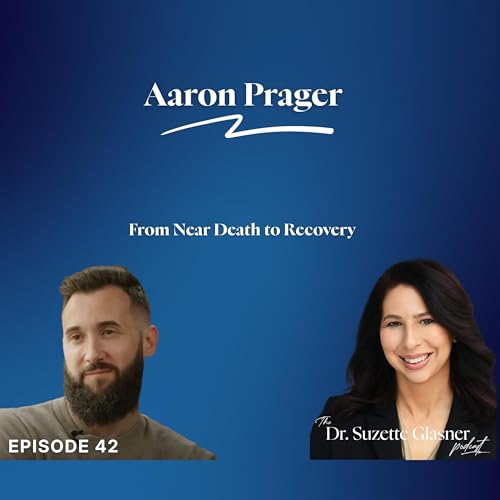
  • Ep. 42: Aaron Prager, Son of Dennis Prager: From Near Death to Addiction Recovery
    Feb 19 2026

    In this in-depth conversation, Aaron Prager — son of Dennis Prager and host of American Recovery on PragerU — joins addiction scientist and clinical psychologist Dr. Suzette Glasner to share his most detailed account yet of his struggle with severe addiction and the transformation that followed.

    Aaron reflects on how addiction to alcohol and methamphetamine progressively took hold of his life, eroding his sense of purpose, isolating him from his family, and leading to psychosis, deepening depression, and despair. What began as experimentation evolved into a life-threatening physiological dependence — the kind that carries a significant risk of mortality.

    Though he wrestled with and at times rejected religion throughout his upbringing, Aaron describes how his eventual return to faith and spirituality became central to his recovery. Beyond survival, he speaks candidly about the internal shift that occurred during recovery: confronting his own flaws, developing humility, and building an honest relationship with himself and a God of his understanding.

    This conversation explores not only addiction and near-death experience, but personal transformation — the process of awakening, self-reflection, and rebuilding a life rooted in responsibility, faith, and family.

    You can find Aaron here:

    X: https://x.com/theaaronprager

    Instagram: https://www.instagram.com/theaaronprager

    You can watch or listen to the full episode on The Dr. Suzette Glasner Podcast here.

    I hope that this episode helps you understand how addiction can unfold, the deeply personal nature of Aaron’s recovery journey and how this can be different for every person who is confronting addiction, and importantly, the fact that people do see the other side of even the most severe addictions like Aaron’s.

    Thank you for listening and. for being part of this community.

    Have a question about today’s episode? Or a question you’d like me to cover in a future episode?

    Email: askdrglasner@gmail.com


    This is a public episode. If you would like to discuss this with other subscribers or get access to bonus episodes, visit drglasner.substack.com
    Show more Show less
    1 hr and 17 mins